Drip Tape: Store New Rolls Between Delivery and Planting
Keep new drip-tape rolls identifiable and protected between delivery and staggered planting, including a clear record for partly opened rolls.
Published by IrriNex Store
Drip tape often arrives before every crop block is ready to plant. A new roll can sit unopened for the first planting, then become a partly opened roll while later rows wait. The useful question is how to keep the correct roll identifiable and in sound condition between those dates. Give each roll a record, a protected place, and a named destination before the crew takes it to the field. Keep each partly opened drip tape roll with its identifying label, so the next planting crew can select the intended material before installation.
This begins after the delivery has been counted and accepted. If a carton is short, wet, or visibly damaged on arrival, use the delivery inspection guide to record that condition first. The steps below concern new material waiting for installation, including the unused remainder of a newly opened roll. A roll recovered from a previously watered field needs the different checks in the used-tape reuse guide.
Label unopened drip tape rolls by planting block
Write one entry for each received roll rather than a single total for the order. Copy the product name, selected option, roll length, diameter, wall thickness and outlet spacing from its label or purchase record. Retain any manufacturer batch or lot number that is actually present. Add the receipt date, quantity, condition of the wrapping and the storage position you assign. Photograph the original label while it remains readable; a handwritten card is easier to replace than a lost factory label.
Keep the order confirmation with the roll record so a crew member can compare a physical coil with the intended option. Similar-looking black rolls can differ in wall and emitter spacing, and a partly opened one can look no different from another once its outer wrap is gone. A colour mark may help locate a roll, but it should point back to the written identity rather than replace it. If a label is missing or conflicts with the order, set that roll aside and resolve its identity before allocating it to a block.
The record should distinguish an unopened roll from one that has been opened for a first block. When a roll is opened, note the date, the block that received material and the length removed if it was measured. Mark any remaining length as an estimate when it is only calculated from the starting quantity. This prevents a later crew from treating a partial roll as a full sale unit. Do not unwind a whole coil merely to make the paperwork look exact; use an appropriate measured handling process when the remaining quantity actually matters.
Keep partly opened new rolls identifiable between plantings
Leave an unopened roll in its protective wrapping until the work for its assigned block is ready. Keep it in a protected location and follow the exact maker’s storage and handling directions for the selected product. The wrapping shields the coil during ordinary moves and keeps its label close to the material it describes. Retain any separate instruction sheet with the stock record so the person releasing the roll can check it before field work.
Do not assume that intact plastic wrapping makes a poor location safe. Choose a sheltered, dry place where water cannot collect around the roll, where sharp tools or loose hardware will not cut the coil, and where routine traffic will not press on it. Keep the roll supported and stable so it cannot fall, flatten or be trapped beneath unrelated supplies. Follow the selected product’s instructions for support, stacking and environmental conditions during the planned storage period.
Walk the route from storage to loading point. A protected shelf is less useful if a roll must be dragged across gravel to reach the vehicle. Clear a route that allows people and suitable equipment to move the coil without pulling on exposed tape or crushing its edges. Keep the label facing a direction that can be read during a stock check. If several sizes share a space, separate them visibly rather than relying on memory of which pile was delivered first.
Give every unopened roll a planting-block destination
On a simple block sheet, list the field or bed, intended planting window, selected tape option, aggregate length needed, and rolls assigned. The staggered-planting irrigation guide deals with operating zones as crops enter and leave production; here the sheet only controls which unused material will reach each block. Revisit it whenever a planting date moves or a block changes its row count. A roll reserved for a later block should remain identifiable even if the first block is installed early.
Separate sale-roll length from the length of an approved installed lateral. For example, two blocks may call for an aggregate 800 m and 900 m of the same tape. Their combined material demand is 1,700 m before cuts, joining decisions and a reserve. A 2,000 m sales roll could cover that total on paper, but its label does not approve a single 2,000 m run, and the actual usable remainder needs a record after the first block. Layout and operating limits still belong to the selected tape’s hydraulic instructions and the field design.
Where blocks need different options, assign them separately even if the sale-roll lengths happen to match. An early crop block may use one outlet spacing while a later block requires another; swapping the two to empty an opened roll can change the intended wetting pattern and zone demand. If the plan changes, update the block sheet and check the selected option before moving material. The zone-flow calculation guide helps when a changed outlet count requires a fresh hydraulic check.
Handle a partly opened new roll as identified stock
Once material has been taken from a new roll, secure the free end and remaining coil by the method permitted for that product and its packaging. Keep the original label with the roll and add a tag showing the opened date, first block, option and estimated or measured remainder. Protect exposed material during the return move, then place it in a named position apart from fully wrapped rolls. The next crew should be able to tell what it is without opening or unwinding it again.
A partial roll is still new material only if the remaining tape has not been installed, pressurized or retrieved from a crop row. Do not combine it in a bin with recovered lines from a previous season. If clean new tape was laid out and then dragged back through a field, its condition calls for direct inspection rather than an automatic “new” label. The distinction matters because a storage card cannot establish that emitters, wall or edges remained sound after field contact.
Record consumption promptly. If the crew cut several laterals but did not measure the amount taken, write down the installed row lengths and cuts, then mark the balance as calculated. If the roll has been shared between blocks, list each withdrawal so an apparently generous remainder is not promised twice. A simple signed handoff line with the person, block and date is more useful than a nominal inventory number that nobody updates.
Check the roll before taking it to the field
Before moving a roll out, confirm the destination block, tape identity, needed quantity, route to the field and person receiving it. Carry the roll record or a clear copy with the coil. Inspect the outside wrapping or exposed remainder for tears, crushed edges, excessive tangles, illegible labels or other changes since it was stored. Set aside a questionable coil until its condition and identity are resolved; bringing it to the field does not make it acceptable to lay.
Stage only the rolls needed for the immediate work where they will not obstruct vehicle paths or be left unprotected after the crew stops. Do not pull tape from an unattended roll to “pre-measure” distant rows. Use the exact product’s dispensing and installation directions, and keep any support or reel arranged so the roll can feed without uncontrolled twisting or sudden tension. Carry those instructions with the roll and keep its label available through connection and first use. The lateral end-access guide covers one of the later field decisions.
When work is interrupted, identify which roll is still unopened, which has supplied rows and which material is lying in the field. Return only the uninstalled remainder to new-roll storage after checking and securing it. Update the record on the same day, particularly if the crew borrowed a roll that was originally assigned to another block. A second crew can then start from a reliable stock picture rather than from the number of coils visible in a shed.
Compare the tape and inline-pipe options by the selected roll
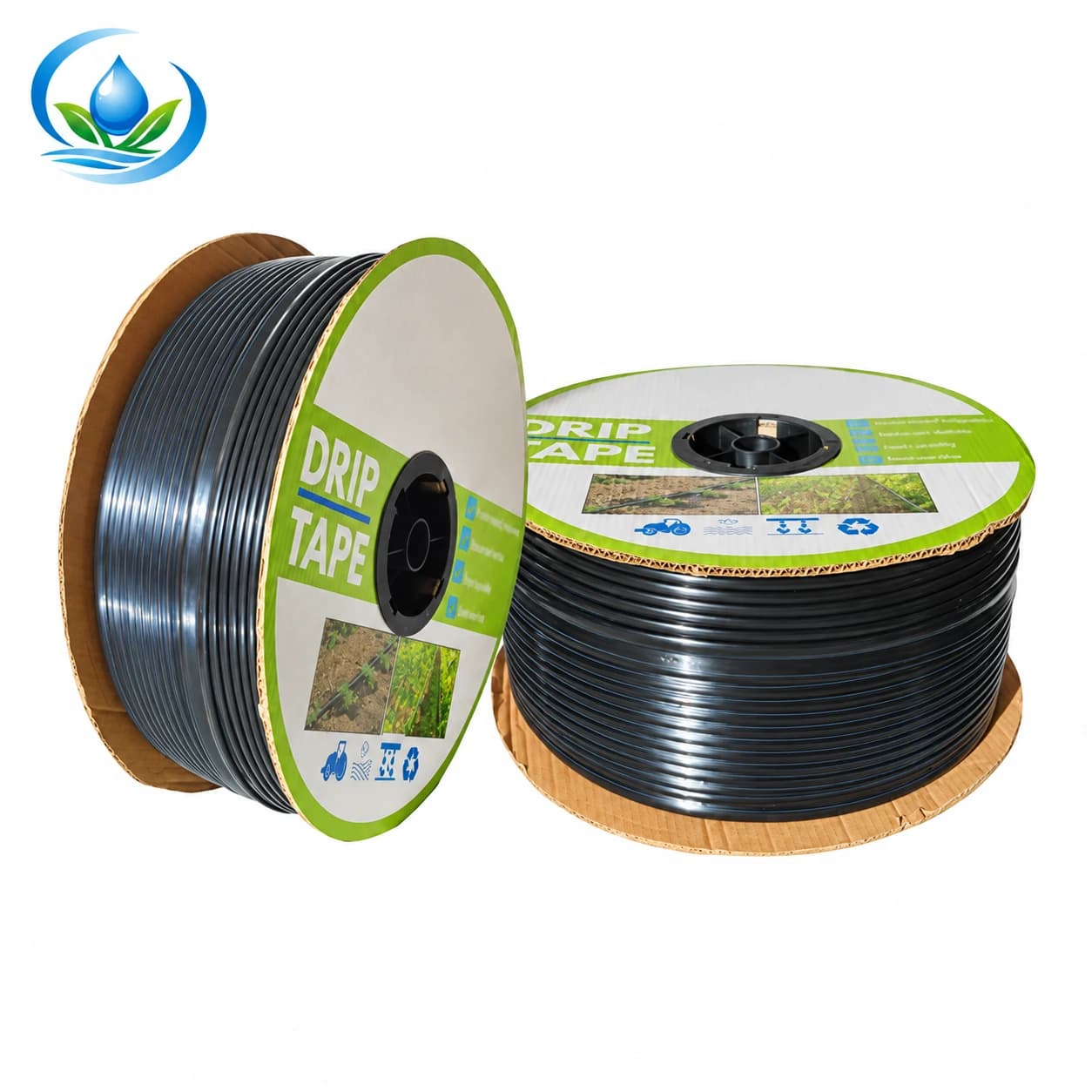
The flat-emitter drip tape includes a 16 mm, 0.2 mm wall, 30 cm spacing, 2,000 m roll option identified as IS-2-C526AC2D85. Record those values as one chosen configuration when assigning it to a block; do not substitute a similarly sized roll from another order. Its sale-roll length helps plan storage and withdrawals. Confirm the chosen tape’s emitter flow, operating pressure and permitted run information before treating a roll count as a hydraulic design.
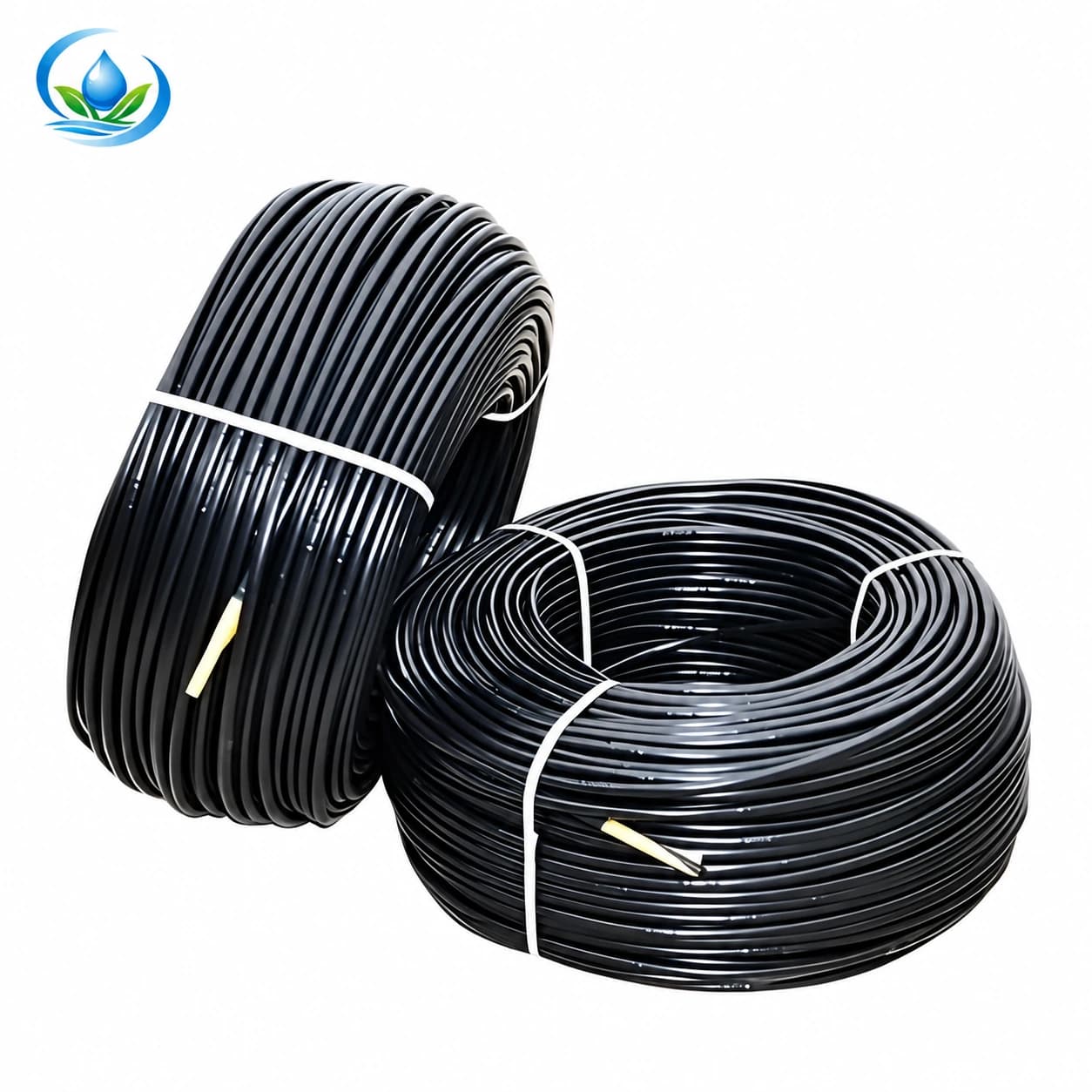
The inline drip pipe has a distinct option, IS-3-8CDA6B18CD, supplied as a 500 m roll. Its line is 16 mm in diameter with a 0.8 mm wall; emitters are 30 cm apart and rated 2 L/h. It is a different product and sale unit. Do not assume that matching nominal diameter and spacing make its connectors, handling limits, pressure needs or planting role interchangeable with the flat tape. A 500 m roll describes material supplied, not an approved 500 m continuous lateral. Keep its label and block allocation separate.
Before adding rolls to an order, compare the exact selected option, displayed price and sale unit with the block sheet. Check the current availability and delivery information for the dates that matter. If an option cannot be selected or its fit to existing connections remains unclear, give Store support the option code, block lengths, intended fittings and the question to resolve. Buying a substitute solely because it has the same outside colour or nominal diameter can create a field problem that careful storage will not solve.
Use a short release check for each planting day
The person releasing stock should be able to read the product and option, identify the assigned block, find the original or carried-over lot mark, see how much material is believed to remain and inspect the coil’s present condition. The receiver should confirm those same points before the roll is loaded. If either side cannot identify the material, hold it for clarification. This is faster than discovering a spacing mismatch after rows have been covered.
At the end of the day, reconcile the assigned roll with what was actually installed and what returned unused. Note measured lengths where available, label any calculated remainder clearly, and put the remaining coil back into its protected location. A postponed block can then use an intact, identifiable roll or a known partial one. The record lets the next planting crew select identifiable material in sound condition and hold a damaged coil for review.
Before you order
Compare this guide with the specifications for your exact product, selected option, water supply and field conditions. Your equipment requirements take priority over a general example.
Compare irrigation products