Irrigation Drip Tape: Is a Used Roll Worth Reusing?
Identify a stored drip-tape roll, measure sound continuous lengths, trial representative delivery and allocate accepted pieces to named new crop rows before ordering more.
Published by IrriNex Store
A stored roll of irrigation drip tape is worth reusing only if you can identify what it is, find sound lengths for the next crop rows, and verify that a representative piece delivers water at the approved operating condition. Begin with the label and old block record, then measure the lengths that remain after damage is excluded. A roll that once contained a sale length is not still that length after cuts, repairs and retrieval. A neat outside wrap is not proof that hidden tape, integral emitters or old connectors will work. Used drip tape roll inspection starts by measuring sound lengths after rejecting damaged spans, because the remaining material may be shorter than its original sale length.
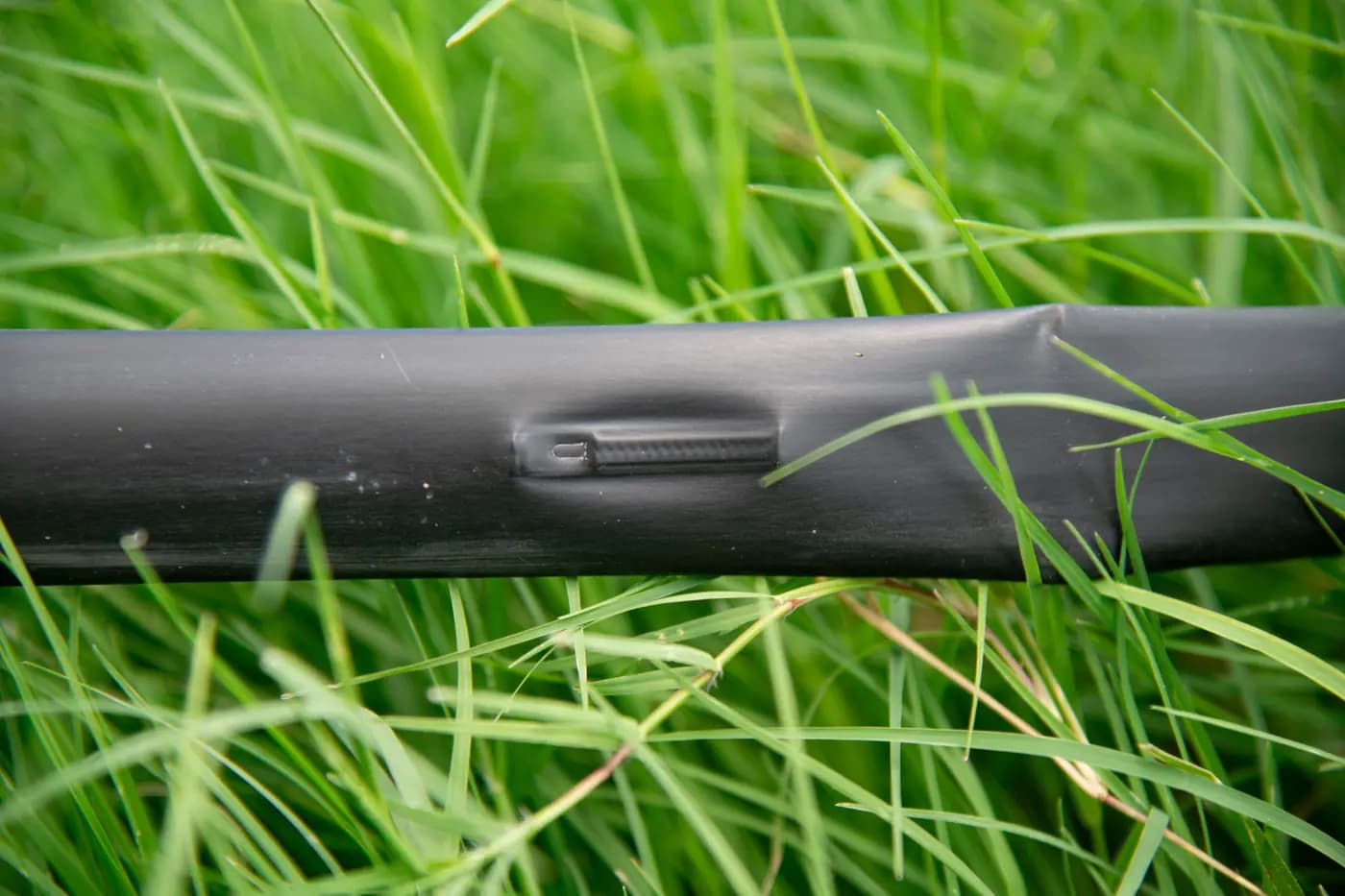
The practical outcome is an allocation sheet: which identified lengths can be trialled on specific new rows, which pieces are held for a confirmed repair, and which are retired from crop service. That decision comes before adding fresh roll quantities to the cart. The opening photograph shows drip tape lying on grass at a Texas farm; it does not establish that the photographed material is used, reusable, the IrriNex product or a tested installation.
Identify a recovered drip tape roll before reuse
Read any surviving roll core, carton label, order record and marker on the free end. Record the manufacturer or product code, nominal diameter, wall specification, emitter spacing and discharge basis, and any working-pressure information supplied for that exact product. Note the previous crop block, installation position, recovery date and whether different short lengths were later wound onto the same reel. If two lots were mixed during retrieval, a single outside label cannot identify every metre inside.
Unwind only enough at first to compare visible markings, emitter spacing and construction with the record. Keep a photograph of the label beside the roll ID. A 16 mm description does not establish that two tapes have the same wall, emitter passage, fitting interface or permitted pressure. If the old material cannot be identified sufficiently to establish its hydraulic and connection requirements, keep it out of a critical new crop row until the original maker or supplier can confirm it. A guess based on colour is not a specification.
The tube-family comparison helps distinguish flat tape from round inline dripline or blank distribution tube when the label has gone. Use that identification before assigning an old roll to a row. Do not buy separate button emitters to replace the built-in outlets of an unidentified tape; factory emitters are integral to its construction.
Measure sound lengths against new crop rows
Write down the intended block, row lengths, soil wetting need, planned operating group, header connection and crop-work risks. A retained length can be physically sound but wrong for the new row's outlet spacing or discharge. A tape selected for an earlier crop and soil arrangement does not become correct for a different crop simply because it is already paid for. Where the new block needs a different spacing or discharge, compare the actual wetting requirement and hydraulic design before claiming reuse saves money.
Separate the proposed route from the packaging length. For each row, record the distance from the compatible header connection to the required end position, including practical tails and any permitted join. A 2000 m or 3000 m sale roll is not one allowable lateral length. The permissible run depends on the exact tape's diameter, outlet arrangement, pressure, slope and acceptable delivery variation. Use the lateral-length planning guide to organize the new row measurements, then match each sound used segment to a named row.
If a row includes a sharp turn, machinery crossing, stake or retrieval obstacle that damaged the previous layout, decide whether the proposed new route changes that exposure. Reusing a short piece in the same damaging position without correcting access can create another leak. A reused coil may suit one protected row but not the entire field, so allocate by named position rather than by a single “usable roll” label.
Unwind and map condition without creating a new failure
Inspect the material over a clean, supported route, following its handling guidance. Look at the outer turns and at interior portions exposed as the coil is unwound. Mark pinholes, long tears, crushed or folded sections, abrasion, stretched ends, damaged emitter areas, soil embedded in a connector and material that cracks during normal permitted handling. Do not deliberately hand-stretch an unknown old tape to see whether it snaps; that test can destroy material without establishing its service limit.
Make each defect a location on the length map, not a vague judgement about the whole roll. Measure sound sections between defects, then subtract the length that the selected repair method would remove or consume. A local tool puncture can differ from repeated cracks across several turns, a brittle surface, multiple leaking emitter bodies or a roll contaminated by unknown chemical residue. The first may justify a verified local repair; the latter findings weaken a case for returning the roll to crop irrigation. Do not claim a fixed number of seasons or a universal “thick tape can always be reused” rule.
Examine the old start and end positions separately. A stretched mouth may no longer seal against a fitting even when tape farther into the roll appears sound. An emitter body damaged by retrieval cannot be restored by sealing the outside wall over it. A line folded sharply through storage may need a decision by the original maker's criteria rather than an improvised pressure-proof test. Keep unusable or unidentified pieces segregated so they are not accidentally installed with accepted lengths.
Calculate usable lengths instead of counting the original reel
For each roll ID, list the measured continuous sections and their condition. Subtract damaged cut-outs and the material lost to making an approved join. A segment shorter than the row to which it was assigned is not a full-row replacement merely because its total metres look impressive. Several short remnants may cover short independent beds if their identities and connection needs match, but do not add their lengths as if they form a single uninterrupted line without counting joints and hydraulic effects.
For a clearly hypothetical example, imagine a labelled used roll yields sound sections of 46 m, 39 m, 18 m and 12 m after inspection. The sum is 115 m. If three planned laterals require 45 m, 40 m and 20 m, the 46 m piece might be a candidate for the first; the 39 m piece does not cover the 40 m row by itself, and the 18 m piece does not cover the 20 m row. Joining is a separate fit, labour and pressure decision, not automatic proof that 115 m will cover 105 m of specified rows. None of these figures comes from an IrriNex roll or a recommended row length.
Mark each candidate with row, intact length, necessary connection tails, proposed join count and unresolved checks. If the field layout changes before installation, update the map rather than forcing a too-short piece to reach the old end. A tape that is sound but only 12 m long may still serve an appropriately designed short row; its usefulness depends on a real destination and the exact product limit, not a universal minimum remnant size.
Separate one repair from an exhausted roll
A single clearly located tear in otherwise identified, flexible material may leave useful sound lengths. The repair option must match the tape's construction and the actual connecting dimensions. Before cutting, determine whether removal leaves the required row length and whether the new joint will sit in a place that can be inspected and protected. Shut down, isolate and release pressure by the installed system procedure before physical work. Never make a repair on a live tape or use higher pressure to “prove” an old connection.
Repeated punctures, cracking on multiple turns, flattened emitter areas, leaks around built-in outlets or multiple uncertain previous joins make the repair burden different. A succession of small fixes adds connection points and labour while still leaving old material between them. If the line's identity is uncertain, a coupling marked for a nominal diameter is not a safe shortcut. The leak-location guide helps document a specific observed escape point; the reuse decision asks whether the remaining whole length deserves another crop assignment.
Check whether the apparent defect belongs to the tape or to an old start, valve or end fitting. Replacing a cracked connector does not condemn every metre of tape; conversely, fitting a new valve does not cure embrittled tape. Keep the itemized work separate in the allocation sheet. If a tested segment continues to leak at several new locations during an approved normal run, retire that segment rather than treating every leak as an isolated surprise.
Trial representative material at the real operating condition
When identification and visual condition support reuse, select a representative portion that includes the age and handling state of the proposed segments. Install it only with verified compatible fittings and the model's prescribed filtration, regulation, flushing and startup procedure. Run it at the permitted operating condition for the intended zone, not at an invented high pressure. Observe the joins and tape wall for leakage or movement and compare representative near and far outlet delivery under equal collection periods.
A short sample trial has a limit: it does not certify every metre still on the reel. Hidden damage and emitter obstruction can remain elsewhere. If the trial is accepted, inspect each allocated length during installation and its first normal run. If it fails, record whether the reason was a wall defect, fitting mismatch, emitter delivery problem, pressure condition or inadequate identification. That distinction tells you whether other sections can be reassessed or whether the roll should be retired from the proposed service.
Use the zone return-to-service guide when the entire system also needs seasonal acceptance. For the retained tape, decide whether a named segment meets the new row's verified requirements. Do not infer that clear flush water or a dry connector alone proves all integral outlets deliver evenly. Keep the trial readings and photographs with the roll ID so the later purchase decision can be reviewed.
Compare reusable metres with the new purchase actually required
Make a row allocation table with four decisions: use this identified sound segment, repair and then trial a particular local defect, hold a segment for more evidence, or retire it from crop irrigation. Add the metres that genuinely fill named rows without unsupported joins. Subtract only those accepted metres from the new material requirement. Count the exact additional starts, verified couplers or valves and ends needed for the mixed old/new layout. Keep labour for unwinding, inspection, cleaning as approved, repair and monitoring visible when comparing it with a fresh roll.
A used roll that costs nothing to take from storage may still consume more field time and fittings than the saved new tape is worth. Conversely, one sound length already matched to a short row can avoid opening a new sale roll. These are site and order decisions, not universal cost percentages. Ask what happens if a used row fails after planting or mulch placement: re-entry access and crop timing can make a marginal length a poor choice for an inaccessible position. Do not describe disposal as recycling without checking a real local acceptance route for the material.
The stored-parts inventory guide helps keep labels and retained quantities through the off-season. It does not declare a stored roll ready for reuse. The new tubing comparison helps if the new field needs a different delivery family. Here, the purchase quantity follows the accepted allocation sheet rather than the original carton size.
Use exact current tape and valve options without assuming fit
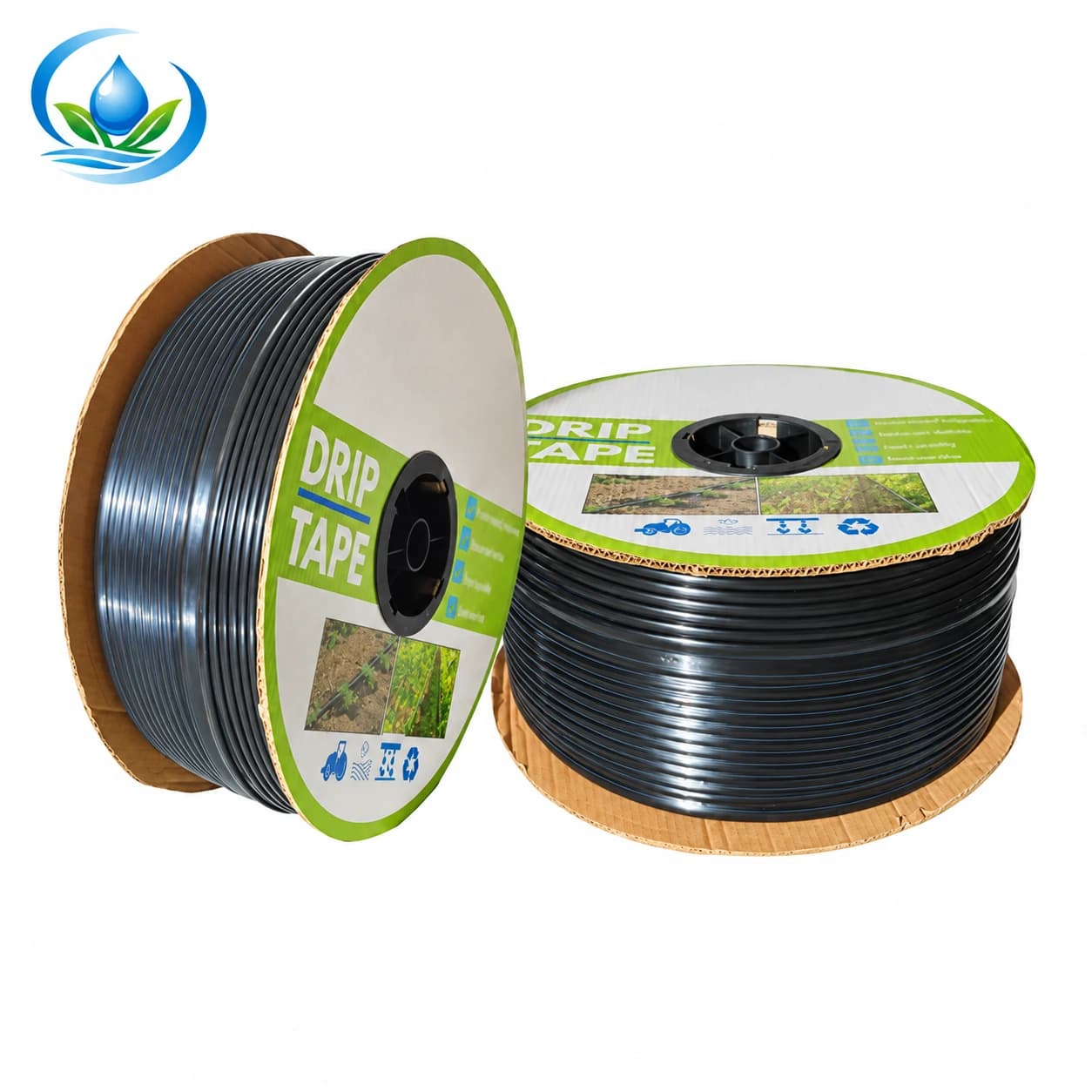
The published IrriNex flat drip tape includes option IS-2-4F08BF82DC, sold as a 3000 m roll with outlets spaced 30 cm apart. That option has a nominal 16 mm diameter and a 0.15 mm wall. The separate IS-2-C526AC2D85 option has a nominal 16 mm diameter, a 0.2 mm wall and 30 cm outlet spacing, and is sold as a 2000 m roll. These paired fields describe new sale options. They do not establish a used roll's identity, lifetime, allowable installed run, emitter discharge or compatibility with an old connector. Check the exact selected option in the cart before using it to fill a shortage.
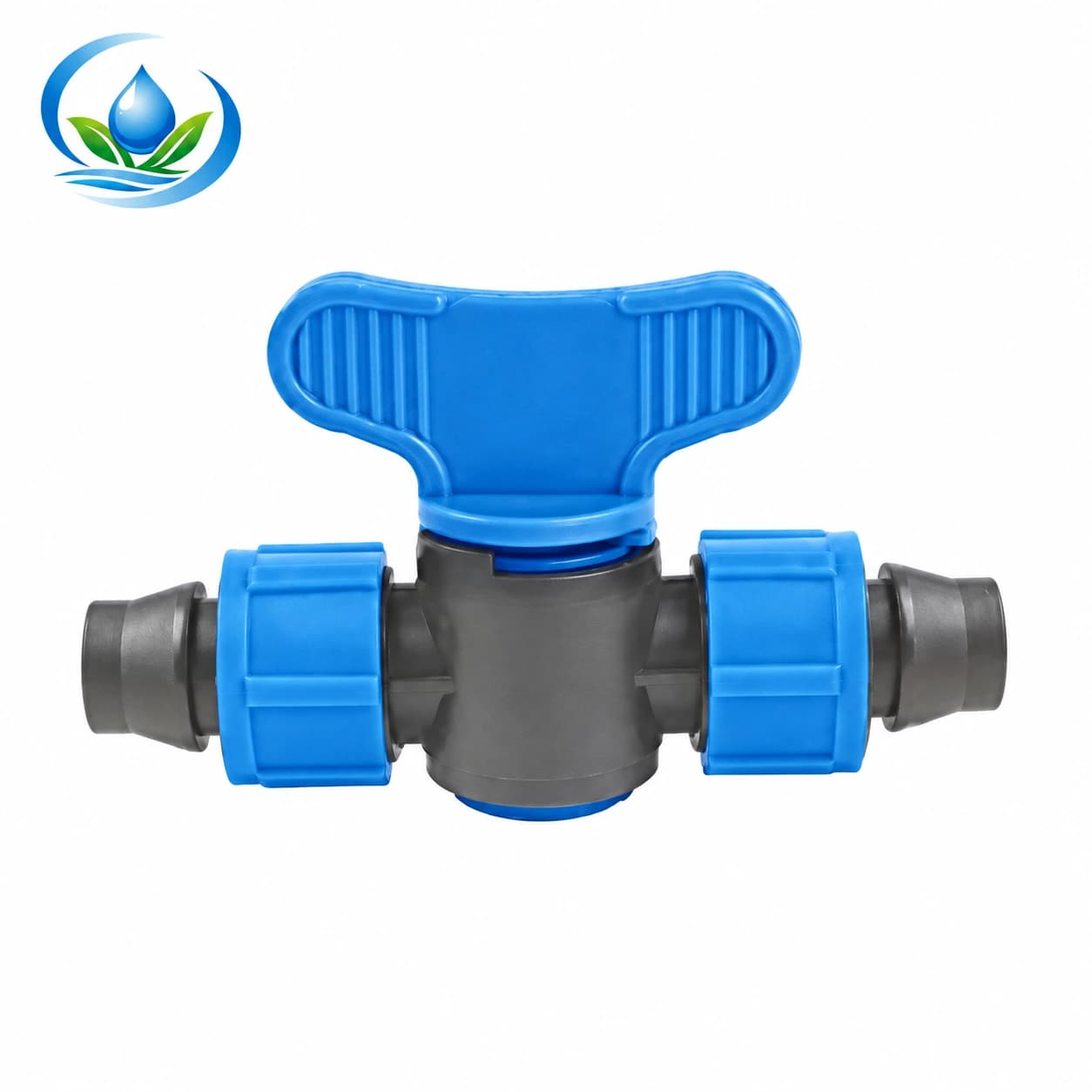
The published V161 lock tape coupler valve is a manual 16 × 16 mm tape-connection option in the catalogue. It is not proof that an unidentified or aged 16 mm tape wall will seal in its locking ends; neither is it an automatic flushing valve. If a reused segment would require this valve, compare the actual tape, locking profile, wall acceptance and maker's installation instructions. If fit remains uncertain, ask product support to verify the exact pair before buying rather than forcing a trial on the crop block.
Choose the matching product-page option, then check current price, units per pack, availability and delivery for the new tape and any confirmed valve. A new tape roll may supply several rows but its package length is not an approved row run length. Use the selected model's operating data to confirm pressure and delivery for the planned route. Do not infer that the 0.2 mm sale option survives more seasons than the 0.15 mm option in this field; handling, source, storage and actual condition control a reuse decision.
Keep an allocation and acceptance record
| Roll record | What to enter | Decision supported |
|---|---|---|
| Identity | Original code, wall, spacing, discharge basis and label confidence | Whether the material can be matched to a row |
| Condition | Defects by measured position, sound sections and old joints | Local repair, hold or retirement |
| Allocation | Named row and intact length after permitted cuts | Actual metres replacing new tape |
| Trial | Operating case, observed leakage and near/far outlet samples | Whether a candidate can enter crop service |
| New order | Unfilled row lengths and exact compatible parts | Specific product-page options and quantities |
Mark each piece used in the field with its roll ID and destination, and keep unidentified, failed and accepted material physically separate. After installation, revisit the used portions during the first normal irrigations and record new leaks or delivery changes against the trial baseline. If a piece is withdrawn, update the allocation and the new-order count rather than silently replacing it with another unknown remnant.
Assign to a crop row only the identified, sound length that passes its approved operating trial. Hold any segment that still needs identification or repair outside crop service, and fill uncovered critical rows with a verified new option. Keep the acceptance and purchase decision beside the field map so the next inspection starts from measured lengths and recorded performance.
Before you order
Compare this guide with the specifications for your exact product, selected option, water supply and field conditions. Your equipment requirements take priority over a general example.
Compare irrigation products