
Drip Irrigation for Grapes: Match Outlets to Vines and Replacement Gaps
Walk each vineyard row to align delivery points with vines, replacement plants and gaps, then compare integrated dripline, individual emitters and suitable supports.
Published by IrriNex Store
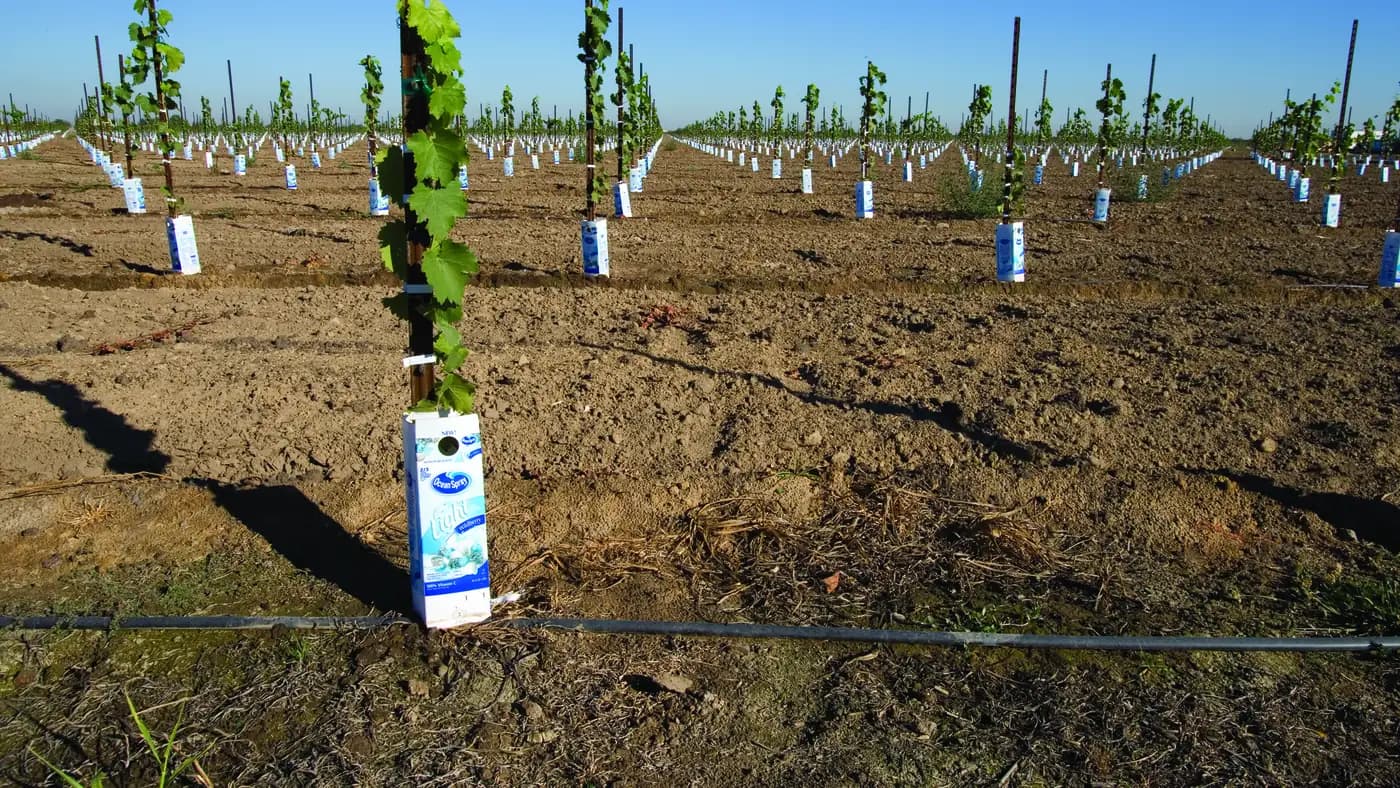
Drip irrigation for grapes should be selected from the positions where water needs to reach the rooted strip, then checked against the vines actually present in each row. A regular planting plan can change after vines are removed, replacements are planted or a line is repaired. Before ordering another roll or a bag of emitters, walk the row and compare living vines, empty positions, posts, existing outlets and cultivation access.
This guide turns that walk into a practical buying record. It compares fixed-spacing dripline with selected individual delivery points and considers a ground route versus an approved supported route. It does not prescribe vineyard watering minutes, deficit irrigation, grape quality improvements or a universal number of outlets per vine. Table-grape and wine-grape production objectives belong in the agronomic plan, separately from component placement.
Give each row position a clear identity
Start from a permanent reference such as the labelled row entrance. Number the planting positions in sequence, including missing vines. Identify posts separately so that a post number cannot be mistaken for a plant number. Note the side from which you are viewing the row; a photograph taken from the opposite end can reverse an apparently clear left-or-right instruction.
For each position, record an established vine, a replacement vine, an empty site or an unresolved condition. Add the approximate location of the existing line and visible outlets. This is an inventory of the current row, not an instruction to plant, remove or relocate a vine.
Keep the original planting plan alongside the new record. A repeated gap may be intentional access, an awaiting-replant position or part of a changed layout. Knowing which it is prevents a temporary missing vine from being treated as a permanent break in the water-delivery plan.
Map the grapevine rooted strip apart from trunk positions
A dot marking a trunk is not a complete map of the soil that needs water. Identify the intended wetted strip from the vineyard's crop plan and accessible root-zone observations. Record soil changes, covering, slope and any section where the established wetting pattern differs from the rest of the row. A vineyard drip irrigation outlet layout should mark established vines, replants and empty positions separately before fixed emitter spacing is chosen.
Inspect near the vine and between existing outlets without damaging important roots. A surface mark beside a tube does not show the full depth or lateral reach of moisture. Conversely, an empty planting position does not prove that all surrounding soil can be excluded from irrigation; the intended rooted strip must govern that decision.
Keep delivery faults separate from placement problems. If an outlet does not discharge, first identify the fault. If it discharges normally but water enters outside the intended area, review its position and the route. Choosing a higher nominal flow is not a demonstrated solution to a misplaced water entry point.
Check the outlet sequence through a complete section
On built-in dripline, locate the first actual emitter and follow the repeating pattern through a representative section between recognizable posts. Measure from the same row reference used for the vines. Do not assume that cutting a new piece to the old length recreates the same outlet positions: the cut can start at another point within the factory spacing.
Mark outlets falling beside vines, between vines, near a post and within a gap. None of those labels alone proves the arrangement right or wrong. They show which positions need a wetting observation or a routing adjustment. Check the pattern again beyond a repair joint, where the next piece may begin with a different offset.
Moving a whole lateral to help one replacement vine moves its other outlets too. Review the complete affected section before accepting that change. Photograph reference points and use measured distances, so the next operator can restore the intended route after cultivation or trellis work.
Compare fixed spacing with selected delivery points
Built-in emitters provide a repeated outlet sequence along the installed emitting length. That can suit a continuous rooted strip when field observations support the distribution. It also means outlets remain active between trunks and across empty positions. Factory spacing is not the same measurement as planting distance.
Individual emitters allow delivery points to be placed at selected locations within a compatible assembly. They can be useful when a row contains irregular positions or when a defined replacement location needs a specific water entry point. Each added point also introduces a mounting or feed connection that must remain identifiable and accessible.
| Row observation | Route to evaluate | Acceptance question |
|---|---|---|
| A reasonably continuous rooted strip | A repeating built-in outlet pattern | Does the observed wetting reach that strip along the section? |
| Irregular or separately managed positions | Identified individual delivery points | Does each complete assembly deliver at its recorded location? |
| A gap within an existing emitting line | Retained route or a documented layout alteration | What soil and adjacent plants still need to be served? |
| Line movement near a post | A revised route or compatible support arrangement | Will the water entry points remain in place during farm work? |
The decision can differ between sections of the same vineyard. Record the chosen approach by location, rather than calling one component family the best option for every grape planting.
Treat replanted vines and empty row gaps as different outlet jobs
A newly planted replacement is a living delivery destination; an empty site is a planning condition. Give them separate marks. Keep the replacement's agronomic requirements in the crop record, including whether the existing shared operating arrangement can serve it appropriately. A point emitter can alter placement, but it does not by itself create a separately controlled irrigation schedule.
University of Minnesota Extension distinguishes new and mature vines in its cold-climate drought guidance. Its regional schedules are not universal settings for these products.
For an empty site, decide whether the present rooted strip and future planting plan justify retaining the existing emitting route. If a genuinely non-emitting section is required, it needs a documented design using suitable components and compatible connections. Do not create a dry gap by plugging, crushing or sealing selected built-in emitters.
Label any temporary arrangement with its location and a review trigger, such as replanting or completion of trellis work. This prevents an improvised route from being forgotten when the gap changes. Record which pieces remain useful and which would need replacement if the final route is different.
Choose a route around posts and cultivation work
Walk the actual path used for mowing, under-vine cultivation, harvest and routine inspection. Identify post bases, anchors, crossings and turning areas. Measure the tube's intended route around those constraints. A straight distance between two vines can underestimate the material needed for the approved route.
A ground route keeps the line near the soil but may conflict with particular tools or repeated foot traffic. A supported route changes access and requires a suitable attachment arrangement. Compare the farm tasks the line must accommodate rather than assuming that higher placement is automatically safer or easier to maintain.
For any supported layout, verify the support system's intended use and the tube's permitted routing. Do not use a vine trunk, shoot or an unverified trellis member as an improvised structural anchor. Keep fittings accessible and avoid forced bends, abrasion against posts and a taut line that pulls its outlets away from their recorded positions.
Check where water lands from a supported line
An outlet's position on a raised tube and the position where water reaches the ground are not necessarily identical. Observe the actual drop path in the installed arrangement. Water may track along a surface or be displaced before reaching the intended area. Check around posts and connections as well as in a clear middle section.
Use this observation to decide whether the approved route or delivery assembly needs adjustment. A neat-looking suspended line is not proof that the rooted strip is receiving water in the intended places. Avoid placing an outlet where normal work will repeatedly move it or where its discharge interferes with the access route.
A buried system is a separate design decision involving suitable equipment and maintenance provision. This comparison of visible ground and supported routes does not supply a burial depth or establish root-intrusion resistance for the listed dripline.
Identify the full dripline option
The dripline with built-in emitters includes SKU IS-3-8CDA6B18CD: 16 mm diameter, 0.8 mm wall, 30 cm emitter spacing, 2 L/h nominal outlet flow and a 500 m roll. Keep that complete description in the order. The 30 cm interval describes outlets, and the 500 m figure describes the supplied roll; neither is a recommended vine spacing or permitted lateral length.
This listed configuration is not established as pressure compensating merely because separate pressure-compensating emitters are available. Match operating pressure, allowable run and connection requirements to the exact option. Use the pressure checks for dripline when the row's slope or operating readings need review.
Compare emitting length with the measured route, including any emitting sections before the first vine or beyond the last. Keep non-emitting transport sections distinct on the drawing. The line-length purchase is clearer when those different functions are not combined under one approximate row length.
Select individual emitters by model and assembly
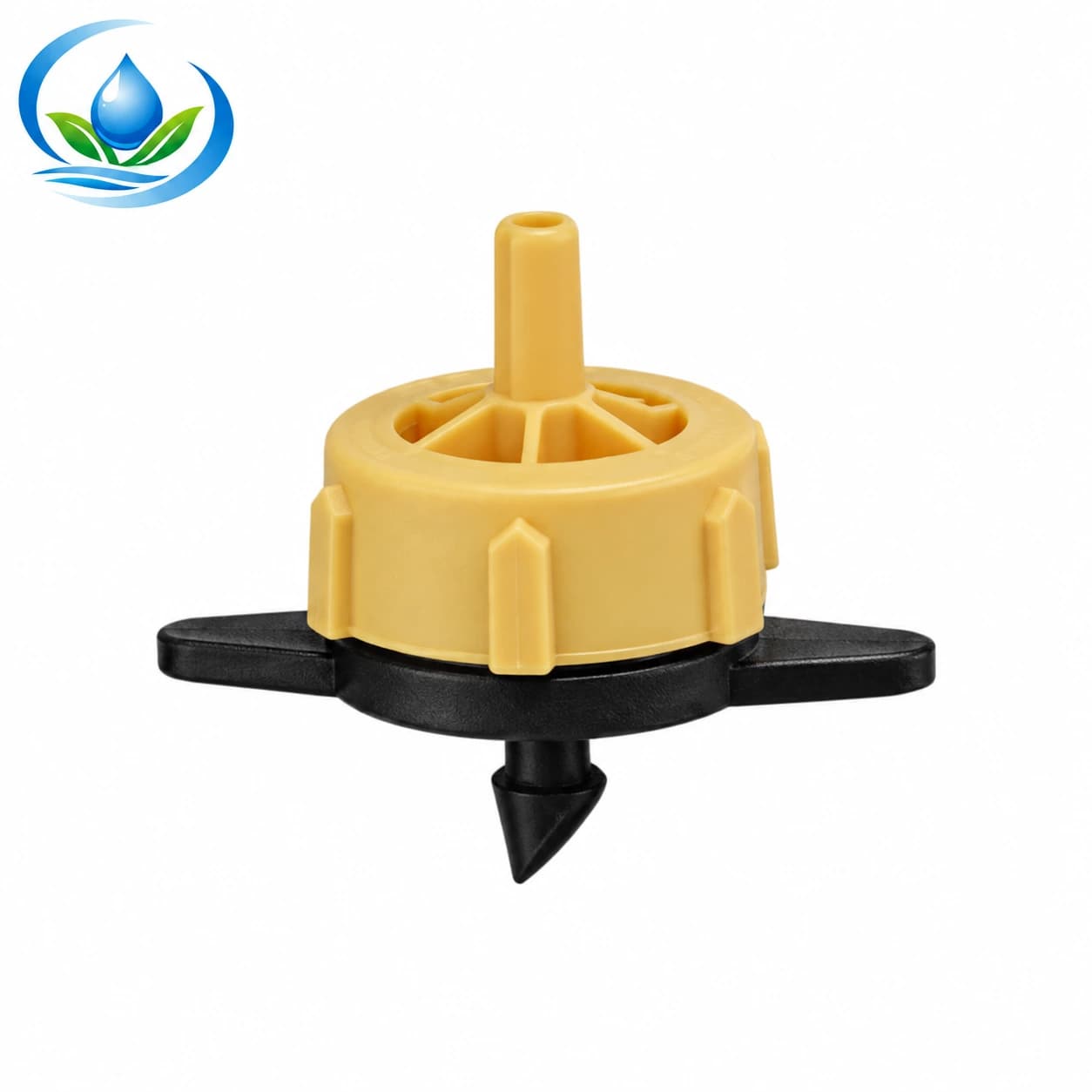
The pressure-compensating emitter family includes TANDPCD02 at 2 L/h and TANDPCD04 at 4 L/h nominally. Those values identify different flow options. Neither establishes the correct dose for a replacement vine or the number of points that an established vine needs.
Map each proposed outlet to its intended delivery location and identify its compatible mounting or feed arrangement. The model name does not identify every tube, connector or support needed to reach that point. Count complete assemblies after their interfaces are established, and keep retained working emitters separate from newly required pieces.
Pressure compensation concerns discharge within a stated working range. It does not steer water toward roots or correct poor placement. The emitter selection guide supports the broader comparison once the row map establishes where the outlets belong.
Use the hook listing as an identification, not a support design
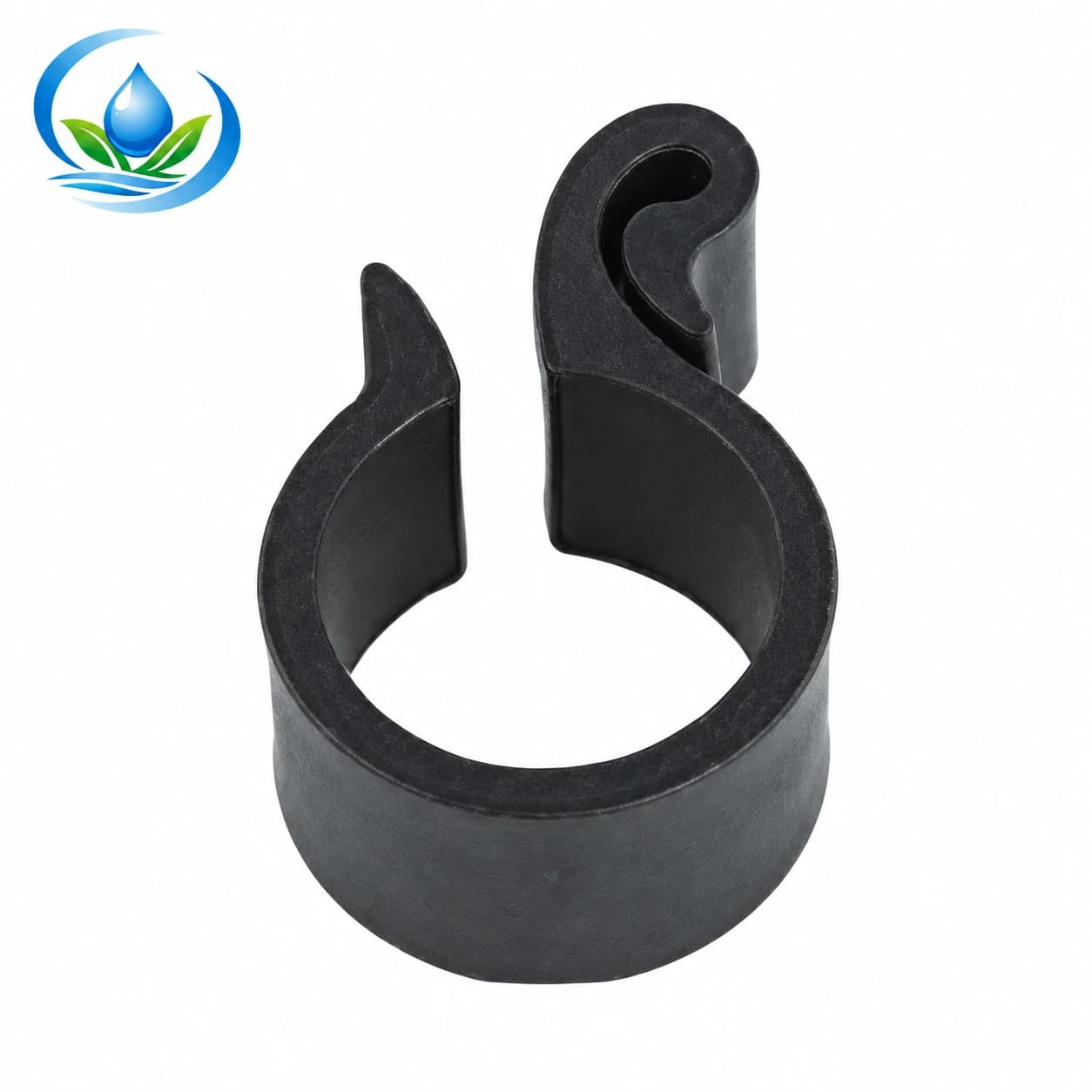
The irrigation pipe hook has a 16 mm choice identified as HC0112-16. This nominal size helps identify an item for compatibility review. It does not establish the acceptable wire diameter, clip geometry, structural load, support spacing or suitability of a particular trellis.
Check both interfaces: the intended tube and the approved support to which the hook would attach. Include service access and movement during normal operation. Use the installation's support requirements to determine quantity; one hook per vine or one per post is not a verified rule.
If the required attachment details are unresolved, keep that line item open while completing the measured tube and emitter list. A hook should be ordered because the confirmed assembly calls for it, not simply because the tube and hook share a nominal 16 mm label.
Turn the row walk into a short order record
Consider a hypothetical section with eighteen marked planting positions: fourteen established vines, two replacements and two empty sites. The section has sixteen living vines, but that does not establish sixteen emitters. First record the water entry points and rooted strip to be served; then count the selected assemblies and the retained parts.
The purchase record should separate measured emitting line, any documented non-emitting sections, identified point emitters, compatible joins and approved support pieces. Note the exact locations of exceptions. Include normal service access at starts, ends and joints so a later inspection does not require moving the delivery path blindly.
After a representative installation, observe discharge and wetting at retained vines, replacement positions and the edges of gaps. Repeat the check where the route crosses a post or changes support. Recheck alignment after work that moves the line. If outlet count or flow changes, use the runtime review after emitter changes as a separate follow-up.
Keep the marked row sketch, product labels and accepted routing photographs together. Send that record through IrriNex Store support when a specific interface needs matching. A useful grape-irrigation purchase places verified components on a recorded route, with each delivery point linked to the actual vineyard rather than to an assumed perfect planting grid.
Before you order
Compare this guide with the specifications for your exact product, selected option, water supply and field conditions. Your equipment requirements take priority over a general example.
Compare irrigation products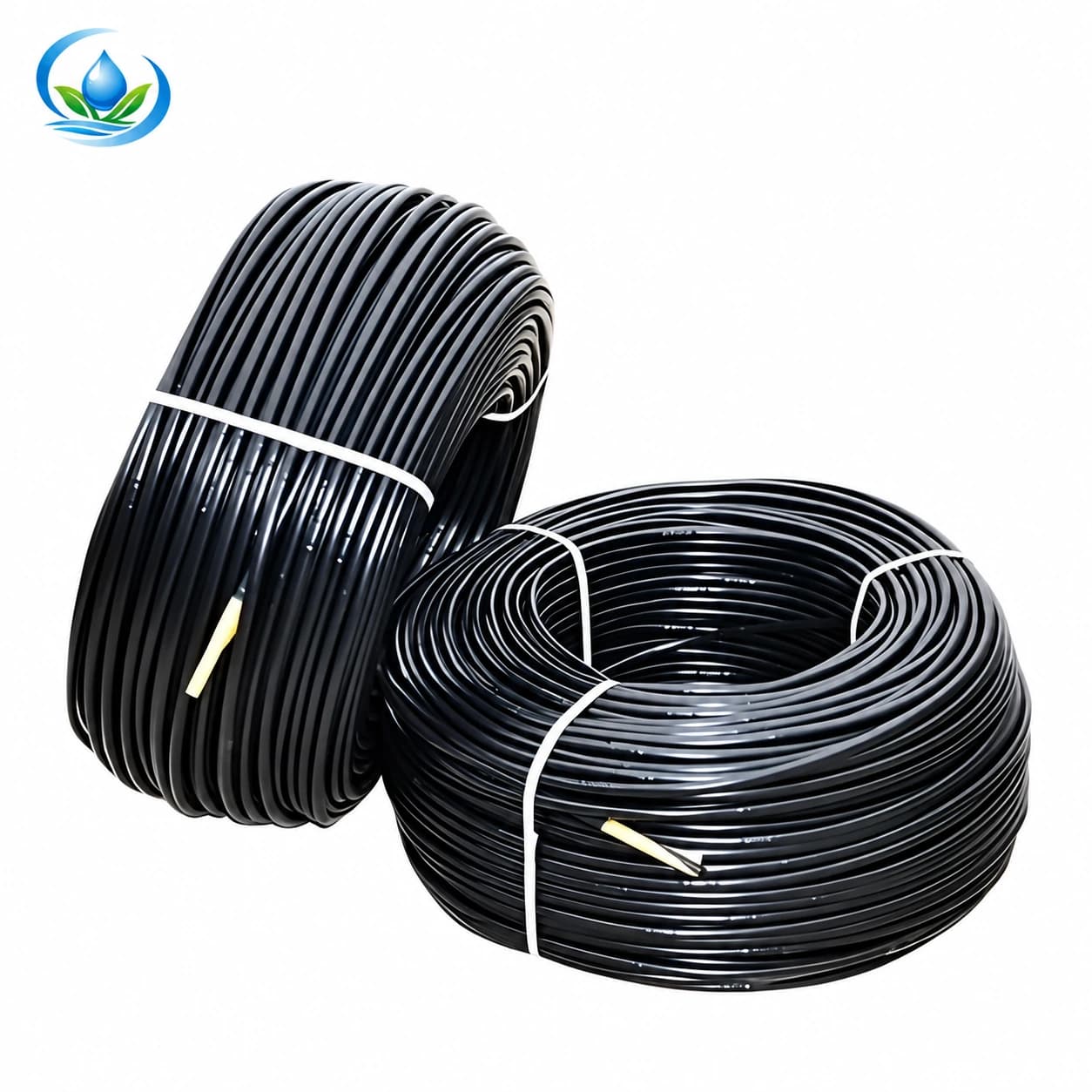
(NRCS_Photo_Gallery).jpg)