Drip Line for Cut-Flower Beds: Water the Soil, Keep Blooms Clear
Trial a drip line in a commercial cut-flower bed by checking both irrigation contact on saleable blooms and water delivery to rooted soil.
Published by IrriNex Store
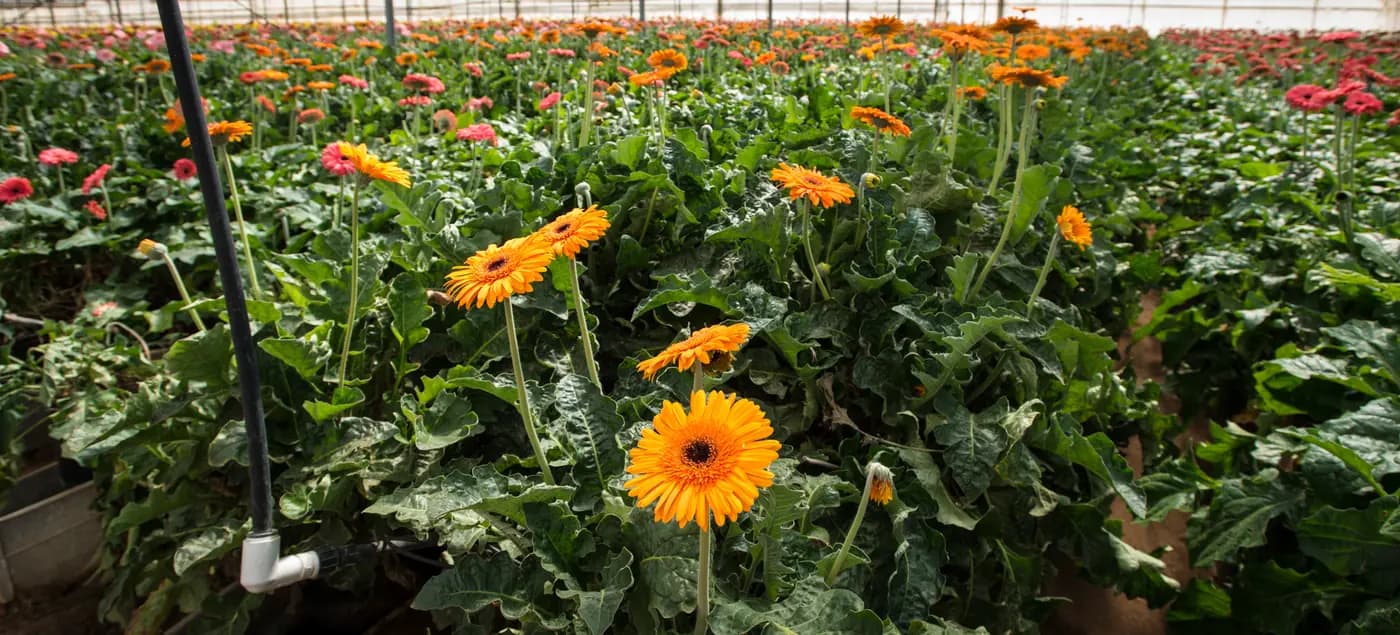
A drip line for cut-flower beds is worth considering when routine irrigation spray lands on saleable blooms or foliage, yet the crop still needs dependable water in its rooted soil. The buying question is not whether flowers should always be dry. It is whether a line can deliver water to the intended part of this bed without adding avoidable irrigation wetting to the stems being harvested. Compare the flower surface and the soil response in a small trial before buying rolls for every bed. Observe bloom wetting and soil delivery in the same small bed section; a drier flower alone does not show that the rooted soil received enough water. Cut-flower drip line soil delivery and bloom wetting need to be observed in the same test bed before buying more line.
Start with a named commercial block, not a general rule that all flowers need the same layout. A direct-sown strip, newly transplanted plugs and a mature cutting bed can have different receiving areas and different access needs. The Utah State University Extension guide to drip tape for cut flowers recognizes keeping irrigation moisture off foliage and blooms as one benefit of drip. Its particular layouts and hardware details belong to its examples; the purchase here depends on the selected IrriNex option and a trial in the actual flower soil.
Can a drip line water cut-flower soil without wetting saleable blooms?
Walk the intended harvest beds before changing equipment. Give each bed an ID and note crop, growth stage, harvest window, current irrigation method and the portion of the stem or bloom that buyers will judge. During a normal irrigation event, observe from a safe position whether spray reaches open flowers, buds, saleable foliage, support mesh or paths. Take comparable photographs from marked places near the start, middle and far end. A wet margin where a neighbouring sprinkler crosses the bed is a different fault from a spray head that intentionally waters all foliage.
Record when wetness appears. Petals already damp before the valve opens may carry dew or rain. Water arriving only when a nearby zone starts may be drift, overspray or a leak. Moisture appearing after harvest may come from washing, handling or storage rather than field irrigation. A drip line will not prevent those other sources, so label the source of each observation instead of crediting or blaming the proposed line for every wet bloom. If the cause is uncertain, repeat during a dry-weather irrigation event before ordering a block-sized replacement.
Do not turn one wet flower into a disease diagnosis. Some flower problems have several possible causes, and keeping irrigation water off foliage is not a guarantee against pathogens or cosmetic defects. The immediate quality observation is narrower: under the named irrigation event, did water from this system contact the saleable surfaces? Keep any separate pest or disease assessment with the grower's crop adviser. No fungicide choice or universal harvest rule follows from this equipment check.
Check rooted soil and flower surfaces in the same trial
Reducing wet petals is not an acceptable result if the rooted strip is left dry. Mark positions that represent the actual crop: by the line, between outlets, beside the intended flower row and at both near and far parts of the bed. Note the soil condition before irrigation. After an event, inspect at a depth relevant to the plants using an appropriate small probe or careful opening away from stems and line. Record where moisture changed, where it did not and whether water pooled or ran into the aisle. A dark mark on the surface alone cannot answer what happened around roots.
Use the crop's own water guidance and local soil observations to judge the result. A newly planted plug may need attention to a different volume of soil than an established cutting crop. Do not import a universal flower watering duration, root depth or percentage moisture target from another farm. If one position is dry while the soil immediately under the tape is wet, first examine the line location, outlet operation and soil movement. Simply increasing the whole event can put more water into already wet parts without reaching the missed position.
For direct-sown flowers, include the shallow seed row during establishment. The seed-row wetting guide shows why a moist stripe beneath a line does not automatically reach a seed layer farther away. Once plants root more deeply, the inspection question changes. A line that met the seedling requirement in one planting can still need a new check when the crop grows or when a different flower occupies the bed.
Map the line around the harvest work
Sketch one representative bed with planting rows, supports, trellis or mesh feet, paths used by cutters, crate resting spots, header entry and an accessible end for inspection. Mark the current spray sources that wet flowers. Draw a proposed line route that reaches the rooted soil while remaining clear of tools and frequent foot or cart movement. A narrow paper distance between line and stems does not prove the crop will receive water; the trial must show how this soil redistributes it.
Ask the cutting crew to walk the map with their actual buckets or harvest carts. They may step between rows or lift support netting in places that looked clear when plants were small. An exposed line should not be used as a crossing for traffic merely because it is flexible. The staked-row access guide offers a useful way to mark supports and repeated harvest movement next to an irrigation route. Flower stems and harvest timing differ, so use the method of mapping the work, not its tomato layout.
If a bed is covered with plastic or another surface material, confirm the proposed line position and access before covering it. A trial that depends on moving a line later will be harder to repeat under a finished cover. The strawberry pre-cover checklist explains the separate value of testing a line before the surface hides it. Do not infer from a photograph that this flower crop requires burial or mulch, or that either Store line is automatically approved under the selected cover.
Compare two identifiable line options without borrowing their specifications
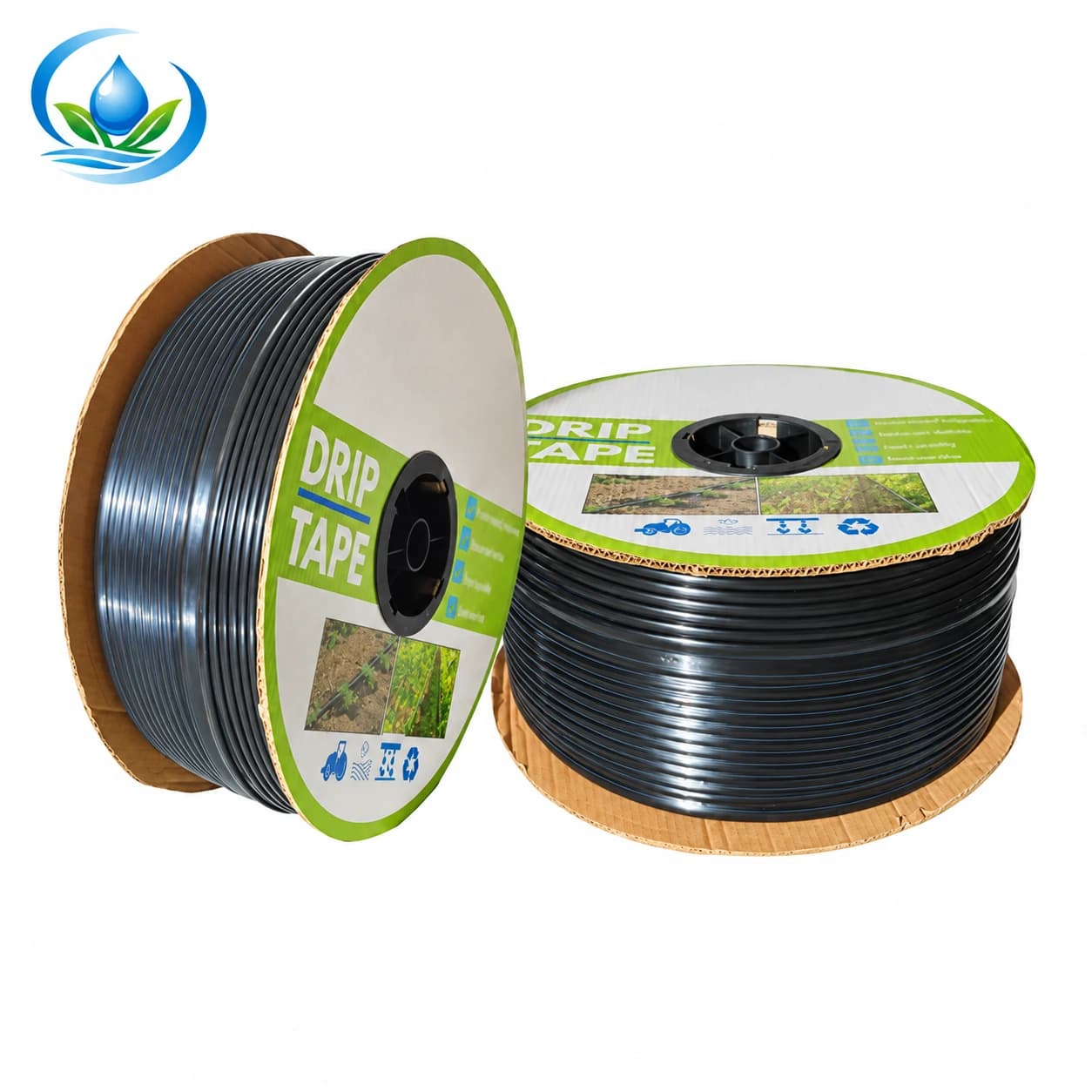
The flat drip tape listing includes option IS-2-C526AC2D85. A sale roll holds 2,000 m of material; its outlets are 30 cm apart, its wall is 0.2 mm thick and its nominal diameter is 16 mm. Those fields identify a particular offered material. They do not reveal the discharge of its exact outlets, an approved operating pressure or a maximum single lateral length. Obtain those model-specific data before calculating how many flower beds can run together. A roll quantity is not permission to operate one lateral for the entire 2,000 m.
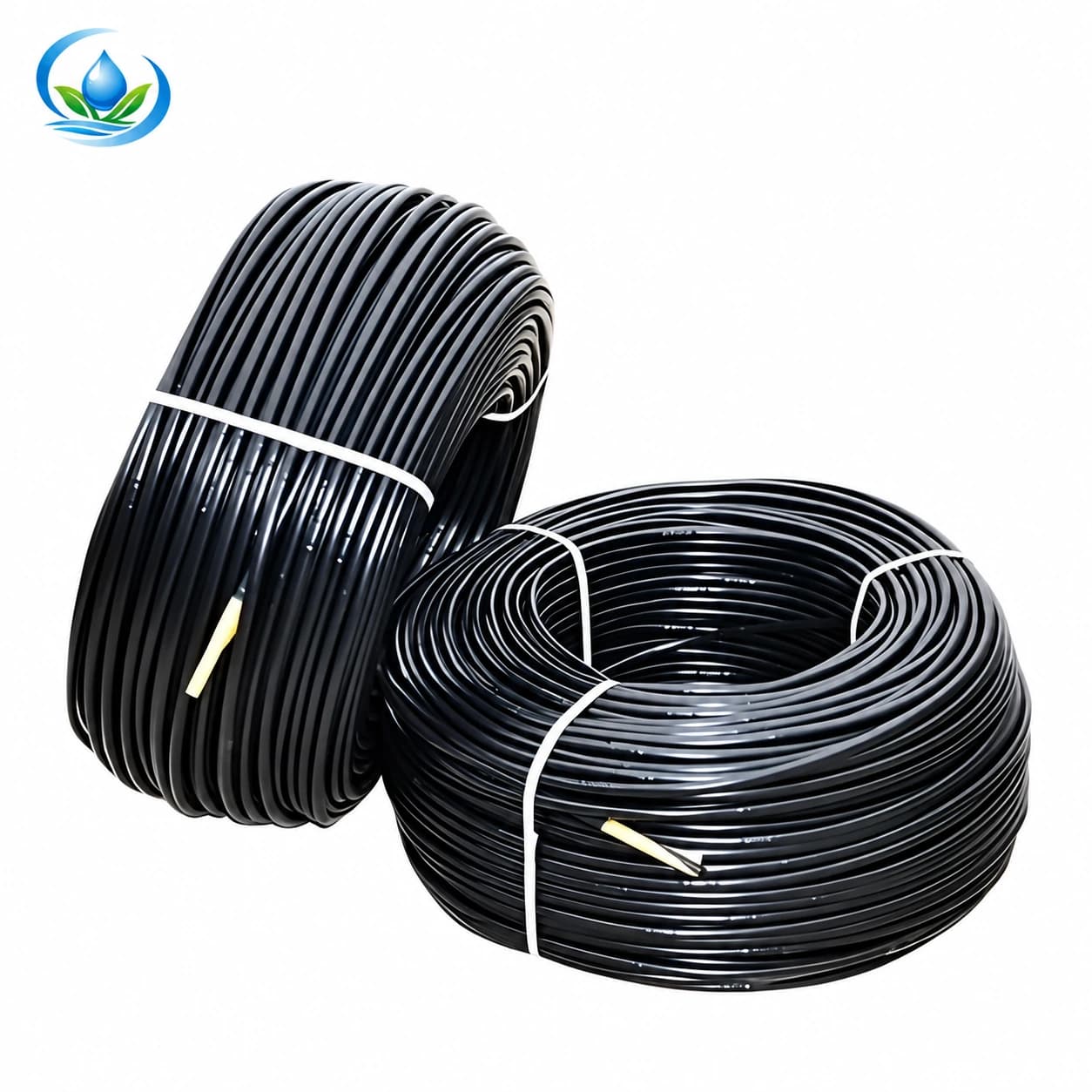
The inline drip pipe offers option IS-3-8CDA6B18CD. It comes in a 500 m sale roll, with a listed 2 L/h nominal outlet option and 30 cm between emitters; the round pipe has a 0.8 mm wall and nominal 16 mm diameter. The 2 L/h is an option detail, not a measured discharge in this flower bed. The roll length does not certify a 500 m installed run; the listing does not make this option pressure-compensating or automatically fit an old tape connector. Its round construction may suit a different handling plan, but that preference must be tested against the bed and exact connection.
The shared “16 mm” and “30 cm” labels do not make the two lines equivalent. Tape and round pipe have different walls and potentially different matching fittings. A 30 cm outlet interval is not a 30 cm plant-spacing instruction or proof that a flower row will be wetted across its width. The roll-label comparison guide helps keep diameter, wall, outlet interval, length and flow basis in separate fields. For this purchase, add two field observations to that label card: which saleable flowers were wetted by irrigation and which rooted positions received water.
Run a small trial that answers both questions
Select a short, representative harvest bed rather than the easiest empty end of a field. It should include the soil, crop stage, supports and access pattern that the full order must serve. Keep its current water-source, filter and control arrangement recorded. Fit one identified line option using the exact product instructions and compatible confirmed connections. Check the permitted pressure and flow for the operating group rather than using a generic tape setting or the value from another seller's flower-bed design.
Before the trial, set an observation card with two columns. In the first, list named bloom and leaf positions likely to receive existing irrigation spray, including any marketable edge row. In the second, list soil checks near and between outlets and at the first and far harvest rows. Write down weather, recent rain or dew, the previous irrigation event, which valves are allowed to open and the active crop stage. This prevents an already wet blossom from being attributed to the new line and an already moist soil profile from being counted as its delivery.
Operate only the approved group under its intended conditions and observe leaks or water reaching flowers from the line, fittings or adjacent equipment. Follow the line's normal inspection and shutdown instructions. Check the previously named flower surfaces during and after the event, then inspect the rooted soil at the agreed positions and time appropriate to that soil. Record a near and far outlet observation if the method permits it. The result should say, for example, “no new irrigation water observed on named blooms, but the outer root-row position remained dry,” rather than declaring a complete success from dry petals alone.
If flowers remain damp, determine whether the line, a leaking start, an overhead neighbour, rain or dew supplied that water. If roots remain dry, examine line position, blocked outlets, running pressure and the actual soil pattern before repeating with a revised arrangement. If water pools at the line while far positions stay dry, extending runtime is an incomplete response. Correct the observed delivery problem and repeat the same positions. One favourable moment cannot prove season-long quality or uniformity across every bed.
Decide for the current crop stage, then revisit the next
The choice made for transplants may need review once buds and open flowers become the saleable product. A mature canopy can hide the line, change where accidental spray lands and block access to the end connection. The date of harvest alone is not a universal instruction to stop or continue irrigation. Follow crop and soil need, and note whether nearby beds at other stages share the same valve. The staggered-planting control guide helps separate changing row membership from a line's physical route.
Propagation mist has another purpose. It may be used to manage air or exposed cutting leaves before roots are established; it should not be treated as evidence that a soil-grown flowering bed receives adequate root water. The mist-versus-root-zone guide distinguishes air, leaf and growing-medium observations. Here the product decision concerns a commercial cutting bed and avoiding routine irrigation contact with saleable blooms while checking soil delivery. A greenhouse may legitimately retain a separate mist or climate arrangement for another stage.
At the next cutting cycle, compare the same named observations. Rain, dew, irrigation spray, line leakage and postharvest handling can change independently. Record whether the new line stayed in place after weeding, supporting and harvesting, and whether the rooted soil still responds near and far. The trial establishes a basis for this bed under recorded conditions, not a disease-prevention claim or a guaranteed gain in vase life, stem length or saleable yield.
Order from the accepted trial, not from bed area alone
Once a line passes both the flower-surface and rooted-soil checks, measure each actual installed route and count the independent bed starts and reachable ends. List the exact roll option, required compatible starts, closures and any separately verified valves or repair pieces. Keep installation quantities distinct from spare lengths and note which beds share a permitted operating group. For the flat tape, obtain the missing outlet discharge and operating limits before finalizing hydraulic quantities; for the inline option, use its 2 L/h nominal outlet only within the documented design case.
Check each selected product page for its current price, sale unit, available options and delivery details. If an option cannot be ordered directly or a connection, flow or pressure datum remains unclear, send Store support the complete option code, existing mating part and the two-column trial record. On delivery, compare roll labels with the accepted options before cutting all beds. A useful purchase is the line and matched parts that supplied the tested flower soil while avoiding unnecessary irrigation contact with the harvestable surfaces during the observed event.
Before you order
Compare this guide with the specifications for your exact product, selected option, water supply and field conditions. Your equipment requirements take priority over a general example.
Compare irrigation products