Raised Bed Irrigation: Reach the Seed Row During Germination
Test moisture at the actual shallow seed rows before choosing existing drip tape, an approved line change or a separately matched temporary micro sprinkler.
Published by IrriNex Store
Raised bed irrigation for a directly seeded market-garden crop succeeds only if water reaches the soil around the actual seed rows. A dark strip below drip tape, or a damp aisle beside the bed, cannot answer that question. Before ordering another line or a micro sprinkler, mark the sown rows, check the shallow seed zone at representative places, and compare what the existing equipment delivers with what the crop plan requires during emergence. Mark one observation point beside the tape and another across the same sown bed; compare soil at the actual seed layer before buying temporary spray. A raised-bed seed-row moisture check samples the sown layer itself, not only the darker soil beside the tape.
Small seeds make this a practical purchase decision rather than a choice between two product categories on a shelf. A bed may have sound drip tape for its later crop stage yet leave a newly sown outer row dry near the surface. Another bed may already be wetted adequately by that same type of tape. The soil, bed shape, sowing pattern and operating conditions determine which result occurs. A short observed trial is more useful than assigning one method to every raised bed.
Does raised-bed drip wet the actual direct-seeded row?
Start with the grower's crop and seeding plan. Record each bed identifier, crop or variety, sowing date, row positions, seed lot, intended sowing depth and any covering or surface treatment that affects inspection. Use the crop's own planting guidance for depth; neither a tape outlet interval nor a sprinkler radius supplies that agronomic number. Mark which sections are already sown and which will be seeded later, so an operator does not mistake an unplanted strip for a dry production row.
Draw the top of the bed as the crew sees it: planted strip, shoulders, tape positions, water entry, slope and any frame edge. Include the head and far end of a long bed if they behave differently. The drawing does not need a standard bed width. It needs to show the distance between each real seed row and the nearest source of water, plus the points where a representative moisture check can be made without damaging the sale crop.
Keep sowing quality separate from irrigation performance. A missing stand can also involve seed viability, temperature, seed placement, surface conditions or pests. A wetting trial diagnoses the water route, not every possible cause of emergence. If the crop plan or seed supplier calls for a particular seedbed condition, use that instruction when judging the trial.
Check shallow seed-zone moisture, not only a dark tape stripe
Choose checks on a representative bed before running the equipment: beside the tape, in each intended seed row, between rows and near a shoulder if it carries crop. Include near and far positions and any texture or elevation change that growers know affects wetting. Record initial conditions. Then observe after the normal operating arrangement has delivered water and, where relevant, after water has had time to redistribute in that soil. Use the same observation positions when comparing options.
A small inspection opening beside a marked sample row, a suitable shallow probe or another locally validated method can reveal the condition at the sowing layer. Avoid digging through production seed or interpreting a single handful as the whole bed. Record whether the soil around the row is moist, still dry, saturated or visibly disturbed. The purpose is a spatial comparison across intended seed positions, not a universal moisture percentage. University of Minnesota Extension's vegetable-irrigation guidance explains why moisture in the upper profile matters during germination; its regional schedules and soil thresholds are not settings for this field.
Surface colour is only a clue. Water can enter near an emitter and move downward while a nearby shallow row remains dry. A bed top can also look damp immediately after application while the seed layer below a crust or cover behaves differently. Conversely, a less visible surface mark does not prove that the row is dry. Compare the actual shallow layer with the planted pattern. If the result differs between the middle and edge of the bed, preserve those separate observations instead of averaging them into one pass or fail.
Check for excessive application as well as shortage. Ponding, flow along the shoulder, wash into the aisle, displaced fine seed or a sealed surface can make an apparently wet bed unsuitable for the intended planting. These signs call for a crop-specific review of application and seedbed condition. They do not justify a blanket increase in pressure or duration. Repeat a trial after correcting an equipment fault, because a blocked outlet or a leaking connection can masquerade as an unsuitable irrigation method.
Give the existing drip tape a fair field test
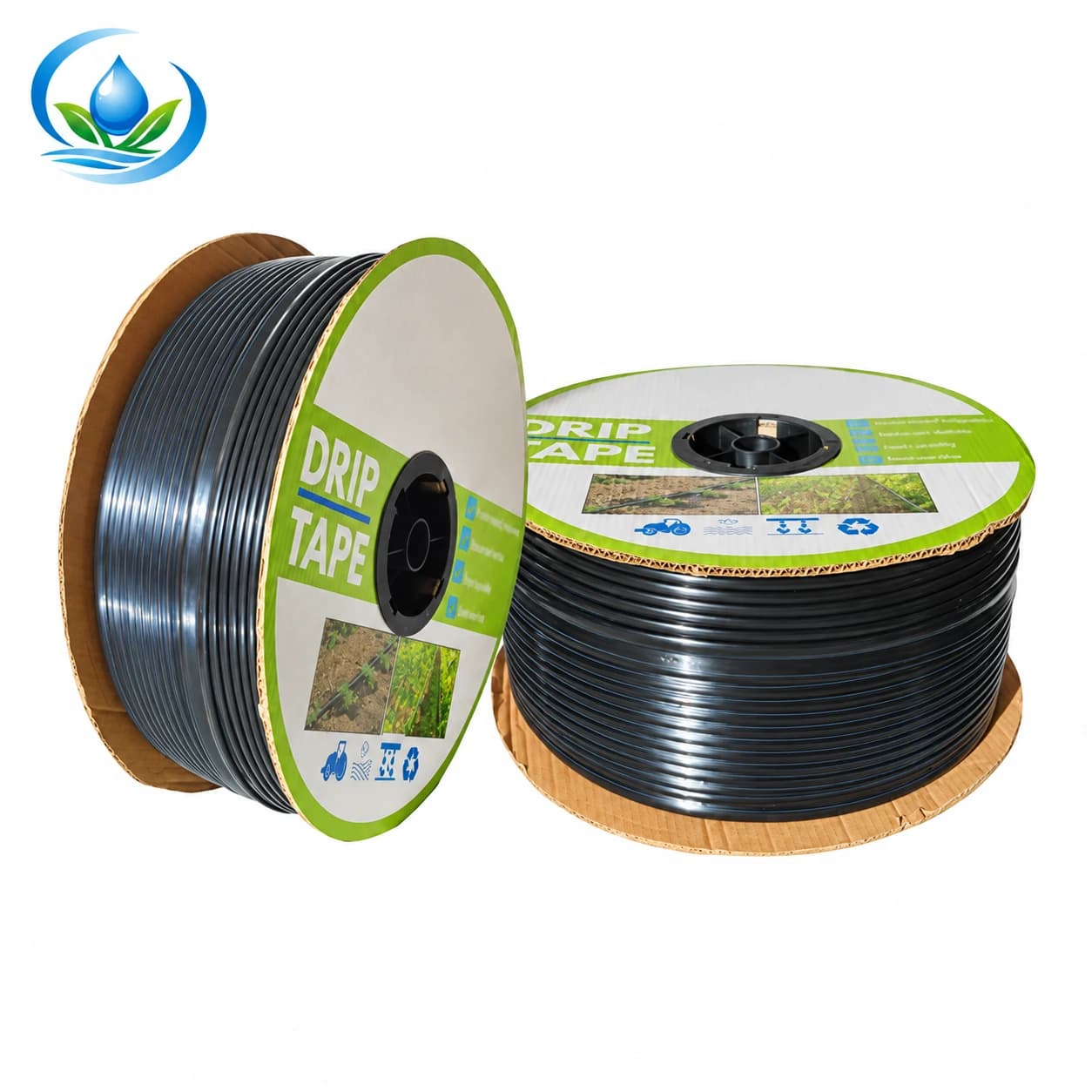
If tape is already installed, first identify its exact option and normal operating group. The flat drip tape listing includes a 16 mm, 0.2 mm wall, 30 cm emitter-spacing option sold as a 2000 m roll, SKU IS-2-C526AC2D85. Those figures identify a purchase configuration. The roll length is not a permissible single lateral length, and 30 cm between outlets does not state how far water will travel sideways or upward to a particular seed row. Obtain the selected tape's emitter discharge and working limits before calculating an operating block.
Run the tape under the filtration, pressure and valve arrangement intended for that bed. Confirm that near and far outlets actually discharge and that the line is not twisted, leaking or obstructed. Then inspect the sown layer at the mapped positions. If the shallow rows receive suitable moisture without excess at the tape or bed edge, retaining the present tape may be the simplest purchase choice. Keep its location and operating observations with the bed record so the next planting is assessed against evidence rather than memory.
If one row is dry while soil directly beneath the tape is wet, extending the event is not automatically the correction. Additional water may move deeper below the tape before it reaches the shallow row. Assess whether a permitted position change, a different number of lines, or a revised bed arrangement could place water where needed. Check the exact tape's installation and handling instructions, compatible starts and ends, active outlet count, pressure and source capacity before changing the layout. The raised-bed feed and crop-turnover guide helps keep the supply connection accessible while emitting lines move between plantings.
Do not treat a line move as only a surface-layout adjustment. An added lateral increases simultaneous demand; a shorter or closed bed changes the group seen by a pump or regulator. Confirm the allowed operating combination and measured delivery after the modification. For the separate question of how a changed emitter arrangement affects event length, use the runtime review after changing emitters. The seed-row decision remains whether water reaches the required shallow position under an acceptable event.
Consider temporary micro spray only for the observed gap
Where an approved drip arrangement cannot give the newly sown positions a suitable shallow pattern, a separately matched temporary overhead arrangement is one option to test. The purpose is to wet the identified seed rows gently and evenly enough for that crop plan, without washing soil or seed out of place. This is not a rule that every small-seeded bed needs overhead water. The result of a trial, not the presence of a sprinkler in a catalogue, determines whether the option helps.
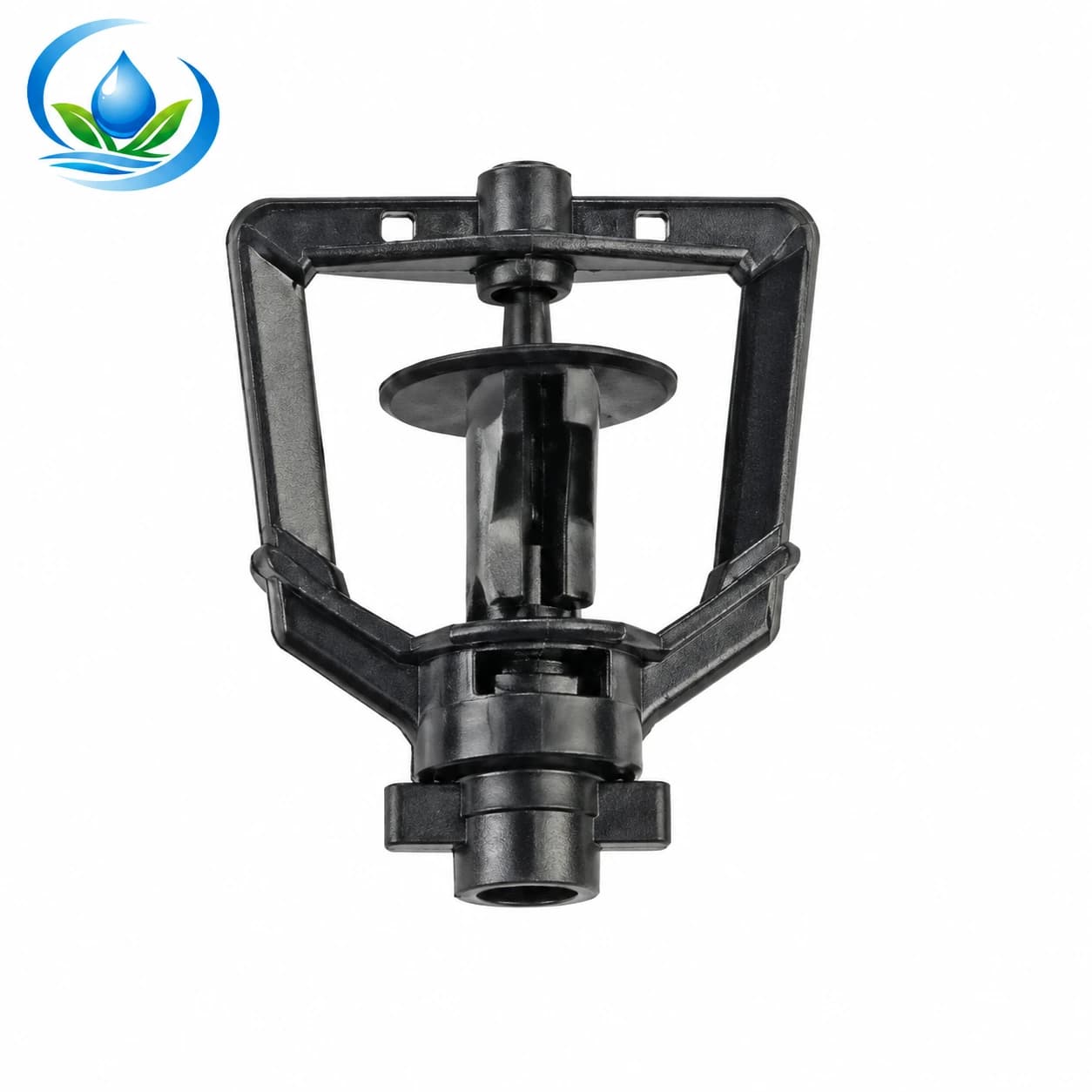
The 251TDC085 standing rotary micro sprinkler is a head with a 0.85 mm nozzle. Its catalogue reference is 40 L/h at 2 bar and a 3 m spraying radius measured at 2 m above ground in windless conditions. These are reference performance details for that head, not a designed spacing, a guaranteed seed-row wetting width or a claim that a stake, tube, connector, filter and control valve come in the same sale unit. Check the selected head and every separate supporting part in the proposed assembly before ordering.
Plan the overhead trial as its own compatible operating case. Establish the source's available flow and pressure while the proposed group runs, the head's documented operating requirements, suitable filtration, feed connections, supports and control arrangement. A 2 bar sprinkler reference must not be supplied by simply raising pressure on an existing low-pressure tape branch. Nor should tape and heads be joined in one unchanged branch on the assumption that both will then perform as specified. A separate correctly matched group may be needed; confirm the exact design.
Place sample observations where the seeds are, including positions that might receive less spray near a bed edge or a blocked side. Wind, supports, nearby foliage and the actual installation height can change the field pattern from the catalogue reference. Watch for movement of seed, pooling or water leaving the cropped strip. A simple distribution check can identify an uneven overhead pattern; the sprinkler catch-test guide explains that measurement task. Pair collected-water observations with the shallow soil check, because a container reading above the bed is not itself proof of water around the seed.
Compare the three choices on the same bed
Keep one decision sheet for the representative bed. For unchanged tape, record which actual rows were reached at the shallow layer, which were not, and whether the event caused unacceptable deep wetting or runoff elsewhere. For a permitted tape-position revision, use the same inspection points and note the new line count and operating group. For a separately matched micro-spray trial, record the support layout, operating condition, seed movement and shallow-row result. Change one material factor at a time when practical, so the crew can tell which alteration improved coverage.
A passing result means the water route suits the intended seed rows under the observed crop and field conditions. It does not certify a germination percentage. A failed result should name the location and symptom: for example, a dry outer row with a wet strip under tape, or excess application beside a head with little water at the far seed row. Such descriptions lead to a specific equipment question. “The bed needs more water” hides the pattern that the purchase must correct.
Compare costs and work only after the field result is clear. Reusing acceptable tape avoids a separate setup and its labor. Moving an approved line may be reasonable when the new position serves both establishment and later growth, but the group demand and crop-work access must still pass. A temporary head arrangement adds supports, connections and a transition back to the later irrigation method. Count those pieces and the work to place and remove them rather than comparing head price with tape price alone. Check the current selected option, price, sale unit, availability and delivery before buying.
Recheck the route as seedlings establish
The first water pattern is not a season-long schedule. As emergence and root development change, inspect the crop and the soil layer the young plants are actually using. The grower can then decide whether the establishment arrangement still fits, whether tape now reaches the active roots, or whether the operating group should change. Use observed coverage and the crop plan instead of a fixed number of days after sowing. Seed lots, weather and soil conditions can make the same calendar age a poor trigger across different beds.
Keep separately planted beds identifiable. A newly sown bed may need a different timing decision from a neighboring crop approaching harvest even when both connect to the same distribution line. The staggered-planting zone guide covers that separate control question. This bed-level check asks which method reaches the seed row; it does not grant two incompatible crop groups permission to share a valve or solve the source's hydraulic limits.
For beds under covers, mulch or other surface treatments, inspect according to that crop plan rather than assuming the exposed-bed result transfers. The strawberry drip guide addresses transplants before plastic mulch is laid, a different planting situation. In a direct-sown bed, keep the observation points accessible and use the sowing positions as the reference even if the surface appearance changes during establishment.
Buy from the measured gap
Bring the bed drawing, seed-row positions, current tape identity, operating conditions and paired shallow-layer observations to the purchase decision. If the existing line passes, replace only worn or incompatible pieces. If position is the problem, identify the exact permitted tape layout and matching connections. If a separate micro-spray trial passes, list the specified head together with the verified feed, support, filtration and control parts needed for that operating group. A head alone is not a complete raised-bed irrigation system.
Retain a dated sketch and the representative trial results with the crop record. At the next sowing, the crew can compare a real seed-row pattern with the previous one and check whether soil preparation, row positions or equipment have changed. Choose the equipment that demonstrably reaches the planted shallow zone under the farm's approved operating conditions, then keep checking as the crop develops.
Before you order
Compare this guide with the specifications for your exact product, selected option, water supply and field conditions. Your equipment requirements take priority over a general example.
Compare irrigation products