Drip Irrigation Hose Pipe: Check Sun-Heated Water at Startup
Compare source water, first outlet water and later normal-run water before changing exposed drip feed tubing or its route.
Published by IrriNex Store
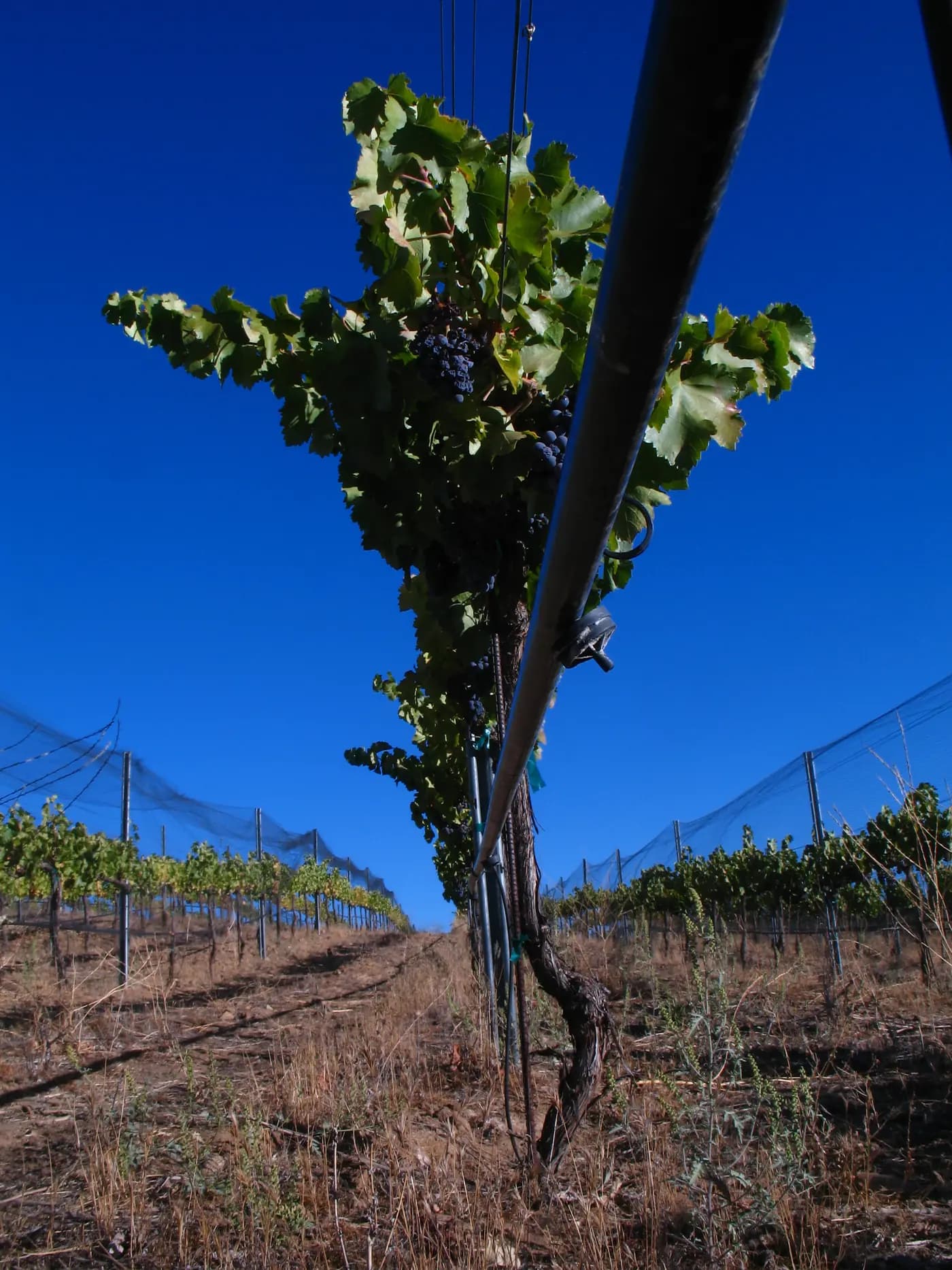
A drip irrigation hose pipe can hold water while a crop block sits idle in the sun. The first water reaching a row at the next start may then differ from the source water that follows. Before buying replacement tubing or changing a feed route, measure the water actually delivered at the start and later in the same normal run. A hot-looking pipe surface cannot tell you the water temperature inside, and a warm source cannot be corrected simply by exchanging one exposed tube colour for another. Record start and later outlet-water readings at the same crop position beside the source reading; a tube surface reading cannot substitute for those water measurements. Drip hose startup water temperature belongs to a paired first-outlet and later-outlet observation at the same crop position.
This is a purchasing check for an operating agricultural drip block. Record which exposed sections may retain water, where the source enters, where a crop receives the first discharge, and the crop team’s own concern about the observed water. The result may support keeping the present line, changing an approved route or protective arrangement, or requesting exact material evidence for a different tube. It does not assign a universal plant-injury temperature or instruct anyone to open a pressurized line.
Measure first outlet water separately from source water
Write down the temperature of water at an existing safe source sampling point, the first water delivered at a representative crop outlet after a sunny idle period, and water at that same outlet after the system has been running normally. Record the time, location and operating group for each observation. “First” means the initial sample available under the permitted sampling arrangement; “later” means a repeat during the same event after the reading has settled for the purpose of your comparison. The later reading is observed, not assumed to occur after a standard number of minutes.
A separate surface reading on a sunlit hose may help locate an exposed section, but it is not a measurement of the water delivered to roots. Infrared instruments see the outside surface and their reading depends on the material and measurement conditions. Use a suitable water-temperature instrument and the installation’s existing approved sampling access. If a reliable sample cannot be taken without dismantling a live joint or exposing someone to water, ask a qualified installer to specify a safe sampling location. Do not judge temperature by touching the line or directing the first flow at a person.
Consider two hypothetical records. In one, source water is 21°C, initial outlet water 31°C and later outlet water 22°C. That pattern raises a specific question about retained water or warming along the exposed route; it does not prove crop damage. In another, source water is 28°C, initial outlet water 29°C and later outlet water 28°C. The source is warm before the field line, so buying a different colour of short downstream tube may not address the main condition. These numbers illustrate interpretation, not acceptable crop limits or expected Store product performance.
Sun-heated startup water or warm source: which route matters?
Select a representative block that has been idle under the conditions causing concern. Note the previous stop, weather and sun exposure, whether the source was moving water through a shared main during the idle period, and which valves are allowed to run together. A feed that remained full and still is a different starting condition from one that drained or was continuously supplied. Map the source, common feed, branches and far crop outlets. Mark portions lying in direct sun and those already protected by the existing design.
Arrange observations within the crop’s planned irrigation event, without adding an extra event just to discard water. The operator or adviser should decide how to prevent a concerning first discharge from reaching people or a crop if the site has already identified that risk. Any diversion or sampling point must be part of an approved system arrangement with a suitable receiving route. An open-ended maintenance flush is a different operation; do not treat its discharge time as proof of the water temperature at an emitter under normal closed-end use.
Use the same instrument and comparable sampling method at the source and outlet when practical. Allow for the device’s response and read it according to its instructions; record what was measured, not simply “hot” or “cool.” If different outlets start at different times, record each location’s actual first sample rather than applying the nearest outlet’s result to the whole block. A near row and a remote branch can have different retained water paths. Repeat under another representative sunny idle period if one event was affected by an unusual source or schedule change.
Check delivery while you measure. A blocked outlet, leaking connector or unfilled far branch can distort the comparison by changing where water travels. Record the normal running pressure or flow observations available for that zone and whether the selected outlet actually discharged. The pipework leak-location guide handles a suspected escape from the line. The agricultural pipe buying guide covers size, pressure class and order quantities; this check adds the timed temperature of water emerging from the installed route. Keep hydraulic faults visible as separate questions instead of labelling every delayed outlet a heat problem.
Trace the retained route before choosing a remedy
Draw the length and position of the exposed common feed, each branch and the first emitter-bearing line. Note pipe identity, outside diameter, wall if known, joint type, support, sun exposure and parts that cross traffic or need daily access. Water may be retained in a manifold, a short feeder, a long PE run or the lateral itself. A black section near the crop may be visually prominent but have less stored water than an upstream route. The field map narrows the component to investigate; it does not predict a safe disposal duration.
For example, a market-farm block may have a source under a covered pump shelter, then a black blank PE feed along a sunny path to a shaded crop row. If source water and later outlet water are similar but the first outlet water is higher, the exposed feed is a reasonable review target. If the temperature stays elevated after the initial period, check upstream source and moving-water conditions before replacing that feed. The comparison follows the route and the readings, not the colour alone.
Do not turn pipe diameter and length into a universal number of minutes to run before crop delivery. Even an ideal calculated full-pipe volume cannot describe branches, incomplete fill, mixing and different emitter discharge paths. The useful purchasing record is which section was actually observed to be exposed and which outlet changed temperature during a normal event. If the result varies across a block, record near and remote outcomes rather than averaging them into one reassuring figure.
If a route change is proposed, check the same crop-work and connection constraints as any pipe job. Moving a line out of sun could put it in a vehicle path, create an inaccessible joint or force a tight bend. The PE coil route guide addresses uncoiling and corners; the present decision concerns whether the changed route improves the observed start-water condition while remaining mechanically and hydraulically acceptable. Obtain the exact pipe maker’s permitted installation and protection instructions rather than assuming burial depth or a wrap that fits every material.
Compare listed tubing without inventing a cooling rating
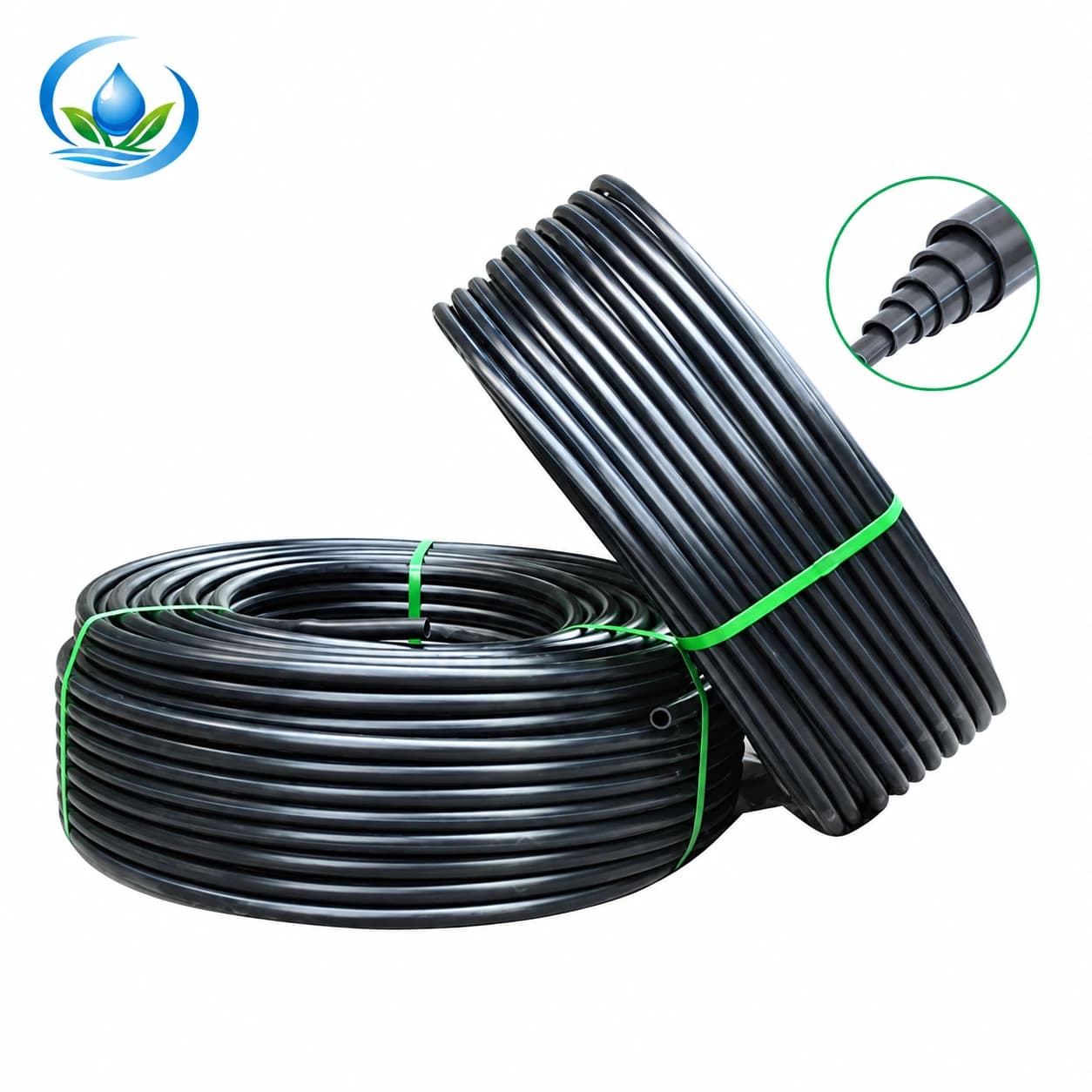
The Store blank PE tubing has exact listed options: 16 mm outside diameter with a 1.0 mm wall, 20 mm with a 1.5 mm wall, and 25 mm with a 1.8 mm wall. Those dimensions identify purchase options and inform connection checks. They do not state an allowable water-temperature exposure, a measured cooling effect, pressure suitability for this specific route or the supplied length. Obtain the chosen option’s current material, operating and installation data before substituting it into an existing feed.
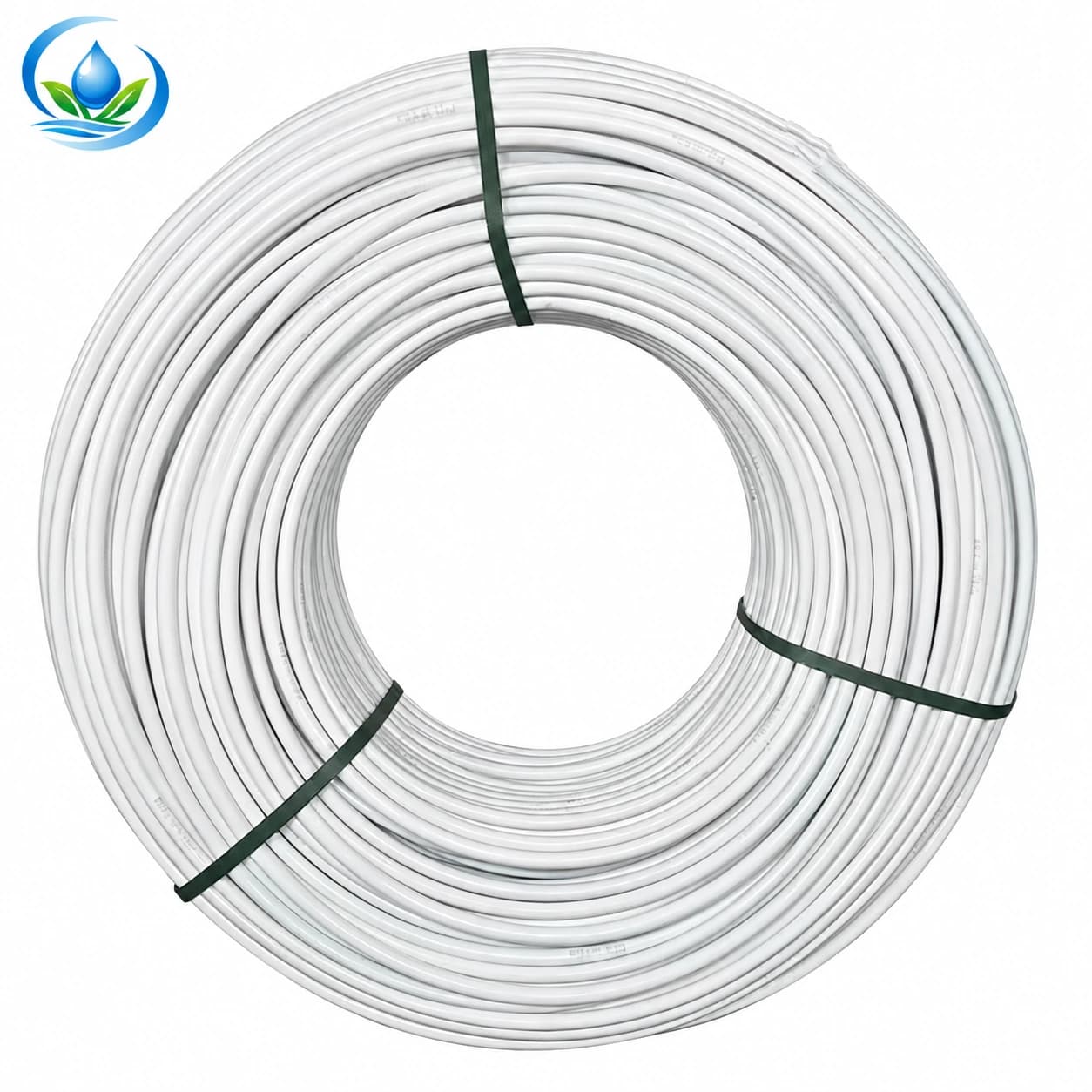
A separate white PE greenhouse supply-tube listing exists in the Store. Its visible white exterior is a real product distinction, but its current Standard listing does not specify the exact bore, wall, pressure class, multilayer construction or measured first-water temperature for your field. It is not interchangeable with a black 16 mm line merely because both are called PE. Request the selected white tube’s complete specification, available sale unit, fittings and evidence for the proposed use before treating it as a replacement.
Manufacturers can design white-surfaced products with more than colour: a particular multilayer wall, a black inner layer, selected resin and tested operating conditions. A reported temperature difference from one manufacturer’s trial applies to its own product and setup. It is a reason to ask for product-specific evidence, not a guaranteed reduction for Store tubing. White outside colour alone does not prove that an interior resists algae or that the line will cool the source water. The actual source-to-outlet record remains the purchasing baseline.
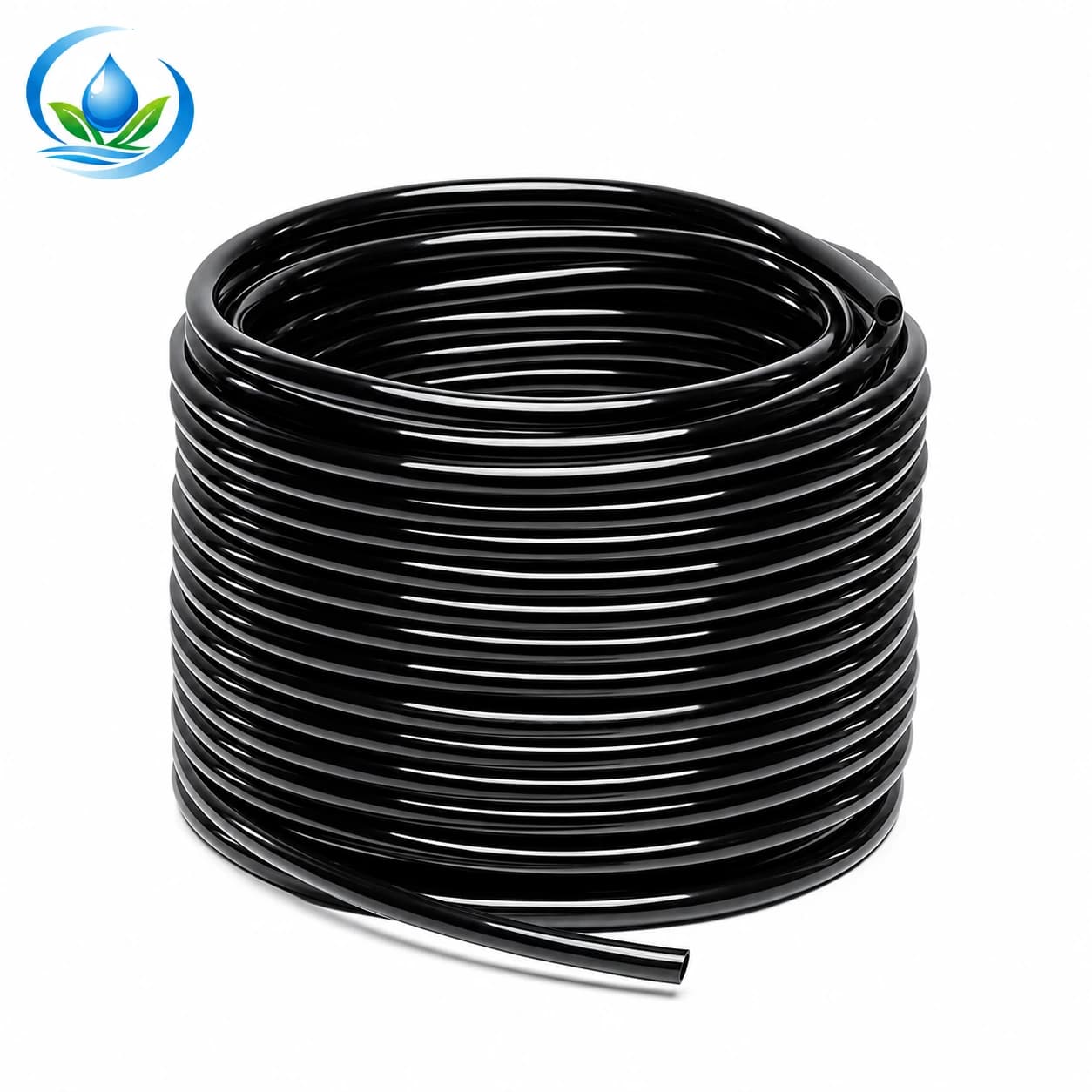
Short micro-distribution tube links may also lie in the sun between a feeder and an outlet. The Store lists paired inside/outside dimensions such as 3 × 5 mm and 4 × 7 mm; these are fit identifiers, not roll lengths or thermal ratings. If observations localize the concern to those last links, check the exact branch and connector compatibility instead of ordering a whole new main feed. If the concern originates in the source, replacing every short link cannot be justified from a surface colour or a photograph.
Evaluate an approved change against the crop and the system
Use the crop manager’s water-temperature and irrigation requirements, not a universal number from a sales page. The same reading may matter differently for a sensitive propagation crop, a mature vineyard and a protected greenhouse bench. Ask the crop adviser what observation would prompt intervention at this stage, where it should be measured, and whether there are other causes of crop response. Temperature alone does not diagnose wilting or poor emergence; volume, timing, moisture in the receiving medium and weather remain relevant.
Changing the time of a normal planned irrigation may be considered only if the crop water window, labor and system controls allow it. A different clock time can change sun exposure but can also change shared source demand or the needs of another block. Record the approved operating group and verify source and outlet temperatures in that actual arrangement. Do not add water merely to push the first portion through, or assume a timer adjustment solves a high source temperature. Any discharge diverted from crop must have a planned destination and a site-specific water-use decision.
Protection or rerouting must also respect the selected tubing’s pressure, UV, temperature, support and joining instructions. An improvised coating, insulation wrap or burial may hide a leak, trap moisture or exceed the material’s permitted installation conditions. A pipe that looks shaded at noon may be exposed earlier in the day; a line protected from light may be inaccessible for service. Have the installer compare the proposed route and protection to the product instructions and the actual crop-work map, then verify the resulting water reading at the outlets.
If the crop concern is really whether water reached the shallow seeded row, use the seed-row wetting guide to examine that location. If a nursery is comparing mist with root-zone supply, the mist-versus-medium guide keeps the outcomes separate. Those decisions are about where water lands and remains. This one is about the temperature of water that arrives at start compared with the source and later discharge; the crop team still needs both kinds of evidence when both are in question.
Turn the observation into a narrow shopping list
Make one sheet for the affected block: source and outlet sampling positions; idle and event times; source, initial and later outlet readings; exposed route sketch; crop stage; existing tube labels; and any delivery fault noticed at the same time. Add the exact section under review, the proposed change and the evidence missing from the candidate’s product data. A single warm surface photograph is not enough to order a new roll, while a repeated, well-located water difference gives the seller and installer a specific route to assess.
For every proposed tube, confirm exact option, material construction, inside and outside dimensions, wall, pressure and temperature conditions, UV exposure allowance, connection method, sale length and included pieces. Keep the white listing and the black PE options as separate entries until their actual specifications and suitability are documented. Check current displayed price, sale unit, availability and delivery for the selected option. If direct checkout is unavailable, ask Store support how to order the exact code and obtain the missing technical information before buying fittings around it.
When a change is approved, record the previous readings and repeat the same source, first-outlet and later-outlet observations under comparable conditions. Check that crop delivery, pressure and access still meet the approved plan. A lower first reading in one event is useful evidence but not a permanent performance guarantee; another source temperature, longer idle period or altered route may change the result. Keep the date, exact product code and installation sketch so the next buyer can tell what was changed and why.
The decision is complete when the farm can explain whether it observed warmer retained water, a warm source, or no meaningful difference in delivered water for its crop plan. Buy only the tubing, connections or approved route work that addresses the measured condition while preserving the required hydraulic service. The first water at the crop, not the colour or feel of the pipe, is the observation that makes this purchase reviewable.
Before you order
Compare this guide with the specifications for your exact product, selected option, water supply and field conditions. Your equipment requirements take priority over a general example.
Compare irrigation products