Drip Irrigation for Strawberry Plants: Check Lines After Row Renovation
Check retained strawberry crowns, the changed row and actual water delivery before keeping, repairing or replacing a drip line.
Published by IrriNex Store
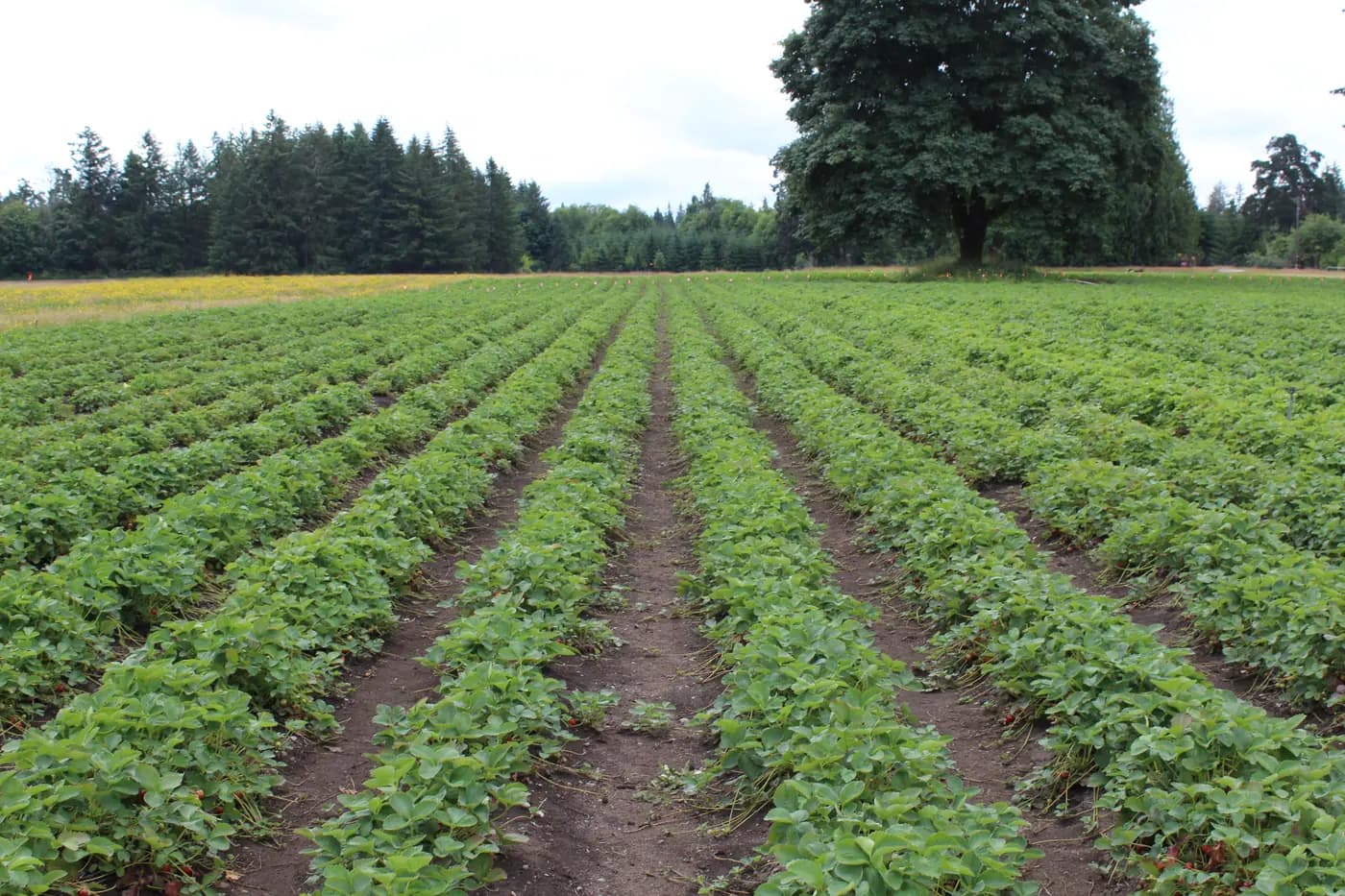
Drip irrigation for strawberry plants needs a fresh field check after an established June-bearing row is renovated. The final harvest ends fruit picking, but the surviving crowns and newly rooting daughter plants still need a workable water route for the retained planting. Mowing, narrowing the row and removing old growth can expose a line that is no longer beside the plants it was meant to serve, or reveal a cut that the old canopy concealed. Before ordering tape, identify the living row that remains, trace the existing line and check delivery to its rooted soil. Place the living crown strip and as-found tape route on the same row sketch; a line near the old canopy may miss the roots retained after renovation. Strawberry drip tape after row renovation must be traced against the living crown strip before the old route is retained.
This decision applies to a bearing-year, perennial June-bearing planting that the farm intends to carry into another season. University of Minnesota Extension's strawberry-renovation guide distinguishes that work from the planting year and from day-neutral strawberry production. It includes irrigation among the tasks after harvest. Its regional dates, row widths, fertilizer and crop-treatment details belong to local crop management, not to a universal Store equipment setting. The buyer's task here is narrower: decide whether the material already on the renovated row can still deliver water to the plants being kept, or whether a named repair or replacement is required.
After strawberry-row renovation, where are living crowns and drip tape?
Start with the grower's renovation plan and the actual field, not the presence of black tape on the soil. Record the block ID, crop type, whether the planting is in a bearing year, and which rows the farm will retain. A last picking pass does not by itself prove that renovation has been approved; one block may be taken out of production while a neighboring June-bearing block is kept. Day-neutral plants may have a different harvest and renewal plan. Put those decisions on the row sheet before counting irrigation parts, so a line is not bought for plants the farm will remove.
Mark the old row edges, the existing water entry, accessible joins and the line end while the plants are still identifiable. Then record the narrower living strip selected during renovation: surviving crowns and daughter plants that the crop team expects to root or keep. A runner lying across an aisle is not automatically a new planting location. Likewise, the old centre of a wide row is not necessarily the centre of the retained strip. Measure the actual relationship between those living positions and the emitting line after the operation. Use fixed row-end references and a dated sketch so another worker can repeat the observation.
The strawberry tape guide for new plastic-covered beds is useful when a new planting is about to hide its line. This older planting presents a different question. Its crop already has rooted crowns, a history of watering and a line that may have crossed the area now being cultivated. Do not copy a new-bed tape position or plant spacing onto it. Where the renovation crew needs to mow or narrow a row, agree a safe equipment route and locate the existing water parts before any implement approaches them.
Recheck the retained strip after mowing and narrowing
Walk the header side and both ends of each retained row. Photograph the line where it enters, where it passes near the planned narrowing edge, and where it closes or is serviced. Note whether the emitting material is flat tape or round inline pipe, its readable option or roll label, the installed length and any earlier splice. Add the valve group that actually runs it. If mulch, foliage or soil hides a section, mark that uncertainty; do not pull a buried or snagged line to make the map look complete. A pre-work record lets the crew tell old damage from damage found after renovation.
Look for route conflicts that the change in row width makes obvious. A line that once lay inside the plant mat might now lie in a wheel path, on a cultivated edge or beside a surviving crown without wetting its growing root area. An inlet may be reachable before mowing but covered by cut material afterward. A line end may be on the side of the bed that will be shaped. Mark each conflict at a named row location. A vague note saying “tape in the way” cannot tell a later buyer whether the remedy is a protected route, a single joint, a replacement length or a redesigned section.
Shut down, isolate and relieve pressure by the installed system's procedure before anyone cuts, lifts or disconnects a line. Confirm with the field lead which controls feed the work area and which adjacent rows must remain available. The planned line-work isolation guide helps define that boundary. Do not use the tape as a visual guide for a cultivator while water runs, or pinch a tube to stop water temporarily. If the route cannot be located without disturbing crowns or damaging a connection, resolve that access problem with the crop and irrigation operators before work proceeds.
Recheck the living strip and the line after renovation
When the approved crop work is complete, redraw the actual edges of the retained row rather than relying on the pre-work sketch alone. Note the surviving crowns, rooted daughter plants where identifiable, new foliage and any sections the grower has decided not to carry forward. Identify the emitting line's new position relative to those plants. If a section has been lifted or moved under an approved method, record the change and both connection points. A different visible row width does not automatically require two lines, a closer outlet interval or a longer run; the soil wetting result and equipment limits decide what is useful.
Inspect the line without asking appearance to prove its performance. Record cuts from tools, flattened or sharply folded portions, pulled starts, worn old joints, blocked or displaced ends and outlets that have become buried in disturbed soil. A damaged connector can leak while the adjacent tape remains sound. A continuous-looking wall can still have weak delivery at some emitters. Name each defect by row and measured distance from a fixed end. The field leak-location guide explains how to distinguish a wet spot from the first point where water escapes before choosing a repair.
Keep the crop check separate. A crown injured during renovation, a daughter plant that has not rooted, compacted soil, weeds and a plugged outlet can all produce poor-looking plants for different reasons. Do not promise that a new line will restore a plant that the grower has removed or judged unproductive. Where the retained strip looks sparse, have the crop team decide which rooted positions still matter. Then ask whether the existing irrigation path serves those positions. The answer may differ within the same block, so retain row IDs rather than averaging all rows into one “renovated” condition.
Observe delivery at the plants being retained
Return the system to service only by its approved startup procedure, under the normal filtration, pressure regulation and valve combination intended for this block. Record the operating group and recent rain. Check accessible joints and the line wall for leakage from a safe position. Compare representative near and far outlets by the method allowed for the selected material, using equal observation conditions. A wet line end alone does not establish that every integral emitter is working. The uneven-emitter-flow check helps distinguish a local outlet from a group-wide restriction before the crew orders material.
At marked surviving crowns and representative daughter-plant positions, examine the relevant rooted soil carefully before and after the normal event. Include plants near an outlet, between outlets, near the inlet and toward the far end. Where the field soil changes, add a contrasting spot. A damp strip under the old tape does not demonstrate that the newly retained plant band is reached. A dry-looking aisle beyond the living row does not prove failure. Record the starting soil condition and the observation time so the next event can be compared fairly instead of treating one photograph as a complete moisture map.
If a position is dry, separate four possibilities before changing the whole block: the selected crop position is outside the intended wetting strip, the line is delivering unevenly, the operating group is not supplying the required pressure and flow, or the soil and weather call for a different crop irrigation decision. If a position stays saturated, look at rainfall, drainage and nearby leaks as well as event duration. Do not prescribe one number of minutes or a standard weekly volume from a product label. The local strawberry crop plan determines how much water is needed; the equipment trial determines where this installed line actually puts it.
Check the next normal run after nearby cultivation or traffic, too. A line that passes immediately after it is reconnected might be shifted by subsequent work, and an accessible end can be covered with debris. Record whether the same marked crowns and far-row positions continue to receive suitable water under the intended operating group. For a persistent fault in an identified tape section, decide the length that can be repaired using the exact material's method; for widespread wall or emitter damage, a single splice will not make the whole line sound. Keep condition and crop-wetting evidence together so the purchase follows a demonstrated gap.
Choose keep, repair or replacement by the row's actual condition
Keep an existing line when it is positively identified, lies on a workable route, remains serviceable and passes the field delivery check for the retained plants under approved operation. That does not require buying a new roll because the harvest ended. Keep its code, route and baseline observations with the renovation record. If a section is too close to the next cultivation path, establish a permitted protected route first; moving a sound line blindly can create new leaks or shift water away from a rooted strip.
For a localized defect, mark the exact cut or failing connection and the sound material on both sides. Identify the product and both mating ends before buying a join. A repair also needs a reachable position and enough material to make the allowed connection without pulling the line taut. Follow the manufacturer's method for removing a damaged section and testing the finished join; a nominal 16 mm label alone does not prove that a lock ring seals a particular wall. The new-tape-to-retained-valve fitting check helps when an old row valve will remain with a replacement tape length.
Replace a failed section when identified sound material and an approved local repair cannot make a suitable run, or when repeated damage makes further small fixes unreasonable. Measure the needed installed route from the real row entry to the service end, including permitted connection tails. Do not order by the old full-row length if the cultivated edge or supply point has changed. The used-tape allocation guide deals with a recovered roll being assigned to another planting; an installed line after renovation has its own crown map and in-place performance evidence. Either case still needs a verified exact identity before a replacement is treated as compatible.
Read the two line listings as different purchases
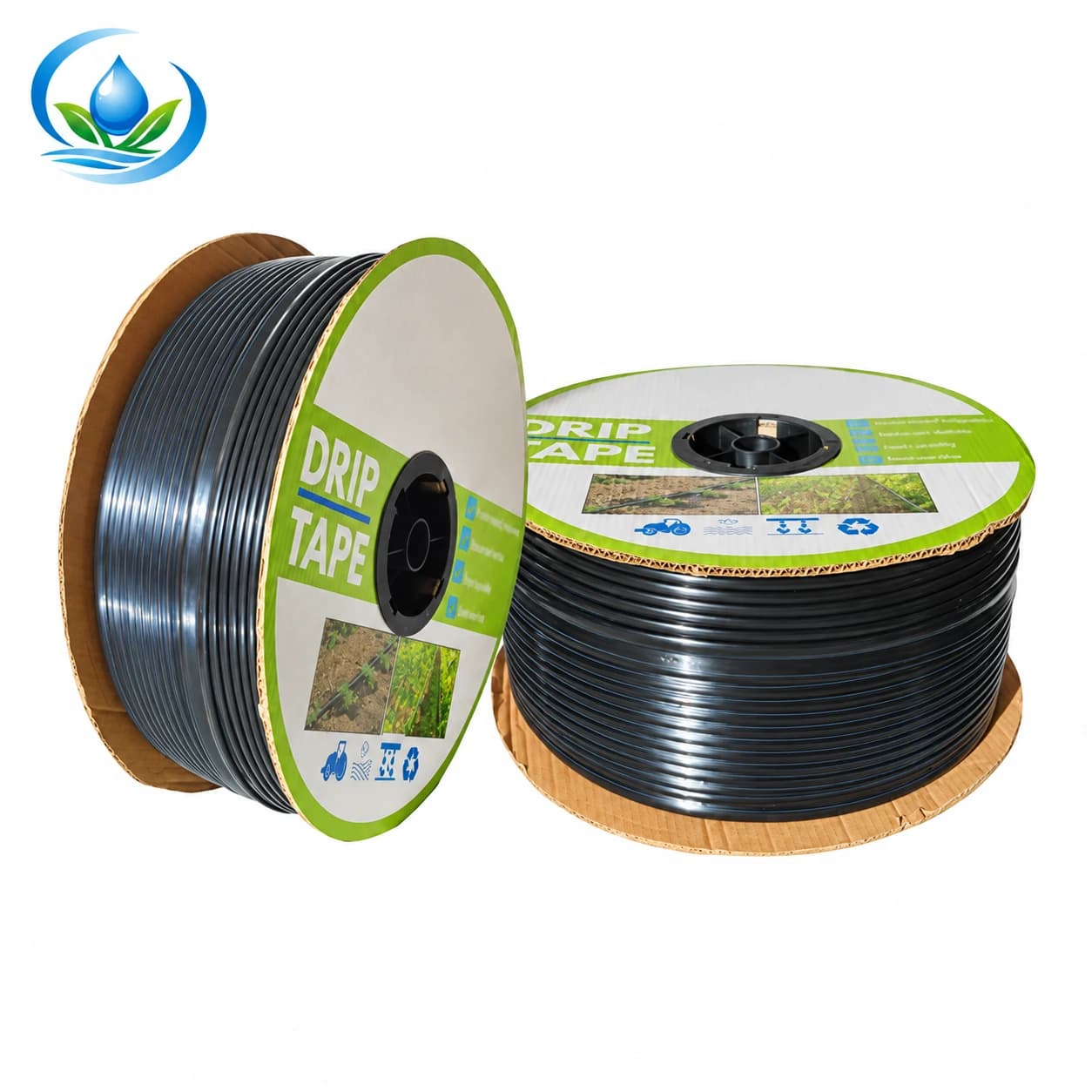
The flat drip tape option IS-2-C526AC2D85 is sold as a 2,000 m roll. Its nominal diameter is 16 mm, its wall is 0.2 mm and its integral outlets are 30 cm apart. These values identify a candidate material for a documented like-for-like repair or new run. They do not tell you this field's permitted pressure, exact outlet discharge, maximum installed lateral length, or how many years that option will tolerate renovation work. Obtain the chosen model's operating and fitting information before using it in a perennial row. The sale-roll length is material quantity, not an approved continuous run.
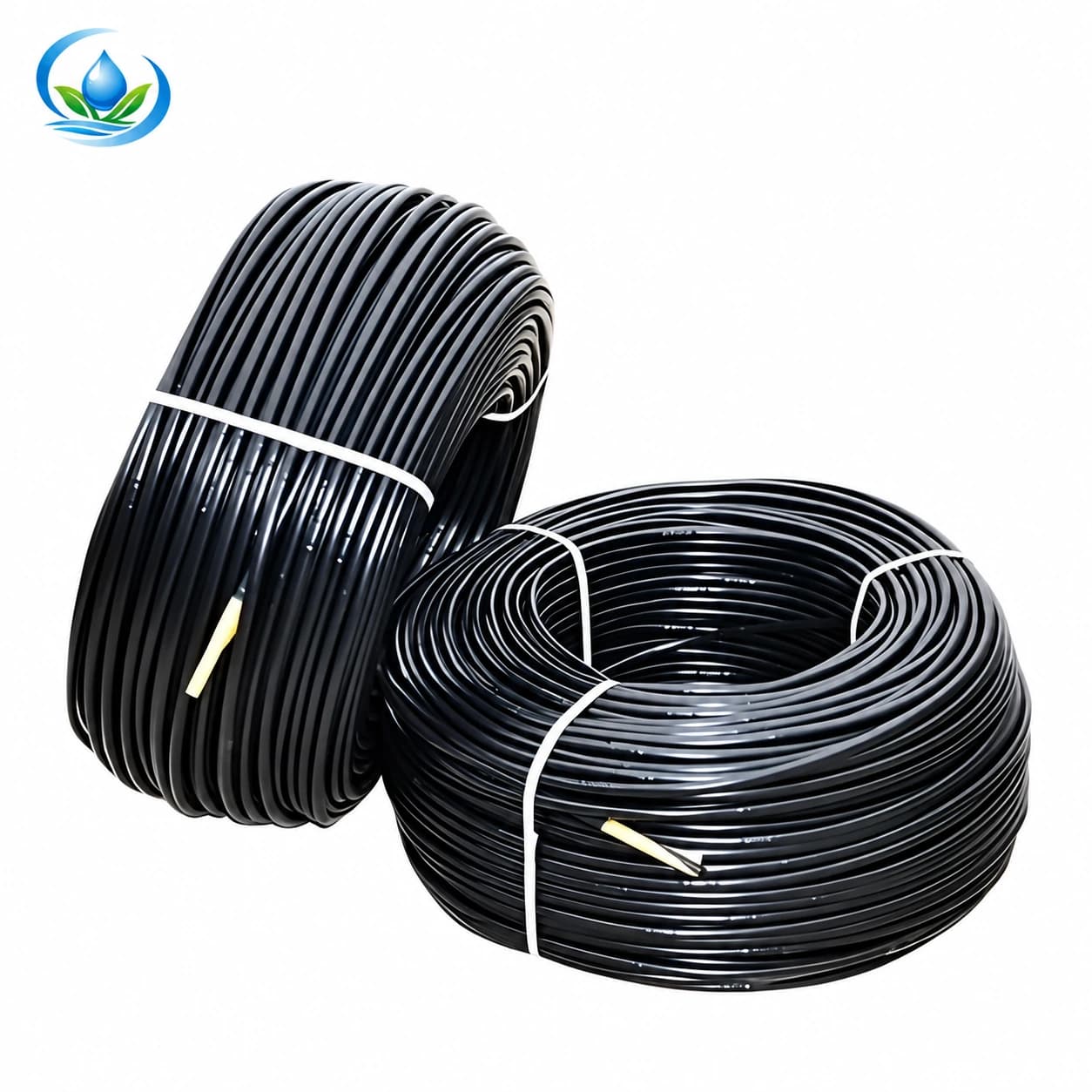
The inline drip pipe option IS-3-8CDA6B18CD is a different construction sold in a 500 m roll. It has a nominal 16 mm diameter and 0.8 mm wall; its built-in emitters are spaced 30 cm apart and list 2 L/h nominal flow per emitter. That nominal figure is not measured delivery to this renovated field, and the description does not verify pressure compensation, machinery resistance or a perennial service life. Do not switch from tape to the round pipe merely because both say 16 mm or 30 cm. Such a change needs new connection, pressure, flow and crop-wetting checks on a representative retained row.
If the selected line differs from the old one, write two lists: what can remain and what has to be verified or changed. The header offtake, valve, join and end may all have different mating requirements. A new line with the same nominal diameter may need a different connection. The tape wall and roll-label guide helps keep thickness and sale unit separate; neither proves that old fittings fit the new construction. Count installed lengths, exact compatible parts and a reasonable identified spare separately. Do not cut sound material before the complete pairing and run are confirmed.
Give the next crew a usable renovation record
Handover one row sheet showing the block and bearing year, the crop team’s retained crown strip, the pre- and post-work line route, each marked fault, the active valve group and near/far delivery observations. Include photographs from fixed ends and the exact product option on any accepted repair. State whether the row is kept with its existing line, repaired, held for more evidence or scheduled for replacement. A worker returning after leaves regrow should be able to find the same water path without treating a new runner or an old removed row edge as the reference.
When the next irrigation event or field operation changes the scene, revisit the marked soil and connection positions. A repair is complete when the intended plants beyond it receive water under normal operation, not when the joint looks dry for a few minutes. If soil delivery is adequate, keep the accepted line even if a different model is available to buy. If the trial fails, take the specific row ID, observed gap, option code and mating details to the purchase decision. Drip irrigation supports routine root-zone watering here; it is not, by itself, a documented frost-protection system for spring blossoms.
On the selected product pages, compare current price, sale unit, available options and delivery against the lengths and parts on the row sheet. Ask Store support about an unresolved exact fitting, operating limit or replacement option with photographs of both mating pieces and the installed label. Buy only what the renovated, still-living row requires. After the berries are gone, the practical measure is whether the line continues to serve the crowns and daughter plants the farm chose to keep.
Before you order
Compare this guide with the specifications for your exact product, selected option, water supply and field conditions. Your equipment requirements take priority over a general example.
Compare irrigation products