Flood Irrigation to Drip: Test One Field Block Before Buying Parts
Convert one flood-irrigated block only after checking the delivery-day source, separate drip headworks and operation beside retained furrows.
Published by IrriNex Store
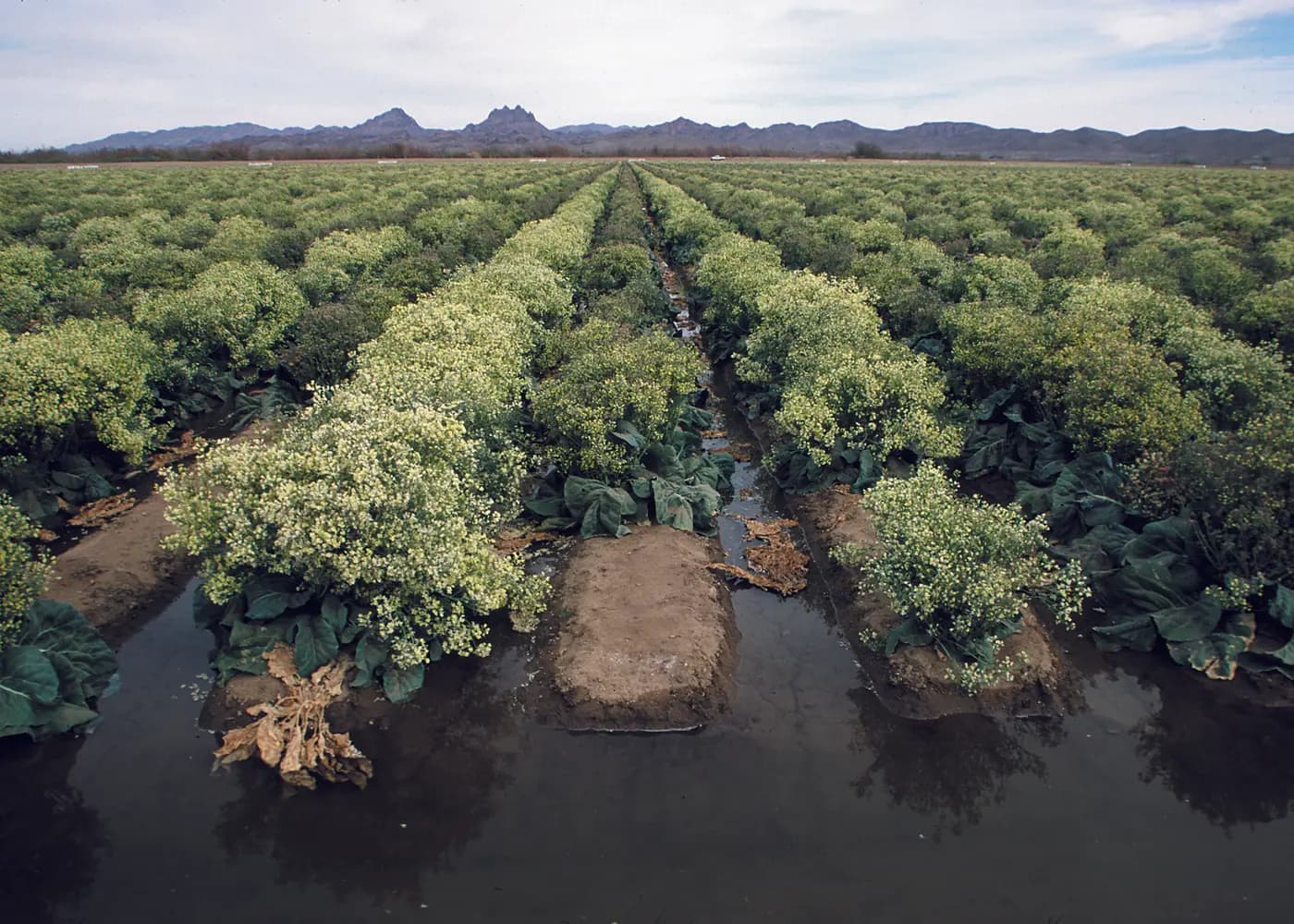
Flood irrigation can remain useful on a farm even when one block is a candidate for drip. If water now travels from an open ditch through a field gate and down furrows or across a border, the first purchase decision is not a roll of tape. It is whether that delivery can supply a separate, filtered, pressure-managed drip block without disrupting the land and water still served by the surface system. Start with one defined block and a drawing of the boundary between the old route and the new one. Draw the existing furrow gate and proposed pressurized branch on one plan; the new filtered block must be checked without treating open-channel water as emitter-ready. A flood-to-drip irrigation trial block needs a defined new filtered supply boundary alongside the furrows that remain in use.
Can one flood-irrigated block support a filtered drip trial?
Pick a field block whose crop rows, access points and water delivery can be observed through a normal irrigation cycle. Mark its first and last crop rows, the location of the current ditch or turnout, the route available to a new header and the places where tractors or harvest crews cross. Record whether the adjoining land will continue receiving surface water. A conversion that appears simple on a plan can leave an uncapped crossing or a shared gate that interrupts the retained furrows whenever the trial block is watered.
Define what the trial is intended to establish: reliable delivery to the crop rows, acceptable operation alongside the remaining flood-irrigated area, and a parts list that can be repeated. If the aim is to compare water use, measure the water delivered to each defined block and account for crop and weather conditions separately. A change in water diverted at the headgate is not automatically the same as a change in water consumed by the crop or the wider basin. Utah State University Extension's water-optimization guide explains why diversion, return flow and consumptive use need separate accounting.
The boundary also prevents a common purchasing error. A surface-irrigation bay may have a gated outlet, ditch pipe or large-volume riser, but that does not prove it has the filtered water, pressure control or connections required by a drip lateral. Retain the useful existing supply route where it is suitable; assess every part that crosses into the proposed pressurized drip system for its actual purpose and rating.
Trace the ditch turnout to the new drip-headworks boundary
Draw the route as it exists on a delivery day. Is water available continuously, in scheduled turns, or only while another bay is being irrigated? Does the water level at the turnout fall as the delivery progresses? Does opening a neighboring surface gate change the flow reaching this block? The answers tell the designer whether water can be supplied directly to an appropriately designed new headworks, whether storage is needed to bridge an intermittent delivery, or whether the proposed block should remain on surface irrigation for now. An open ditch or pond is a water source, not evidence of usable drip pressure.
Separate the source intake from the field header on the sketch. Between them a suitable system may require an intake arrangement, pumping or another verified source of operating head, filtration, pressure management, isolation and measurement. Those items depend on the actual source and operating duty. A small disc filter or drip lateral cannot turn a variable, sediment-laden ditch delivery into a complete working drip system by itself. Have the headworks designed for the selected crop block and the way the farm receives water, then shop the compatible components.
If a storage pond or tank is proposed, record its position and usable water during the time the block needs irrigation. The full tank level is not the worst operating condition. Compare the lowest expected supply level and the real pressure and flow at the intended drip connection while the required block is running. The low-tank-level guide shows why a layout that works at a high water level may fail as the supply falls; it does not certify this farm's new headworks.
Keep the existing surface route on the plan. Label the gates that still feed adjacent furrows, the tailwater path, the proposed drip branch and any junction that both systems share. A pipe or pump may have enough capacity for one mode and not for both modes together. Do not assume the systems can operate simultaneously. If combined operation is wanted, the approved design must account for the actual combined demand and for transitions between the permitted operating groups.
Check the water that will actually enter the emitters
Surface deliveries can carry silt, sand, plant debris and biological material, with loads that change after a gate is moved or a channel is disturbed. Sample the water at the proposed intake under representative operating conditions, including the troublesome period if the source is variable. A jar that looks clear at one moment cannot certify the whole season. Record whether the supply comes from a canal, ditch, pond or other source, and obtain the selected emitter maker's filtration requirement before choosing a filter train.
The irrigation-water test guide is useful for separating suspended material from dissolved constituents. For this conversion, the additional question is whether the old supply can be conditioned at the new headworks at the flow the drip block requires. A screen or disc element may be one part of that arrangement; settling, media filtration or other treatment may be needed for a different source. A filter's mesh label alone does not establish adequate treatment or a compatible flow through a dirty system.
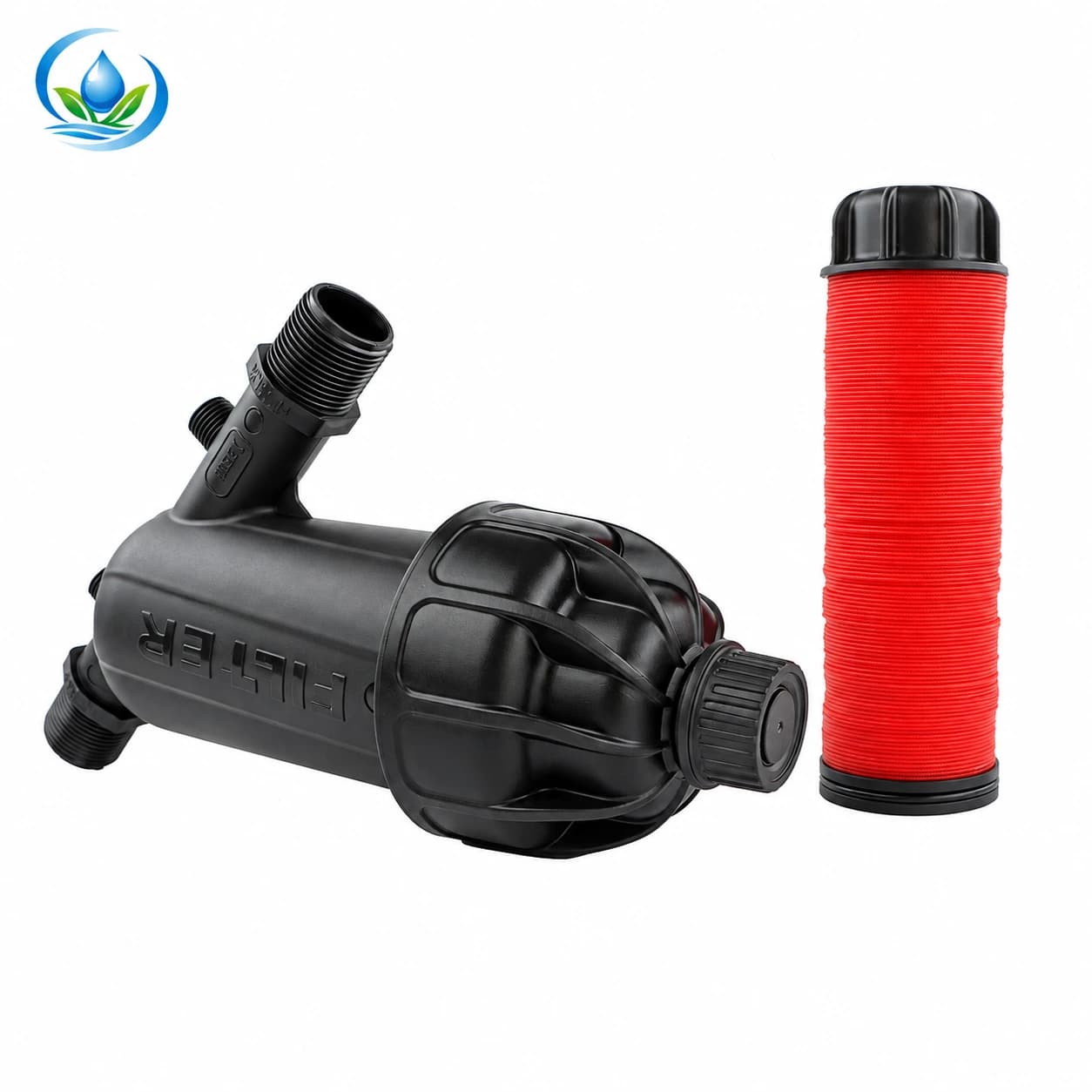
The Store lists a Y-body disc filter with several connection and maximum-rating options. For example, the listed F32YD variant is a 1-inch, 120-mesh unit with separate maximum entries of 6 m³/h and 8 bar. These are product limits, not a promised operating point, a stand-alone answer for canal water, or a substitute for the emitter maker's water-quality requirement. Select an exact filter arrangement from water evidence, the block's design flow and the pressure available after treatment.
Translate the old delivery into a measured drip duty
A flood set may deliver a large flow for a short interval through an open gate. A drip block instead needs an appropriate flow and pressure through many outlets during its chosen operating window. Record source flow where it can be measured, then establish the pressure and usable flow that a properly designed headworks can deliver at the new header. Static pressure, pump maximum head and pump maximum flow are different values; neither maximum proves the required duty with filtration, elevation change and line losses included.
Count the proposed crop rows, measure each row length, and mark where the header can connect without crossing everyday field traffic. Use the crop's local water requirement and the selected emitter's documented discharge at its working pressure to calculate the block demand. If the source cannot serve all rows together, choose approved groups with a clear operating sequence. The block-capacity example keeps a daily crop-water estimate separate from actual delivery capacity; it does not prescribe a daily dose for this crop.
Do not use the old headgate opening as a drip flow setting. It controlled surface advance under different conditions and may pass far more water than a small drip branch can use. Likewise, existing large pipe, surface risers and gate fittings should be inventoried, then retained only where their dimensions, pressure rating, water-contact suitability and intended function are verified for the new arrangement. A familiar connection shape is not proof of a pressure-rated match. The design must include a controlled operating path; never plan to keep a pump running against all closed branches.
Compare line choices against this one block
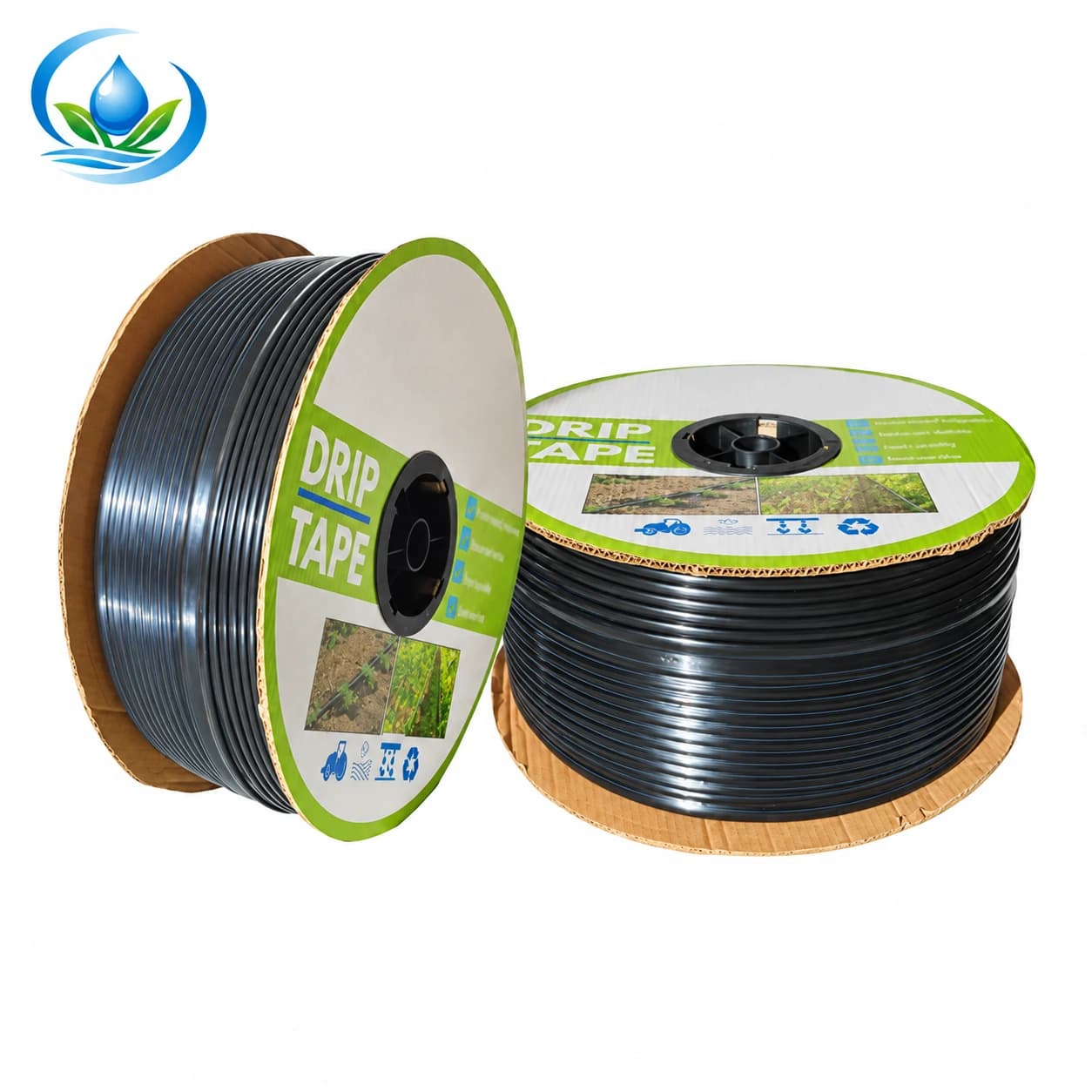
For regularly spaced seasonal crop rows, flat-emitter drip tape is one candidate. For one listed 16 mm option, the sale unit is a 2,000 m roll; its wall is 0.2 mm thick and outlets are 30 cm apart. Those dimensions describe the selected product and sale unit; the roll length is not an allowable run length, and spacing alone does not give the emitter discharge. Obtain the exact model's discharge and working-pressure data before calculating how many rows can operate at once.
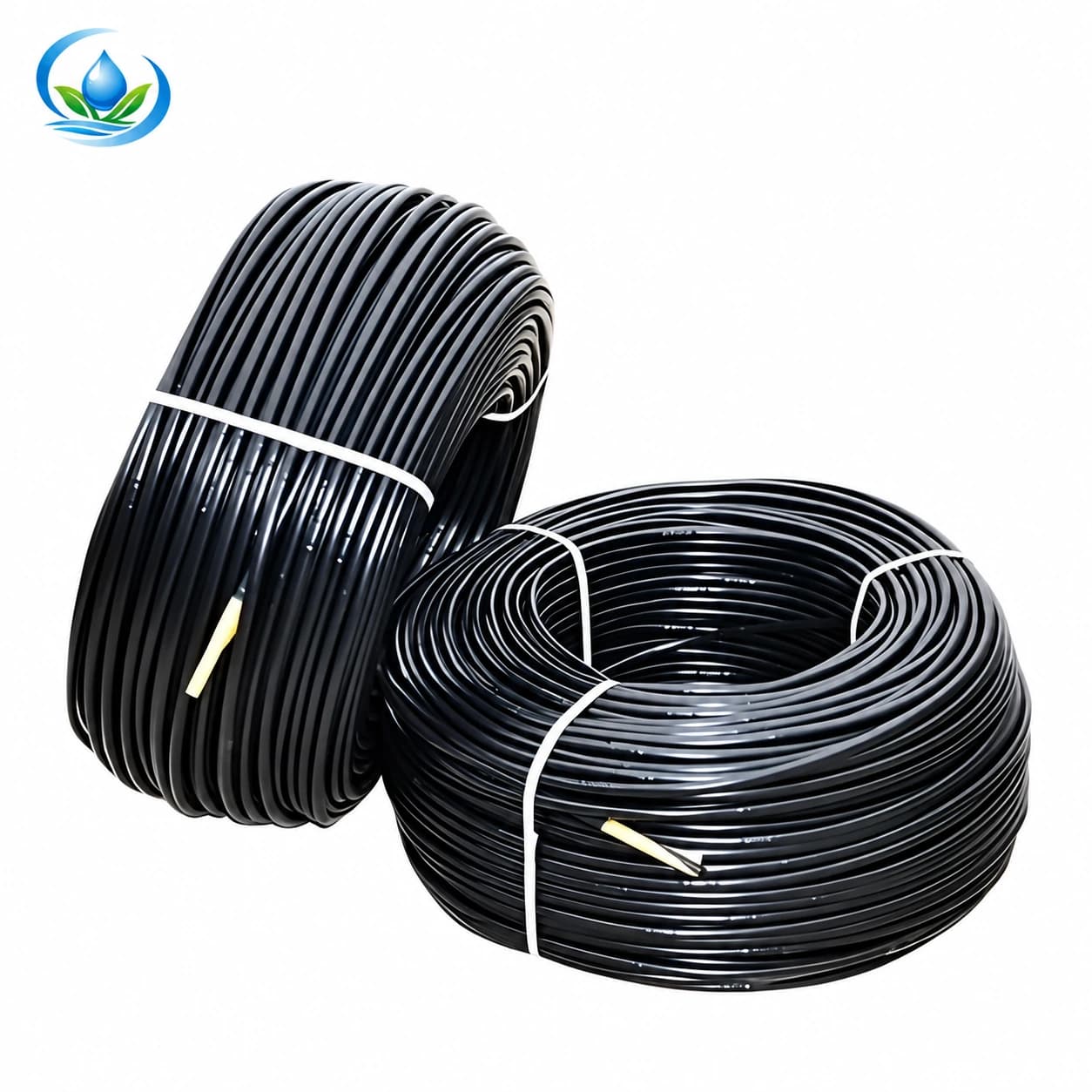
The inline-emitter drip pipe offers a different line construction. A listed 16 mm, 0.8 mm wall option has 30 cm spacing, a nominal 2 L/h emitter entry and a 500 m roll. That nominal output is a selection input under its specified conditions, not a field measurement or a guarantee that a 500 m lateral will operate uniformly. Compare the actual crop-row geometry, protection from field work, operating pressure and connection details for the exact variant rather than treating tape and pipe as interchangeable because both are 16 mm.
Place the line and header on the field map before estimating quantities. Count complete rows, turnbacks, crossings and the length from the approved headworks to the first row. Record separate fittings for the header transition, lateral connection, isolation and end treatment as specified for the chosen line. A roll count without those boundaries can leave the trial block with tape but no verified way to connect it to filtered, pressure-managed water. The existing-line expansion guide covers adding a bed to an already pressurized drip network; a former flood block needs the extra source and headworks decision described here.
Run a bounded trial and decide what to repeat
Install and operate the trial block according to the approved design and exact product instructions. During its first normal event, observe the intake and filter condition, operating pressure at the relevant points, flow into the block, visible leaks, and discharge near the first and last crop rows. Check the soil response at several rows rather than accepting a single wet spot near the header. If the last rows receive less than expected, do not simply raise pressure or run longer; identify whether the limitation lies at the source, treatment, header, line or operating group.
Watch the boundary with the retained surface system during a normal farm delivery. A successful test does not merely show water dripping at the new line. It also leaves the neighboring furrows, crossings and tailwater route usable as planned, and it does not rely on an unrecorded valve position or a helper standing at the ditch. If both modes are scheduled on the same day, note whether the source level and available flow recover between them. Keep the trial small enough that a failed assumption can be corrected before purchasing materials for every block.
Record the trial's input volume, active block area, duration, pressure readings and observed crop-row wetting. Compare like periods and boundaries if you want to assess water use against the former flood method. The field water-comparison guide explains why a percentage taken from a catalogue or another farm is not a measured saving here. Improving one block's application control may change diverted water and return flow differently; evaluate any water-accounting objective on its own terms.
After the test, make a concise repeat list: source and headworks duty that actually worked, required treatment, selected line and fittings, row group, acceptable crossing and access route, and the measurements that would trigger a redesign. Then price the exact sale units and check current availability and delivery for each Store item. The farm irrigation cost guide helps organize the parts budget, while the trial record decides whether buying more of those parts makes sense. If a selected product has no purchase option on its page, ask Store support how and when it can be ordered before buying related components.
Questions before converting another flood-irrigated block
Can I connect drip tape directly to the flood-irrigation ditch?
No direct connection should be assumed. A ditch is a water source and delivery route; the chosen drip line needs water of suitable quality at its specified operating condition, through a compatible headworks and connections. The design may use part of the existing route, but the pressure, filtration and interface have to be established for the actual block.
Will one small disc filter make the surface water drip-ready?
Not necessarily. The answer depends on the contaminants observed under representative delivery conditions, the selected emitter requirement, block flow and the filter arrangement. Compare the exact filter's connection, element and operating limits with the complete treatment design; a maximum flow listing does not demonstrate acceptable performance with a dirty ditch supply.
Can the neighboring furrows run while the drip block operates?
Only if the source, headworks, branches and operating procedure are designed for that combined case. Water reaching an open surface gate can alter the new branch's supply. The safer purchase decision is to specify the allowed operating groups first, then verify both the drip trial and the retained surface delivery in those actual groups.
Does conversion guarantee lower farm water use?
No. It can change how water is delivered and controlled, but the outcome depends on the original system, crop, management and the boundary used for measurement. Measure the block's application and crop response; distinguish reduced diversion from reduced consumptive use and changes in return flow. Order materials for the next block only after the first block and its water supply have passed that practical check.
Before you order
Compare this guide with the specifications for your exact product, selected option, water supply and field conditions. Your equipment requirements take priority over a general example.
Compare irrigation products