Soybean Crop Irrigation per Day: Check Water Demand Before Choosing Drip Parts
Check soybean water demand, soil and rainfall, the actual watering window and measured block delivery before selecting drip tape, inline pipe and filtration.
Published by IrriNex Store
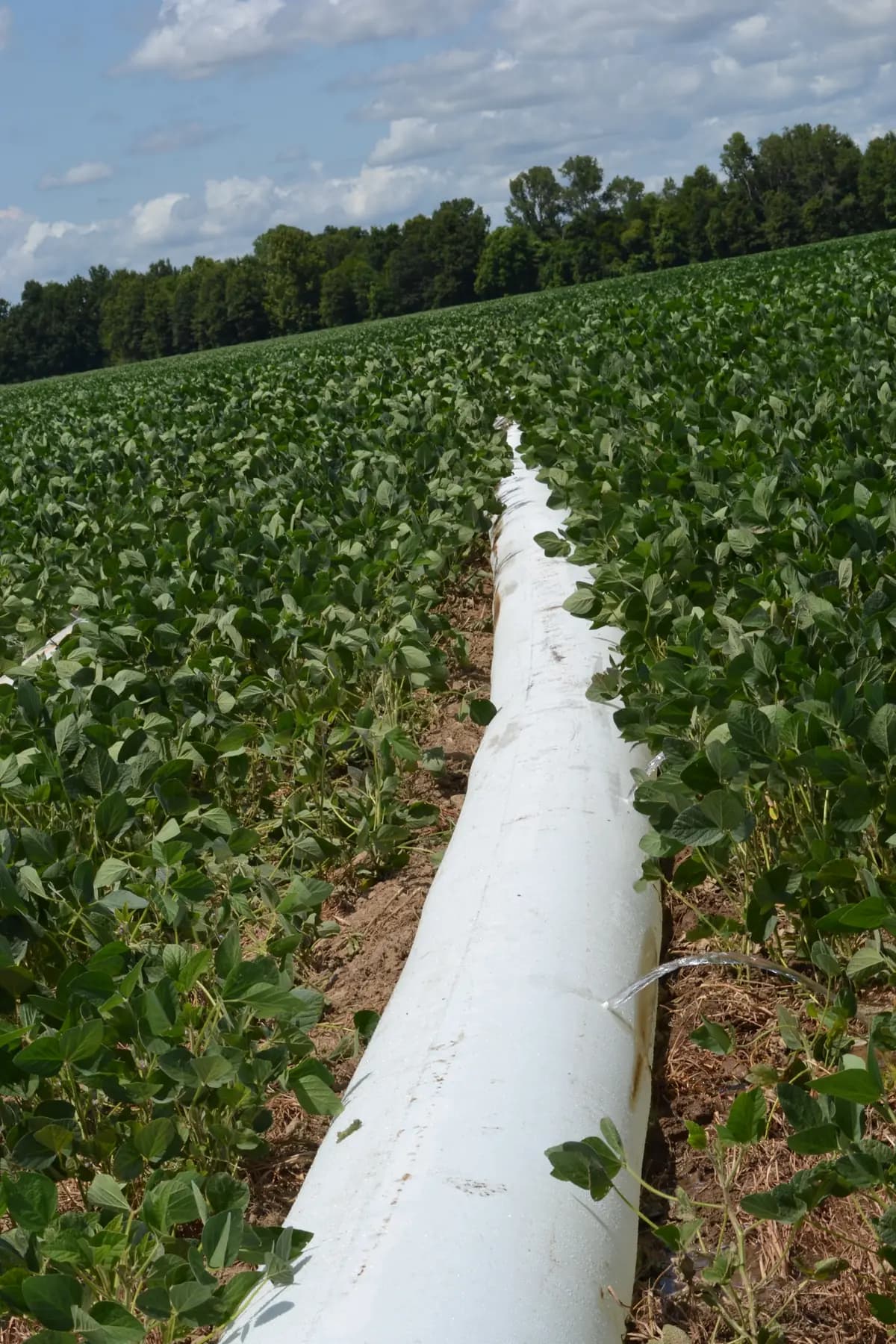
Soybean crop irrigation per day is a question about changing crop water use and a field's ability to supply water, not a fixed number of minutes to run every day. Soybeans can use different amounts as growth stage and weather change. Rain and water already held in the soil may supply part of that use. Before buying drip tape, dripline or a filter, decide what the local crop and rooted soil need next, when the field can be watered, and what the proposed block can deliver while operating. Soybean irrigation water demand should guide the next block decision alongside stored soil water and actual delivery capacity, not a fixed daily timer.
A useful result is a dated block sheet with three separate entries: an agronomic estimate of water to replenish, the time window available to run irrigation, and a measured or model-verified delivery case for that block. If any entry is uncertain, keep it visible. A product's roll length, emitter spacing or filter maximum cannot fill in a missing crop-water decision.
Read daily soybean water use as a field estimate
Crop water use is often expressed as a depth per day because weather and plant development can be assessed over daily intervals. That unit does not instruct the grower to irrigate at the end of each day. A field may draw on water stored in its active root layer, receive effective rainfall, or have a planned irrigation that spans more than one day's use. The irrigation event must be selected from the current field condition and local management method rather than from the words “per day” alone.
Record the soybean growth stage on the day of the decision. Water-use estimates can change as canopy and reproductive development change; a number copied from an earlier stage is not a season-long setting. Record local weather, especially conditions that affect evapotranspiration, and the best available field observation of soil moisture in the active rooted layer. Where the crop stage or soil interpretation is uncertain, use a local agronomist or regional extension method before deciding an event target.
University of Minnesota Extension's irrigation-management guidance treats irrigation timing as a changing judgment involving crop development, weather, remaining soil water and pumping capacity; it flags the soybean reproductive period for close attention. Its numeric deficits, rooting assumptions and end-of-season dates are developed for Minnesota conditions. Use the decision factors, then obtain locally appropriate values for your own field rather than transferring its tables as a universal soybean prescription.
Convert the next soybean irrigation depth to block demand
Give the block a name and measured area. On one line of the sheet, write the crop stage and local daily water-use estimate with its source and date. On another, record recent irrigation, rain measured at or near the field, and the soil condition at representative rooted positions. If a storm left runoff or missed a sheltered section, its gauge depth is not automatically water stored around every soybean root. The post-rain block check shows how to document a pause, a restart or a further inspection after a specific event.
Then write a proposed net replenishment amount only when local crop and soil evidence support it. “Net” here means the water intended to be retained and usable in the relevant root zone, not the volume passing the farm's inlet meter. A daily evapotranspiration estimate is one input; it does not by itself say how much irrigation should be applied if soil storage and rainfall contribute. Likewise, a dry surface alone does not prove the rooted layer is depleted.
Keep the field's variability visible. A sandy rise, compacted track edge and lower area may hold or receive water differently. If the proposed block combines unlike soil or rainfall conditions, test representative positions or reconsider its operating boundary. Do not average a very wet hollow and a dry crop section into an apparently precise single number without stating what area each observation represents.
Check the watering window before choosing a drip product
List the hours when this block can actually receive water. Other fields may share the pump; filtration or flushing may take time; a field operation may interrupt access. A day contains 24 hours, but the soybean block may have only a smaller scheduled window. Write the available duration and the other blocks that must run before or after it. Distinguish the number of installed laterals from the number opened together.
Next, measure or establish the source flow and pressure while the intended operating group runs. A static pressure reading with every outlet closed is not the pressure that reaches the far end when emitters are delivering. Record the valve combination, filter condition, pressure locations, supply flow and representative discharge along the proposed route. If this is a new layout, obtain the exact emitter's hydraulic table and a design for the planned lengths and elevation before buying by roll count.
The farm drip design guide addresses full hydraulic sizing; the flow-rate worksheet helps count the outlets intended to operate together. Here the purchase test is narrower: can the proposed soybean block supply an acceptable gross volume during its real window while maintaining suitable pressure and delivery across the rows? If not, the answer may be a revised operating group or source design, not simply a longer watering instruction.
Use depth, area and measured flow without equating gross and net water
Consider a wholly hypothetical calculation to make the units visible. Suppose a local assessment for a 2,000 m² soybean block identifies a candidate net replenishment depth of 3 mm. One millimetre over one square metre is one litre, so the arithmetic net-equivalent volume is 3 × 2,000 = 6,000 litres, or 6 m³. These figures are invented for the worksheet; 3 mm is not a recommended daily soybean dose, and the assessment must still account for local soil, weather and crop stage.
Now suppose the chosen operating group is measured at a hypothetical 2.5 m³/h at the field inlet and has a three-hour window. The inlet could supply at most 2.5 × 3 = 7.5 m³ gross during that uninterrupted window. A separate hypothetical gross inlet allotment of 6 m³ would take 6 ÷ 2.5 = 2.4 hours by steady-flow arithmetic. That calculation describes water crossing the inlet. It does not prove that 6 m³ has been stored in the crop's root zone.
| Illustrative entry | Arithmetic result | What remains unproved |
|---|---|---|
| 3 mm candidate net depth over 2,000 m² | 6 m³ net-equivalent | Whether local field evidence supports that target |
| 2.5 m³/h inlet flow for three hours | 7.5 m³ maximum gross inlet volume | How much reaches and remains in the rooted layer |
| 6 m³ separate gross inlet allotment | 2.4 hours at steady 2.5 m³/h | Whether that gross allotment meets any net target |
Water can be unevenly distributed, leave as runoff or drainage, remain in pipework, or wet soil outside the intended roots. Do not assume 100% application effectiveness when translating a net need into inlet volume. Verify distribution and rooted-soil response for the installed system; use a locally justified application factor only when it has evidence for that case. The first trial may show that the three-hour window is insufficient, or that the candidate replenishment target needs revision. Neither conclusion follows from product labels alone.
Compare actual tape and dripline options only after the capacity check
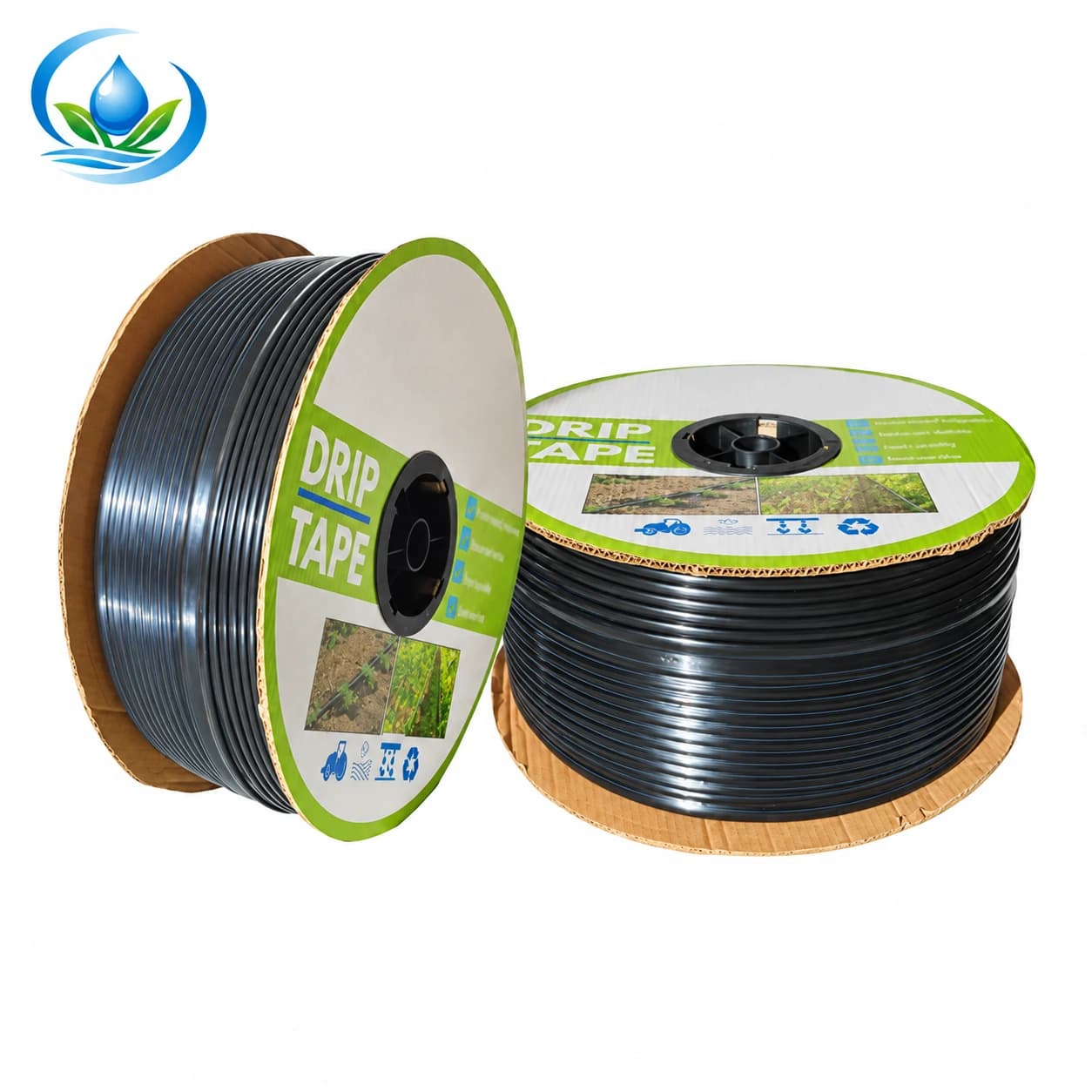
The IrriNex flat drip tape has a selected option IS-2-C526AC2D85: nominal 16 mm diameter, 0.2 mm wall, 30 cm outlet spacing and a 2,000 m sale roll. Those fields identify one current option. Confirm the selected tape's emitter discharge at its specified working pressure before calculating block delivery. Outlet spacing and roll metres alone cannot establish the block's hourly flow. Obtain the variant's permitted run length before placing it into the soybean capacity sheet.
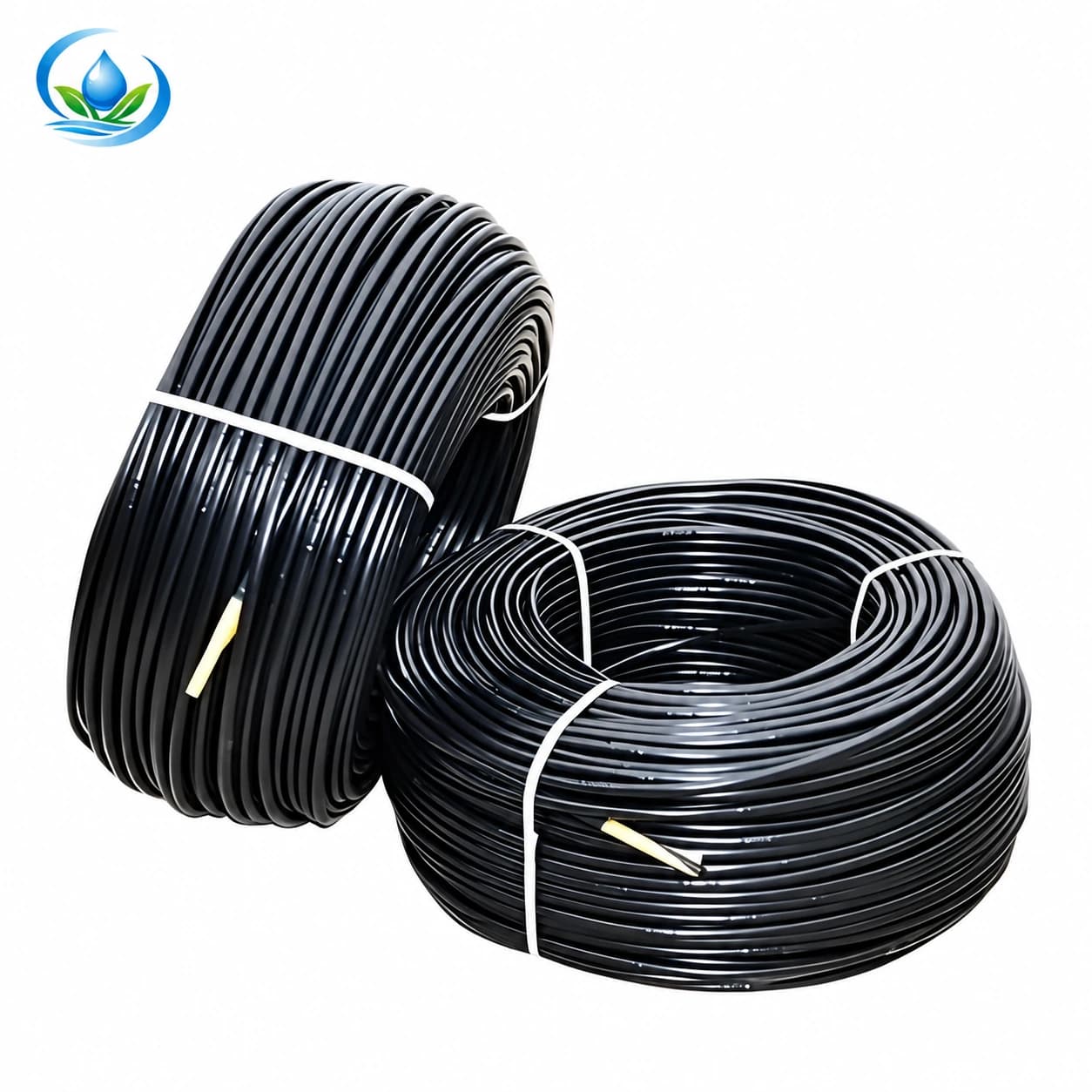
The IrriNex inline drip pipe option IS-3-8CDA6B18CD is nominally 16 mm with a 0.8 mm wall, 30 cm emitter spacing, a listed 2 L/h per outlet and a 500 m sale roll. The listed discharge is a nominal outlet entry, not a measured field result or proof of pressure compensation. Count the outlets in the installed lengths that run simultaneously, then verify working pressure and near-to-far discharge. Five hundred metres in a package is not a permitted single lateral length.
Neither 30 cm outlet spacing nor either wall specification is a soybean row-spacing recommendation. Soil wetting, the intended crop strip, line position, slope, working pressure and access all matter. If the block needs a different layout, select a matching variant and test it; do not force a sale option into the field because its package seems convenient. The zone-planning guide helps frame which laterals can run together without confusing a total roll purchase with one operating group.
Keep filtration limits separate from the required operating point
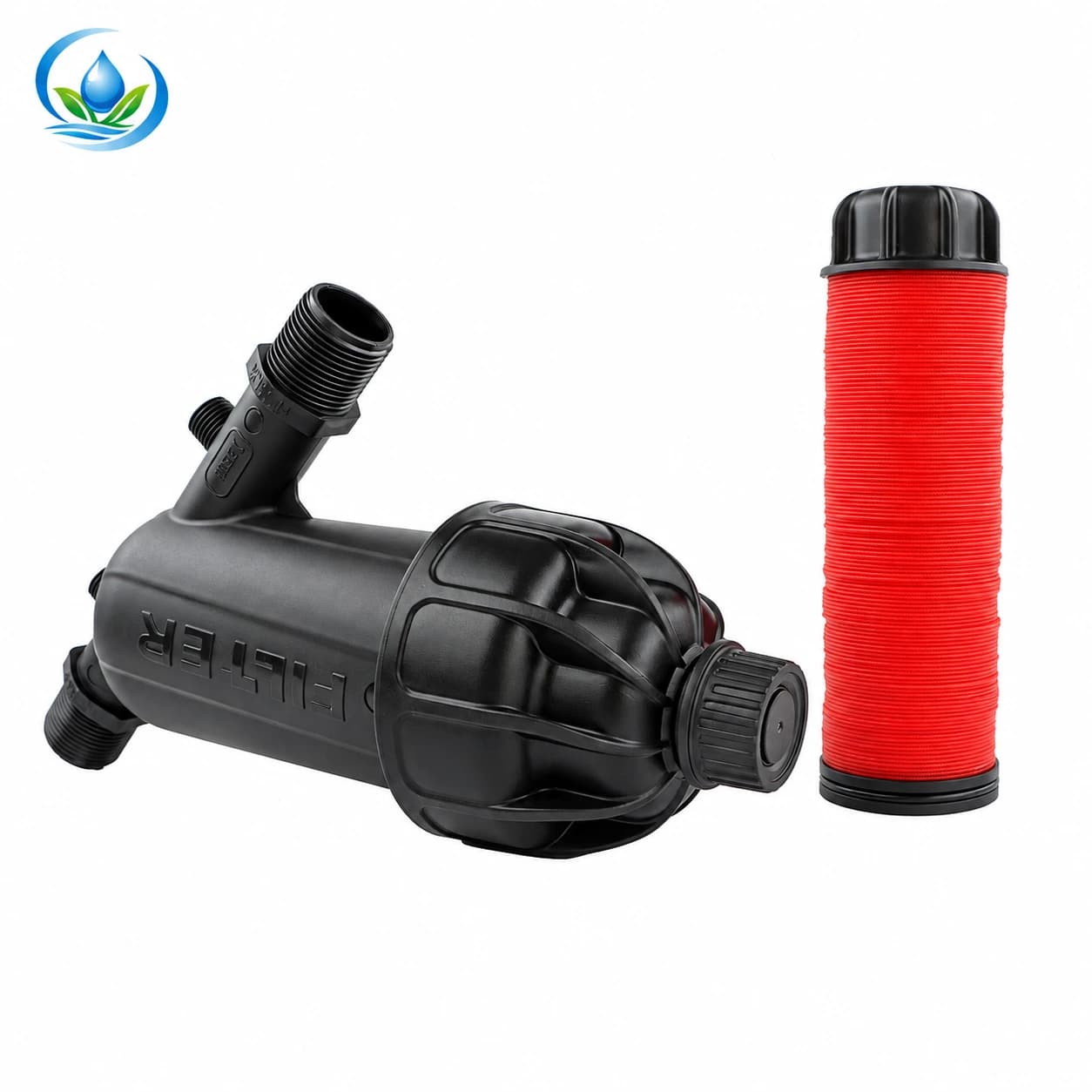
The IrriNex Y-body disc filter option F32YD, SKU IS-34-F32YD, lists a 1-inch connection, 120-mesh disc grade, maximum flow of 6 m³/h and maximum pressure of 8 bar. The maxima are separate product limits, not the clean-filter pressure loss at the proposed soybean block's working flow. They do not prove that a 2.5 m³/h example will leave enough pressure for the farthest outlets or that 120 mesh meets every selected emitter's requirement.
Match the actual water source, emitter protection requirement, expected group flow, connection details and room to service the filter. Plan how a dirty element will be inspected and cleaned without opening a pressurized housing. The filtration buying guide covers source and emitter selection in detail. A filter is not a substitute for pressure regulation where the chosen line requires it, and a maximum rating cannot be used as the normal design point.
Shop from an accepted block record, then review it as the crop changes
Before adding items to a cart, keep one record with the block area, crop stage, local scheduling method, soil and rainfall observations, proposed net replenishment, allowed watering window, measured or designed gross supply, active row lengths, running pressure and far-end observations. Show any missing item as unresolved. If the available window cannot meet a locally established target, revise the operating arrangement with the appropriate designer or agronomist before treating more tape or a larger filter as the solution.
Compare exact product-page options for tape, dripline and the filter, including current price, sale unit, availability and delivery. Confirm compatibility between the selected tubing and its fittings, filter and regulator, and inspect a representative installed section at normal operation before expanding the order. The runtime guide after changing emitters addresses a different question: recalculating an existing event after hardware changes. Here the first question is whether the soybean block's current field evidence calls for an event at all and whether the proposed installation can supply it.
Update the sheet when growth stage, weather, rainfall, operating window or the active zone changes. Keep meter and field observations together so a later operator can see whether a shorter event reflected rain, stored soil water, a changed outlet rate or a supply limitation. This makes “per day” a prompt to check the crop and the system regularly, while the actual watering decision remains tied to measured local conditions.
Before you order
Compare this guide with the specifications for your exact product, selected option, water supply and field conditions. Your equipment requirements take priority over a general example.
Compare irrigation products