Subsurface Drip Systems: Confirm Root Intrusion Before Buying Repair Parts
A dry patch over a buried dripline does not prove root intrusion. Preserve an identified outlet sample and confirm the approved repair before ordering pipe or couplings.
Published by IrriNex Store
Subsurface drip systems can develop a dry patch without showing the failed outlet at the surface. If one buried section seems to deliver less water, roots inside an emitter are one possible cause, but the crop pattern alone cannot establish it. Keep the line map, operating record and an intact specimen together before buying pipe or a coupling. The useful purchase question is whether a specific damaged reach can be repaired under the line maker’s instructions, or whether the installed material and service plan need broader review. Preserve one identified exposed outlet with its orientation and field location; a dry crop patch alone cannot establish root entry inside an emitter. Subsurface drip emitter root intrusion is confirmed at an identified outlet, not inferred from a dry crop patch alone.
This is a check for an existing, known buried run. The roll burial guide covers the earlier decision about whether a material should be placed below soil at all. Here, a field fault has already appeared. Kansas State University’s SDI operating guide treats root intrusion and soil drawn toward emitters during shutdown as separate concerns. The distinction matters because a replacement part chosen for the wrong cause can leave the same weak area in service.
Are roots inside the buried emitter or only around the pipe?
Mark the block, valve group, row and approximate distance from the accessible feed and end points. Note when the crop response changed and whether the same pattern appears on neighboring rows. Compare observations made under the same normal operating setup: which zones were open, what upstream pressure and flow records show, and whether a recent filter, valve or supply change affected a larger area. If several rows changed together, investigate their common supply before treating one buried emitter as the source.
Use the installed route drawing to place the suspected reach between known landmarks. A stressed plant might sit beside a blocked outlet, an off-route wetting pattern, a damaged tube or a normal outlet whose water has moved through the soil differently than expected. Soil texture, recent rain and crop rooting also affect what appears at the surface. The uneven emitter flow guide gives the initial pattern check; keep its general comparison and add a traceable buried location before any exposure work.
Photograph the crop and soil pattern with the row identifier in view. Record the date, operating group and any recent digging, cultivation or line repair. Ask the person who installed the line which outlet model, spacing, pipe option and accessible service points actually belong to that row. A purchase record for a similar roll in the shed does not identify the material now underground. Do not excavate from a guess on the planting map if the line’s position or other buried services are uncertain.
Locate the weak subsurface reach before ordering a coupling
Crop roots normally grow around a buried emitting line. A root mat outside the tube can change how soil water looks when the area is opened, yet exterior roots alone do not show that an emitter passage is plugged. Actual root intrusion means roots have entered the outlet or internal flow path and are restricting delivery. It takes an identifiable emitter or intact sample and a model-appropriate inspection to support that finding. A dry patch, surface root growth or a single low collection reading cannot show what is inside a concealed passage.
There is a third possible pathway: after shutdown, pressure changes and drainage may draw soil particles toward an outlet. That is soil ingestion, not a root growing into the emitter. Check the operating history and the system’s intended air-management arrangement when the sample contains fine soil or the symptom follows shutdown. A finer or larger inlet filter does not necessarily address material entering from outside the pipe at a buried outlet. Likewise, an air-management change for soil ingestion is not evidence that internal roots have been removed.
Keep other causes on the list while evidence is incomplete. Sediment or biological material, a kinked or crushed section, a leaking connection, changed supply pressure and an incorrect operating group can each reduce apparent delivery. The water-and-emitter filtration guide helps with material arriving in the supply; the leak-location guide helps when water may be escaping from the network. Neither substitutes for seeing what blocked a particular buried outlet.
Preserve a useful sample before deciding what to replace
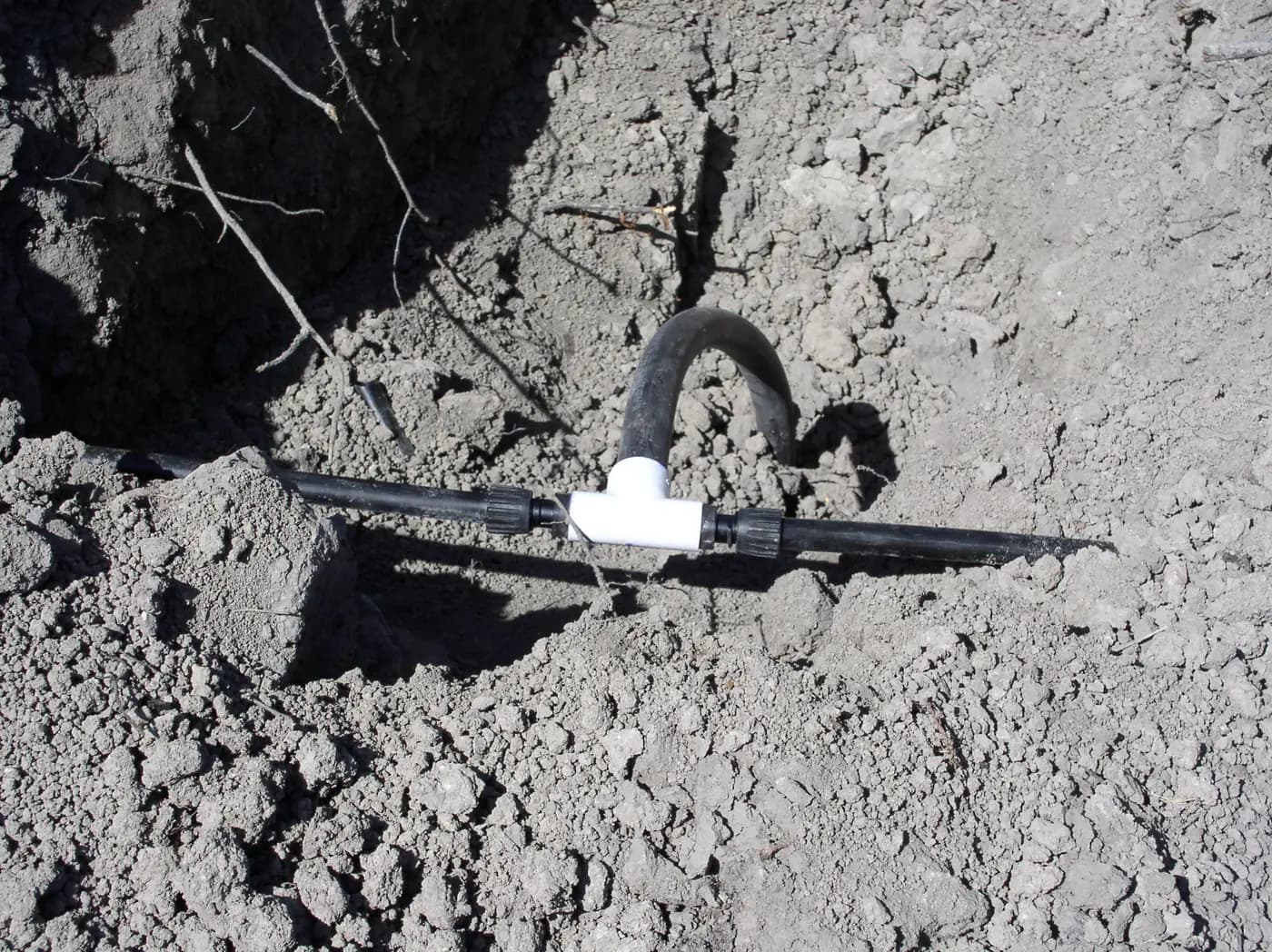
If the installed equipment’s service procedure allows a section to be exposed, have an authorized worker identify the line and other buried services, isolate the correct block and make it safe under those instructions. Expose enough of the mapped reach to see the selected outlet and neighboring pipe without pulling on an unseen connection. Photograph the line in place before moving soil or roots. Keep the row, direction of flow, outlet position and orientation with each image. A sample that loses its location loses much of its diagnostic value.
Where the maker or qualified service provider requests a removed specimen, follow its method for selecting, cutting, sealing, labeling and shipping it. Mark the exact product identity if known, field position and date, and retain the surrounding observations. Do not scrub a suspected passage, pull roots from it or discard the neighboring sound portion before it has been assessed. An intact comparison can help the reviewer distinguish internal growth from roots merely touching the outside of the pipe. The sampling method and the number of locations depend on that line and the investigation; a generic cut length would not establish the cause.
Sometimes the safest decision is to stop at the record. If the route cannot be located reliably, the line cannot be isolated, or exposing it would damage neighboring services or a crop, ask a qualified installer for a service plan. Do not open a pressurized joint or dig repeatedly until a dry plant is found. The task is to obtain enough evidence for a specific repair decision while preserving the installed system’s integrity.
Ask what the exposed outlet actually shows
Record whether roots remain outside the tube, visibly enter the outlet, or appear inside a passage when the exact model is inspected by an approved method. Also note whether fine soil, deposits, a torn wall or a crushed section is present. The answer may be mixed: a damaged pipe can leak while one emitter is obstructed, and a shutdown problem can coexist with root growth. Write the observations separately rather than labeling the whole row “root intrusion” after the first exposed root.
Compare the suspect point with a nearby location that still delivers normally and shares the same supply. The purpose is to check whether the suspected feature differs at that position, not to certify every emitter in the zone. Preserve the operating conditions and crop observations that prompted the comparison. If the outlet construction cannot be inspected without destroying the evidence, send the identified sample and photos to the maker or competent service provider for a model-specific finding.
Look for repetition before choosing a small patch. One confirmed root-affected outlet may be a localized service issue; similar confirmed samples at several mapped positions suggest a wider materials or operating problem. The count and distribution matter more than a dramatic photograph of one root. If the evidence instead points to soil entry during shutdown, review the air path and drainage design with the installer; do not call a coupling or a filter a cure for that pathway.
Choose a repair only after the line and joint are identified
For a genuinely local damaged reach, ask the exact line maker whether a section may be replaced and which connector, pipe option and installation method are approved for that service. The repair has to restore the intended outlet sequence and remain compatible with the buried environment and any later access or inspection requirements. A successful push-on fit at the workbench cannot establish long-term underground approval. Keep the replaced length, joint locations and selected parts on the route drawing.
The Store’s inline drip pipe has built-in emitters and several selectable dimensions and outlet options. Match a proposed replacement to the installed line’s exact diameter, wall, emitter spacing, flow option and manufacturer’s service instructions. The product page alone does not certify that this pipe can replace an existing subsurface line, resist root intrusion or be buried for the intended period. A new roll with an attractive spacing may still alter delivery across that row if it differs from the installed outlet construction.
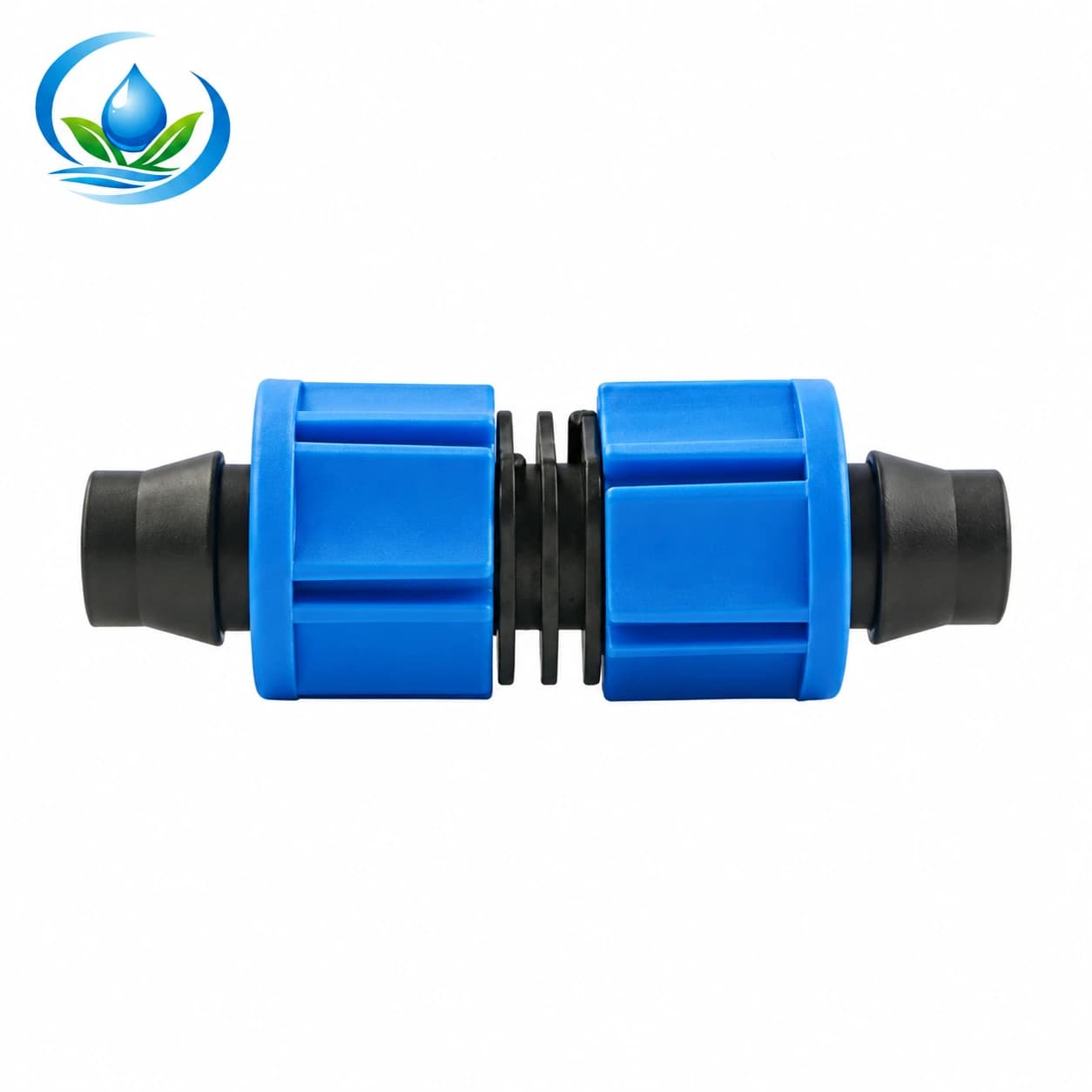
The lock-nut coupling is a separate connection family with nominal 16 mm and 20 mm options in the catalogue. Those nominal sizes do not prove it mates with a particular pipe wall or is approved as a buried repair joint. Confirm the exact pipe and connector combination, the required installation method and whether the completed joint must remain accessible. The coupling fit guide explains why the actual ends and service duty should be checked before cutting a replacement section.
When confirmed intrusion occurs at many positions, replacing one short length may only move the next investigation along the row. Ask the line maker or designer whether the material is suitable for the crop, burial duty and current operation, and whether a documented alternative line or service change is required. Do not use an unverified chemical treatment, a higher pressure setting or a different filter as a shortcut. A product-specific remedy needs its own instructions and assessment of the whole installation.
Keep shutdown evidence in the decision
Ask the crew whether the fault appeared after repeated stops, drainage to a low point, a valve change or maintenance that altered the air path. Keep those observations beside the exposed specimen. Kansas State’s operating discussion distinguishes roots entering an emitter from soil drawn inward when a vacuum forms during shutdown; the remedies have different targets. If soil is found inside and negative-pressure entry is suspected, request a review of the installed high points, accessible air devices and operating sequence by someone who can see the complete zone.
Do not assume that a generic non-return part, end closure or filter prevents every shutdown entry path. Its location, condition and behavior in the actual installation matter. The lateral flushing access guide can help identify where service points are, but flushing out water at an end does not identify the material inside a buried emitter. Keep the diagnosis tied to the sample and the installed line documentation.
Retest the mapped reach and make a precise order
After an approved repair, record the replacement part and joint positions, then run the block under the same documented normal condition used for the comparison. Check accessible connections, zone flow or pressure observations and representative soil wetting near the repaired and neighboring areas as the crop and soil allow. Compare the result over normal operating cycles rather than declaring success from one damp spot. If the symptoms recur, preserve the new location and operating record before replacing more parts.
Build the order from the identified pipe and documented repair method: exact selected line option, measured replacement length, the approved connector model and quantity, and any required accessible service components. Before checkout, read the listing for that precise variant and confirm its displayed price, pack quantity, order availability and delivery terms. If the buried-use approval, pipe-wall fit or outlet match is unresolved, send support the line label, clear photos, sample location and required service conditions for a specific compatibility answer. The best purchase is the part that a qualified procedure permits you to install and verify at this actual buried reach.
Before you order
Compare this guide with the specifications for your exact product, selected option, water supply and field conditions. Your equipment requirements take priority over a general example.
Compare irrigation products