What Is Subsurface Drip Irrigation? Check the Roll Before Burying It
Check whether the exact drip roll is approved for its intended burial period, then map access and service before covering it.
Published by IrriNex Store
What is subsurface drip irrigation when the material in your shed is an ordinary drip roll? It places the emitting line beneath the soil surface so water leaves the outlets in soil near the intended crop roots. That description explains the water path; it does not certify a particular roll for burial. Before opening a trench or ordering more material, identify the exact roll, decide how long it must remain below ground, and obtain the maker's installation and service conditions for that use. A visible 16 mm label alone cannot answer those questions. Retain a map showing buried starts, joins, ends and service access before covering the row; the roll label alone cannot locate a hidden repair point. Subsurface drip tape burial suitability belongs to the identified roll and its service plan, not a visible 16 mm mark.
A short-season line laid shallowly for one crop and a permanent subsurface drip irrigation installation impose different demands. The first may be lifted after harvest if its material and handling instructions permit the placement. The second must remain operable and serviceable while outlets are hidden over successive crops or years. Neither intention can be inferred from a roll's wall thickness or sale length. Write the intended use on the field sketch before comparing products; otherwise a convenient reel in stock may quietly become an unsupported permanent installation.
Can this exact drip roll stay buried for the intended service?
Start with the crop, field, proposed line route, expected period below soil and whether the line will be recovered. Mark cultivation, planting and harvest passes that could disturb that route. Record who will locate an outlet, isolate the block or retrieve a line after the crop changes. A seasonal arrangement still needs an allowable placement method and a safe route; a permanent design needs a longer service plan, not simply more soil over the same material.
Ask how water will reach the crop at emergence as well as after roots develop. Water released below ground can move differently in coarse and fine soil, and the useful wetting shape changes with outlet flow, placement and operating conditions. The surface may remain dry even while the intended root layer wets; conversely, a damp patch above a buried line does not by itself prove a leak. A representative field wetting observation at the proposed placement is more useful than assuming either appearance tells the whole story.
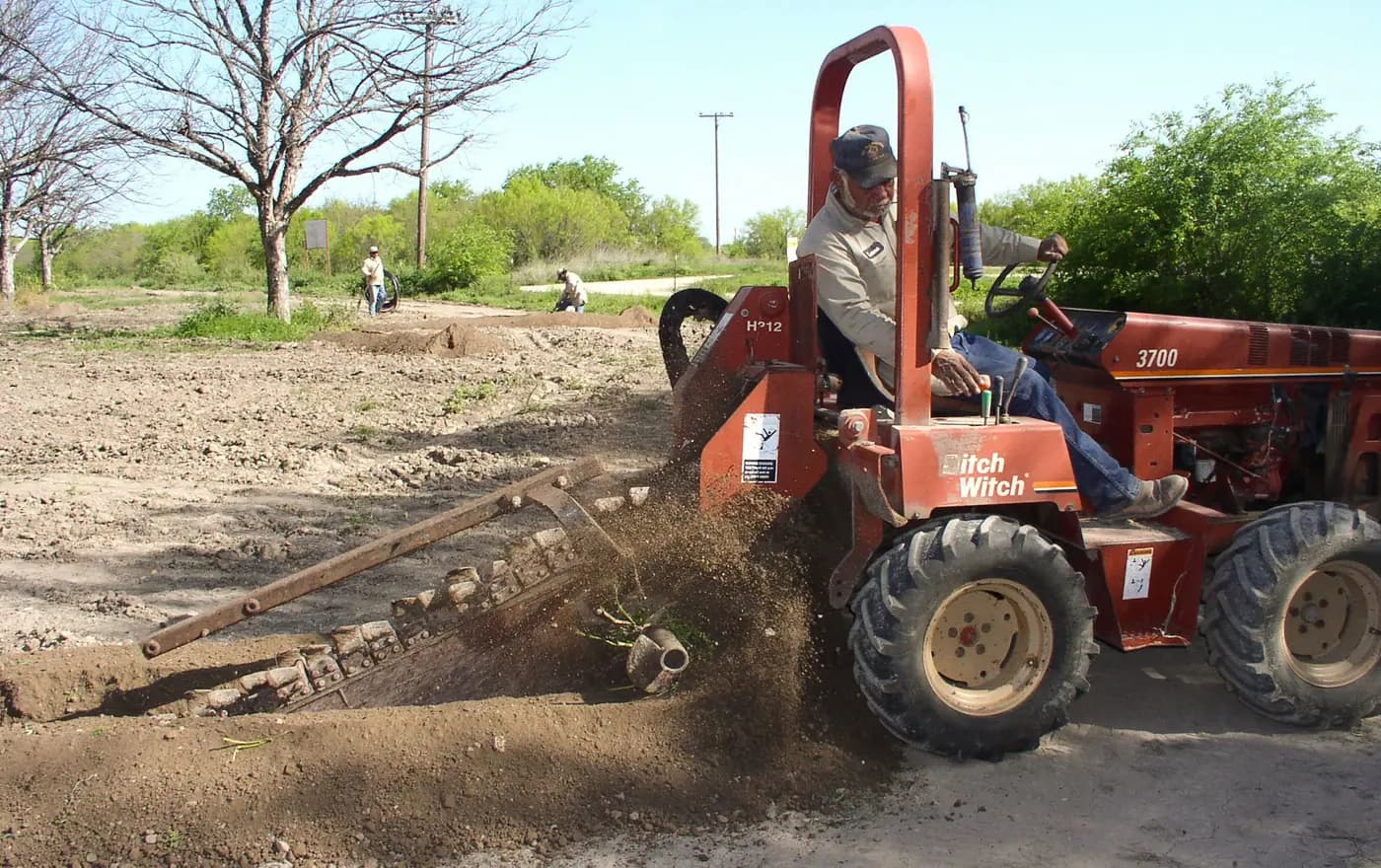
Do not choose a universal cover depth from another farm. Record the proposed depth relative to crop roots, cultivation tools, stones and the maker's placement limits for the exact material. The photo of orchard trenching above shows a real underground irrigation route being prepared; it does not establish a depth or identify either roll sold here. If the crop requires surface moisture for establishment, include that requirement in the irrigation plan rather than expecting an unseen line to solve it automatically.
Identify the complete roll before mapping subsurface drip
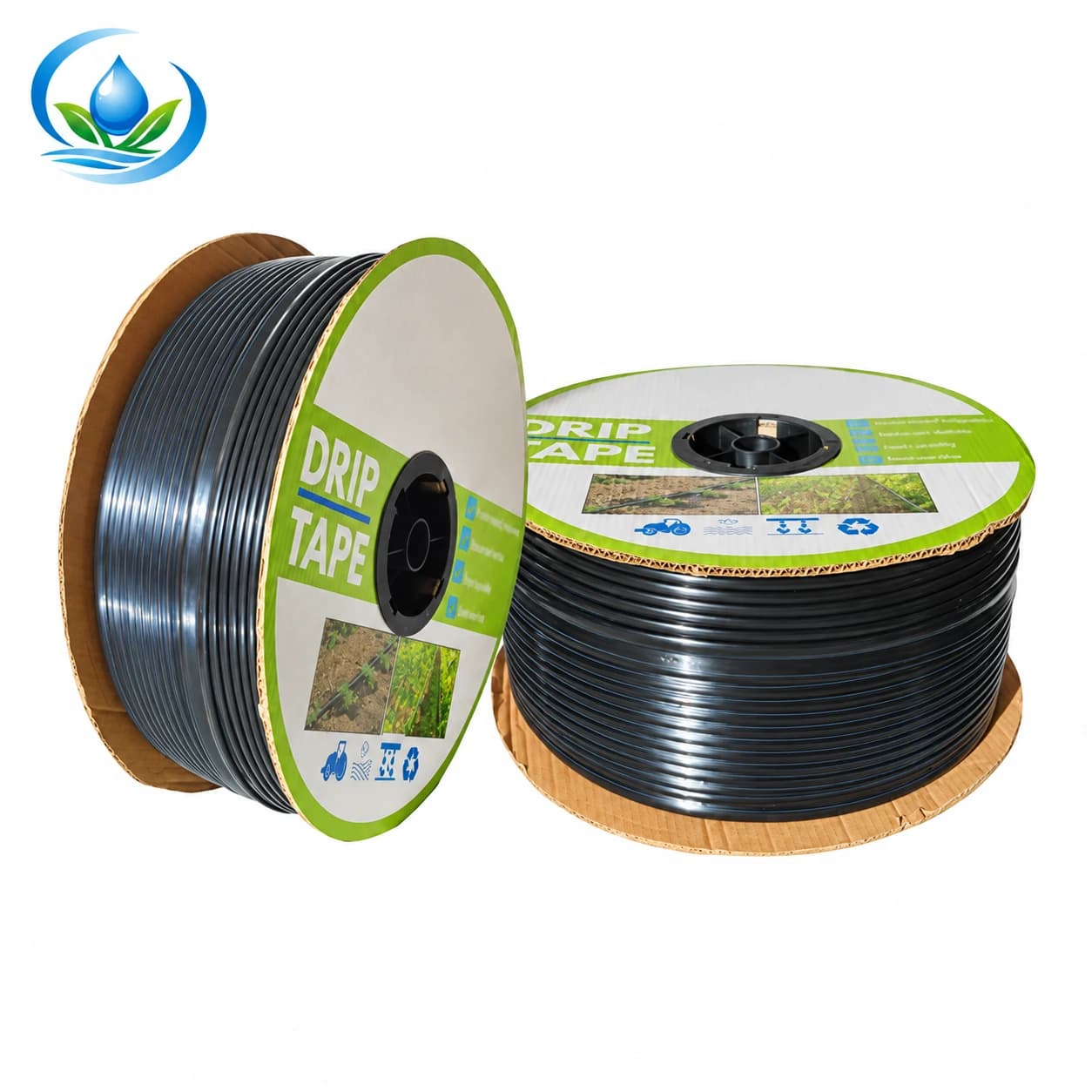
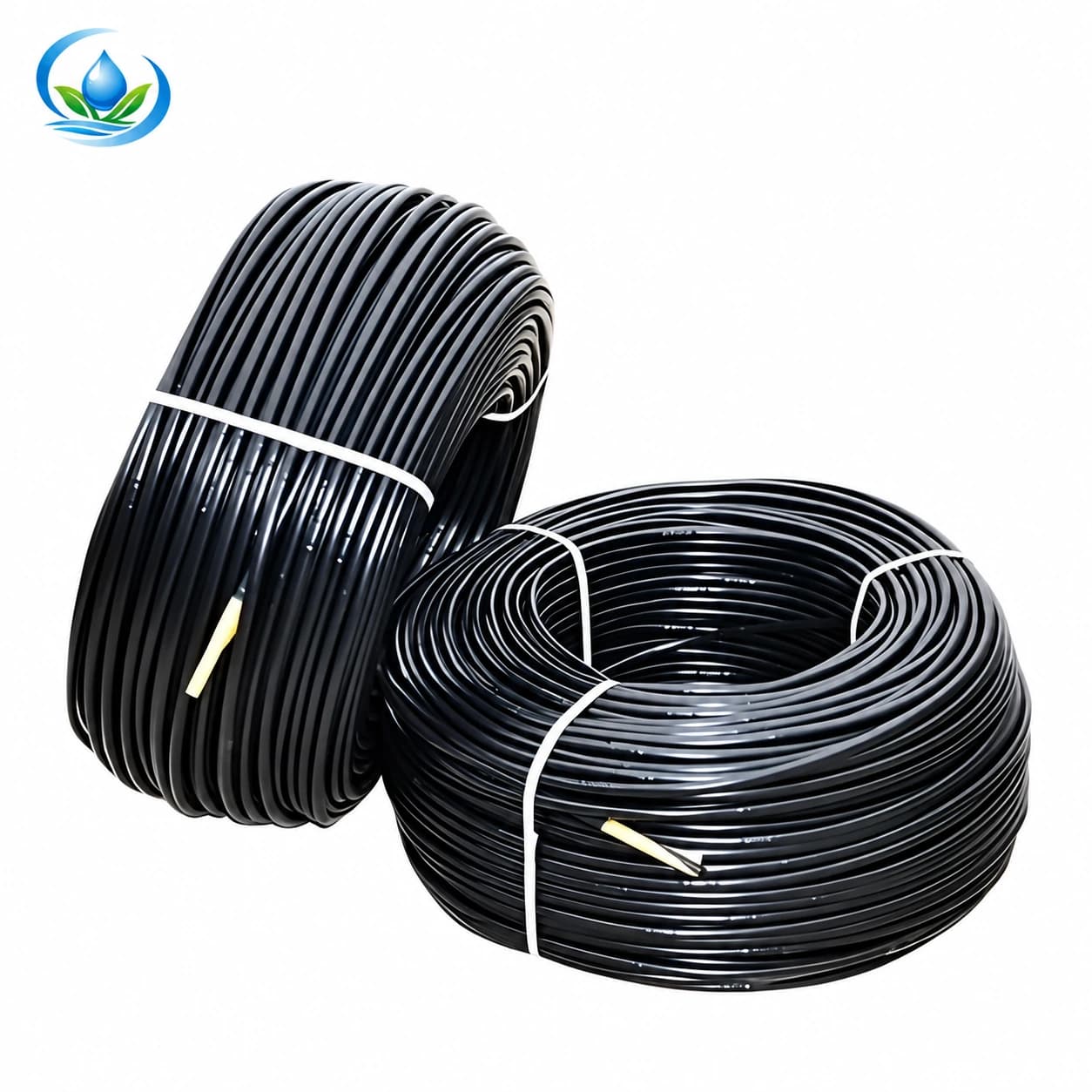
Keep the label or selected product option with the field map. It should identify the line construction, diameter and wall, outlet spacing, emitter model or discharge basis where documented, roll length and any applicable pressure or handling limits. If the existing roll has no trustworthy marking, compare a sound offcut and purchase record with the exact manufacturer's documents. Do not identify an old stretched end by whether a familiar connector can be forced onto it. The tape and inline-pipe comparison helps separate the material families before any connection is selected.
For a concrete shopping comparison, the flat drip tape option IS-2-C526AC2D85 is a 16 mm, 0.2 mm-wall roll with 30 cm outlet spacing and 2,000 m package length. The selected option does not provide a verified outlet-flow value. The round inline drip pipe option IS-3-8CDA6B18CD is listed as 16 mm, 0.8 mm wall, 30 cm outlet spacing, 2 L/h emitter choice and 500 m roll. These figures distinguish the listed options; neither option's dimensional record by itself establishes permanent-burial, anti-siphon or root-resistant approval.
Ask for the precise selected roll's written placement permission and conditions before assigning it to soil. Confirm whether the stated use covers a short seasonal placement, prolonged underground service, or neither. Also request the relevant operating-pressure, filtration, connection and retrieval instructions. A different manufacturer's line may carry a specially designed buried emitter; that feature cannot be carried across to an apparently similar Store roll. A 500 m or 2,000 m package describes material supplied, not a permitted uninterrupted lateral length.
Make the buried route traceable before covering it
Draw each lateral from its named header connection to its end, including direction changes, crossings and places where equipment passes. Give the line a durable field identifier that still makes sense after the present crop is gone. Record measured distances from fixed features and the installed depth along the route, including changes in grade. A sketch showing only parallel rows is inadequate when a crew later needs to avoid a buried line during tillage or find an isolated fault.
Mark which connections and closures must remain reachable from a normal working position. A buried emitting reach can coexist with above-ground or otherwise accessible authorized service points, but the actual arrangement must follow the selected equipment's instructions and local design. Do not assume that the end of every reel is an acceptable flush point or that a hidden joint may be opened safely by digging. The accessible-feed guide for beds discusses changeover access; here the route map has to preserve access even when the emitting run is no longer visible.
Before backfilling, photograph the line from fixed landmarks with a scale or measured references and record the exact option installed at each row. Include header starts, repair joints and outlet orientation if the manufacturer specifies one. Keep one copy where field crews can retrieve it, not only in a buyer's order email. A buried line that nobody can locate reliably may be damaged during ordinary farm work long before the roll material itself reaches the end of its useful life.
Check the operating case that the hidden line must survive
The intended zone still needs a known running supply, suitable filtration, pressure within all relevant limits and an acceptable delivery pattern along each planned lateral. A roll's emitter spacing alone does not supply its total flow or allowable run length. For the flat option above, do not invent an emitter-flow value from another flat-tape row. For the inline option, keep its documented 2 L/h emitter choice with its stated operating basis; determine actual zone demand and pressure conditions before multiplying outlet counts.
Burial can make a weak outlet harder to notice, so specify how performance will be checked after installation. Identify accessible pressure and flow observation points and a way to compare the same operating group over time. Observe a representative wetting area where the installation permits it and retain baseline readings at normal operation. A wet surface, a dry surface or a meter total alone is incomplete evidence of what each crop row receives. A service plan should tell the crew when a changed reading warrants investigation without pretending that one universal number diagnoses every buried fault.
Plan shutdown as carefully as running delivery. Water draining toward a lower point can change pressure inside a line and may draw surrounding soil toward an outlet unless the exact assembly and air-management design prevent that pathway. Ask the supplier or designer how the selected emitter, air path and valve states behave for the proposed buried route. Do not infer anti-siphon performance from ordinary outlet spacing or a thicker wall. Soil entry, roots, sediment, biological growth and mechanical damage are different diagnoses; a blocked outlet is not proof of any one of them.
Build service access into the purchase decision
Find the approved means of isolating and depressurizing the block, reaching the header, servicing the filter and accessing the permitted end or flush arrangement. Keep equipment clearances and discharge routes workable after planting. Flushing may require a separate hydraulic condition from normal irrigation; neither clear water at an end nor a brief pressure reading proves every buried emitter passes water. The exact line and system instructions determine the procedure and accepted discharge, rather than a guessed time, frequency or pump increase.
Write down what happens if one section fails. Can an authorized worker locate the section from the map, isolate it, expose it without cutting adjacent lines, and use a documented matching connector? Will the repaired point remain reachable or be recorded and re-covered according to the product instructions? The leak-location guide addresses finding an escape point in a visible network; with a buried emitting run, route records and baseline measurements become especially valuable before anyone excavates.
Never dig blindly at a suspected outlet, pull apart a pressurized fitting or use a chemical treatment simply because delivery has fallen. Isolate and depressurize by the installed equipment's procedure before exposing or refitting a section. Identify the actual cause and obtain a permitted repair method for that construction. If the roll has no authorized buried repair or service route, the apparent saving from putting it underground may turn into avoidable crop disruption and labor.
Decide whether an existing roll should be placed, held or replaced
An unused roll with an intact label is easier to evaluate, but age in storage does not establish fitness. Inspect packaging and representative material for damage, obtain the exact current instructions and compare them with the proposed service period and handling method. For a previously used roll, also document recovered length, repaired points and wall condition. The used-roll allocation guide helps decide whether that material remains useful at all; a pass for surface reuse is still not a buried-installation approval.
Separate the crop's desired water placement from a solution based on what is already on the shelf. If written approval for the exact roll and installation is missing, hold that burial choice and keep the roll available for a documented use. If permanent SDI is the requirement, request a line and complete service arrangement specifically documented for that duty. A thicker alternative or a different emitter count does not close the evidence gap. A redesign may be needed if the route, crop establishment or access cannot be reconciled with the approved material.
Animal exposure is another reason to avoid a shortcut. Covering a line may change its exposure to field work, but it is no guarantee against animals, root interaction or hidden damage. If punctures prompted the proposed burial, first map the repeat incidents and check the actual cause with the repeated-damage guide. Then evaluate whether a supported new route also meets crop wetting, service and hydraulic requirements. Do not buy a roll on an unsupported “rodent-proof” assumption.
Test a small approved section before repeating the route
Once placement permission and design conditions are documented, install a representative section using the exact roll, connections and intended soil and working route. Follow the manufacturer's installation, flushing and startup sequence. Inspect accessible joints and outlet delivery at the specified operating condition before concealment. Confirm the proposed wetting pattern in the crop root layer with a suitable field observation method. Record conditions so later readings have a real baseline. A sample cannot certify a different material, slope or crop block without a new check.
After placing the approved test reach, compare normal operating flow and pressure with the pre-cover record and look for unexpected surface discharge, uneven crop response or changed soil moisture at representative points. Allow for soil and weather variation when interpreting those observations. If a wet patch appears, verify its source before excavating; if the surface looks dry, examine the intended root zone before declaring the line blocked. The point is to learn whether this actual buried arrangement can be observed and serviced, not to force an expected visual result.
For the retail order, choose the exact product-page option, verify its current price, sale unit, quantity available and delivery, and retain the selected model and written installation conditions with the field drawing. Count material from measured approved lateral and connection lengths, not by assuming that an entire sale roll can run as one line. Hold the order if burial permission, flow data, mating connections or service access remain unresolved, and send the exact label and field route to support for a specific compatibility question. Buy the placement that can be operated and found again after the soil closes over it.
Before you order
Compare this guide with the specifications for your exact product, selected option, water supply and field conditions. Your equipment requirements take priority over a general example.
Compare irrigation products